Stock market investing can feel like learning a new language.
Wall Street throws around terms like "bull market," "P/E ratio," and "market cap" as if everyone speaks fluent finance.
But here's the thing: you don't need an MBA to understand these terms. And a lot of them are actually much simpler to understand than it may seem.
So, we've compiled 77+ stock market terms that every investor should know - explained in plain English, without the Wall Street Jargon.
Think of this as your investing dictionary, minus the dust and confusion, so you’ll want to make sure you bookmark this page for easy reference later.
Once you know each term like the back of your hand, you might be ready to start investing.
Knowing the terms is step one. To see them used in the market news, get the free Market Briefs newsletter, one email every morning on the economy, stocks, real estate and crypto in under 5 minutes.
The Basics: Getting Started
1. Stock
This is an equity investment that represents a share of ownership in a publicly traded company.
When you buy a stock, you become a partial owner of that business - which means you get to participate in its growth and even vote in shareholder meetings.
However, you only own the company on paper, so you can’t walk into McDonald's and tell employees what to do, but you do own a tiny piece of the golden arches.
2. Share
Another word for stock - they're sometimes used interchangeably. One share = one unit of ownership in a company. The more shares you own, the bigger your slice of the pie.
3. Public Company
A company that sells shares to the general public on a stock exchange. Think Apple, Amazon, Tesla, McDonald's and more. There are literally thousands of publicly traded companies.
Going public is a major milestone for many businesses.
4. Private Company
A company owned by a small group of investors, not available for public trading.
These companies don't have to disclose their financials publicly, and you can't just buy shares on your brokerage app.
Think of companies like SpaceX or Cargill - businesses that currently are, or have chosen to stay private.
5. IPO (Initial Public Offering)
The first time a company sells shares to the public - it's basically the company's stock market debut.
This is when a private company "goes public" and becomes available for regular investors to buy. This helps them raise money, liquidate private shares, and generate some buzz.
We've seen massive IPOs like Alibaba raising $21 billion in 2014 and Facebook (now Meta) making its public debut.
6. Stock Market
A marketplace where investors buy and sell shares of publicly traded companies and other securities.
It's where businesses come to raise money and investors come to build wealth. Many have physical locations, but most of the actual buying and selling today happens online.
7. Stock Exchange
The physical or digital location where stocks are actually traded.
Major U.S. exchanges include the New York Stock Exchange (NYSE) and NASDAQ - these are the financial centers where trillions of dollars change hands every day.
The U.S. stock exchanges are the biggest and most influential in the world.
8. Shareholder
Anyone who owns at least one share of a company's stock.
Congratulations, if you own even a single share of Apple, you're a shareholder! You own the company on paper and get to participate in its growth.
9. Portfolio
The collection of all your investments - stocks, bonds, ETFs, real estate, and other assets you own.
This helps keep all of your investments organized, which helps you track progress to make sure your wealth-journey is on track.
10. Brokerage Account
An account that lets you buy and sell stocks, bonds, and other investments.
Think of it as your gateway to the stock market. Companies like Fidelity, Charles Schwab, or Robinhood, are brokers that basically connect you to the market.
Just fund your account with money and start investing.
Market Indexes
11. Index
A benchmark that tracks a group of stocks to measure market performance.
It tells you how a specific group of companies is doing overall.
Indexes also help investors see the big picture without tracking hundreds of stocks individually.
12. S&P 500
An index tracking the 500 largest U.S. public companies by market cap.
This is the most watched benchmark for the overall U.S. stock market - when people say "the market is up today," they're usually talking about the S&P 500.
It covers about 80% of the total U.S. stock market value.
13. NASDAQ 100
An index tracking the 100 largest non-financial companies on the NASDAQ exchange. This index is tech-heavy, too.
It's basically the tech industry's report card.
14. Dow Jones (The Dow)
An index that tracks 30 prominent U.S. companies to measure daily market movement.
These are blue-chip American companies - and the index is the oldest and most famous U.S. stock index, though it only tracks 30 companies compared to the S&P 500's 500.
15. Market Cap (Market Capitalization)
The total value of a company's shares, calculated by multiplying share price by total shares outstanding.
This tells you what the market thinks the entire company is worth. A company with 1 billion shares trading at $100 each has a $100 billion market cap - that’s a lot of dough.
Companies are usually broken down into large cap ($10 billion+), mid cap ($2-10 billion), and small cap ($1 billion or less).
There’s also mega cap companies, with market caps over $100 billion.
How You Get Paid
16. Capital Gains
Profit made when you sell a stock for more than you paid. Buy Tesla at $100, sell it at $200, and you've got $100 in capital gains per share.
This is one of the two main ways investors make money in the stock market - the other being dividends.
17. Dividend
A portion of a company's profits paid directly to shareholders, usually quarterly.
It's basically your reward for being an owner - the company shares its success with you in cold, hard cash.
Some companies like Coca-Cola and Johnson & Johnson are famous for their reliable dividend payments.
18. Dividend Yield
The annual dividend payment divided by the stock price, shown as a percentage. If a stock costs $100 and pays $4 in annual dividends, that's a 4% yield.
This tells you what percentage return you're getting just from dividends, not counting any price appreciation.
19. Dividend Aristocrats
Companies that have increased their dividend for 25+ consecutive years.
These companies have raised their payouts every single year for decades. They're called "aristocrats" because they're basically dividend royalty.
20. Dividend Kings
Companies that have increased their dividend for 50+ consecutive years.
These are even rarer than Dividend Aristocrats. We're talking about companies that have paid growing dividends through recessions, wars, and every market crash you can imagine.
21. Price Appreciation
When a stock's price increases over time. This is the classic "buy low, sell high" strategy everyone talks about.
Combined with dividends, price appreciation is how stocks create wealth - your $10,000 investment grows to $50,000 over the years as the company's value increases.
Investment Styles
22. Active Investing
Picking individual stocks and trying to beat the market through research and analysis.
This is the hands-on approach - you're researching companies, reading financial reports, and making specific bets on which stocks will outperform.
It takes more time and skill, but potentially offers bigger rewards.
23. Passive Investing
Investing in funds that track indexes, aiming to match market returns with minimal effort. Instead of picking winners, you buy the whole haystack - investing in broad market funds and letting them grow over time.
It's the "slow and steady wins the race" approach, and many investors who don’t have as much time for active investing choose this route.
24. Growth Stock
A company expected to grow earnings faster than average, often paying little or no dividend.
These companies reinvest their profits to fuel expansion rather than paying shareholders.
They're focused on getting bigger, not paying you quarterly checks.
25. Value Stock
A stock trading below its intrinsic value, often offering dividends and stable earnings.
These are the bargain hunters' favorites - established companies that are sometimes temporarily on sale due to market conditions or short-term fears.
Value investors look for quality companies at discount prices based on metrics like P/E or P/B.
26. Income Investing
Investing primarily for regular cash flow through dividends and interest payments.
Instead of focusing on price appreciation, income investors want that steady paycheck from their portfolio.
Retirees love this strategy because it creates a reliable income stream without selling shares.
27. Value Trap
A stock that looks cheap but is actually declining due to fundamental business problems. It's the investing equivalent of a "too good to be true" deal - the low price isn't a bargain, it's a warning sign.
The company might be losing market share, in a dying industry, or dealing with serious financial troubles behind the scenes.
Funds and Investment Vehicles
28. ETF (Exchange-Traded Fund)
A fund that holds multiple stocks and trades like a regular stock on an exchange. You get instant diversification across dozens or hundreds of companies in a single purchase.
Want to invest in the entire S&P 500? There's an ETF for that (actually several).
29. Index Fund
A fund designed to track a specific index, usually passively managed by computers rather than humans.
Because there's no expensive fund manager making daily decisions, fees are typically lower.
John Bogle, who invented index tracking, famously said "don't look for the needle in the haystack, just buy the haystack."
30. Mutual Fund
A professionally managed fund that pools money from many investors, typically actively managed by a human portfolio manager.
These funds try to beat the market through expert stock picking, but they charge higher fees than index funds. You can only buy or sell once per day, unlike ETFs which trade all day long.
31. REIT (Real Estate Investment Trust)
A company that owns and operates income-producing real estate, required by law to pay out 90% of taxable income as dividends. Want to invest in apartment buildings, shopping centers, or data centers without actually buying property? REITs let you do that, and they typically offer high dividend yields between 3-6%.
32. MLP (Master Limited Partnership)
A partnership structure, often in energy companies, that distributes most cash flow to unit holders.
These investments can offer attractive yields and tax advantages, though they're more complex than regular stocks.
Think oil pipelines and energy infrastructure that generate steady cash flow.
33. Bond
A loan you make to a government or corporation that pays interest at regular intervals.
When you buy a bond, you're essentially lending money and getting paid back with interest over time.
Bonds are generally safer than stocks but offer lower returns due to their stability, but there are higher yield bonds that may be a bit riskier, but could offer a higher return.
Fund Analysis (The CDAA Method)
34. Assets Under Management (AUM)
The total value of investments a fund manages. A fund with $586 billion in AUM (like the SPY has way more stability and liquidity than one with $3 million.
Higher AUM usually means lower risk because there's serious money backing that fund, but not always.
35. Expense Ratio
The annual fee a fund charges, expressed as a percentage of your investment.
A 0.09% expense ratio means you pay $9 per year for every $10,000 invested.
These fees come out automatically and seem small, but over 40 years they can cost you tens of thousands in lost growth.
36. Net Asset Value (NAV)
The total market value of all shares in a fund at the end of each trading day.
It's calculated by adding up the value of everything the fund owns and dividing by the number of fund shares.
This tells you what one share of the fund is actually worth.
37. Prospectus
A legal document required by the SEC that outlines a fund's objectives, risks, holdings, and fees.
It tells you everything you need to know before investing - every ETF and mutual fund must provide one publicly as a legal requirement.
38. Holdings
The individual stocks or securities a fund actually owns. When you invest in an ETF, you're buying tiny pieces of all these holdings in one transaction.
An S&P 500 fund holds about 500 stocks, giving you instant diversification.
39. Asset Allocation
How a fund divides its money among different investments or sectors. A fund might put 40% in tech, 20% in healthcare, 15% in financials, and so on.
Good asset allocation spreads risk and opportunity across multiple areas.
40. Share Weight
The percentage of a fund's total value that one particular stock represents. If Apple is 6.73% of an ETF, that means nearly 7% of your investment goes to Apple stock.
Understanding share weight helps you see which companies have the biggest impact on your fund's performance.
Financial Statements: The Company Report Card
41. 10-K Report
An annual audited report showing a public company's complete financial picture for the fiscal year.
This is the official document every public company must file with the SEC - it's like a comprehensive health check-up for the business. Serious investors read these cover to cover and they are legally required to be published.
42. 10-Q Report
A quarterly unaudited report of a company's financials, filed every three months.
These give you more frequent updates than the annual 10-K, helping you track how the business is performing throughout the year.
43. Balance Sheet
A financial statement showing what a company owns (assets) and owes (liabilities) at a specific point in time. It's called a balance sheet because it must balance:
Assets = Liabilities + Shareholder Equity. Think of it as the company's net worth statement.
44. Income Statement
Shows a company's revenue, expenses, and profit over a specific period - basically, did they make money or lose money?
It’s like a profit and loss statement - It starts with total revenue at the top and ends with net income (the famous "bottom line") at the bottom.
45. Cash Flow Statement
Shows how money actually moves through a company from operations, investing, and financing activities.
A company can look profitable on paper but still run out of cash - this statement tracks every dollar that comes in and goes out.
46. Assets
Everything a company owns that has value - cash, property, equipment, investments, inventory, buildings, patents, etc.
Assets are resources the company can use to make money. The more valuable assets a company has, the stronger its financial position.
47. Current Assets
Assets that can be converted to cash within one year.
This includes actual cash, inventory that will be sold soon, and money customers owe the company (accounts receivable).
Current assets show how liquid the company is - how easily it can access cash if needed.
48. Liabilities
Everything a company owes - debts, bills, loans, and other financial obligations.
These are the opposite of assets - liabilities cost the company money.
High liabilities aren't always bad, but they need to be manageable relative to assets and income.
49. Current Liabilities
Debts that must be paid within the next 12 months. This includes upcoming loan payments, bills due, and any other money the company needs to pay soon.
Companies need enough current assets to cover current liabilities, or they could face cash problems.
50. Shareholder Equity
The value remaining after subtracting liabilities from assets - basically what shareholders actually own.
If the company sold everything and paid all debts, this is what would be left. It's also called book value or net worth.
Profitability Metrics: Is the Company Actually Making Money?
51. Revenue
The total money a company brings in from sales before any expenses. This is also called "the top line" because it's literally at the top of the income statement.
More revenue is generally good, but it doesn't tell you if the company is profitable - you need to look at what's left after expenses.
52. Net Income
The company's profit after all expenses, taxes, and costs are subtracted - the famous "bottom line."
A company can have huge revenue but tiny net income if costs are high, or vice versa.
53. Earnings Per Share (EPS)
Net income divided by total shares outstanding - shows profit earnings t per share.
If a company made $10 billion and has 1 billion shares, that's a $10 EPS.
This metric helps investors compare profitability across companies of different sizes and helps them understand how much of a company's earnings they may actually own.
54. Operating Income
Profit from a company's core business operations before interest and taxes.
This shows how well the actual business is performing, separate from financial engineering or tax strategies.
It's the money the company makes from doing what it's supposed to do.
55. EBITDA
Earnings Before Interest, Taxes, Depreciation, and Amortization.
This shows core business profitability - the metric strips out accounting and financial decisions to reveal how much cash the core business generates.
Investors use it to compare companies with different capital structures or tax situations.
Valuation Ratios: Is This Stock a Good Deal?
56. P/E Ratio (Price-to-Earnings)
Stock price divided by earnings per share - this shows you what investors pay for each dollar of earnings.
A P/E of 30 means you're paying $30 for every $1 the company earns annually.
Lower P/E can mean a bargain (or a company in trouble), while higher P/E often signals growth expectations.
57. P/S Ratio (Price-to-Sales)
Stock price divided by revenue per share - this is useful for valuing unprofitable companies.
When a company isn't making money yet, you can't use P/E ratio. P/S lets you value companies based on sales instead of profits, which is helpful for younger, fast-growing businesses.
58. P/B Ratio (Price-to-Book)
Stock price divided by book value per share - this compares price to net asset value.
This tells you if you're paying more or less than the company's "accounting value."
A P/B below 1.0 means you're buying assets at a discount, though that could signal problems rather than a bargain.
59. Book Value
Total assets minus total liabilities—what the company would be worth if it sold everything today.
This is the company's net worth from an accounting perspective. It's what shareholders would theoretically get if the company sold everything and paid all debts.
60. Enterprise Value (EV)
Market cap plus total debt minus cash - it represents the true cost to buy the entire company.
This is more accurate than market cap alone because it accounts for debt you'd have to pay off and cash you'd receive.
Investors use EV to compare companies with different capital structures.
61. EV/EBITDA
Enterprise value divided by EBITDA compares the company’s value to core earnings.
This ratio is popular because it works across companies with different debt levels and tax situations.
It's particularly useful in industries where companies have very different capital structures, like semiconductors or infrastructure.
Market Conditions: What's the Weather Like?
62. Bull Market
A sustained period when stock prices are rising and investor confidence is high. Bulls charge forward, and in a bull market, so do stock prices.
Bull markets never last forever, but they usually mean indexes & stock values are rising.
63. Bear Market
When the market drops 20% or more from recent highs, investor sentiment turns negative.
Bears swipe downward, and hibernate, taking prices with them. Bear markets are scary but also create buying opportunities for investors with cash ready to deploy.
64. Market Correction
A 10-20% decline from recent market highs - less severe than a bear market but still painful.
Corrections happen at regular intervals, though, there’s no way to fully predict when a correction is coming.
65. Dip
A temporary 5-10% decline in stock prices. "Buying the dip" means having cash ready to invest when prices temporarily drop.
Since 1950, the market has recovered from every single dip and gone on to make new highs - but timing these perfectly is nearly impossible.
66. Volatility
How much and how quickly stock prices change—basically, how bumpy the ride is.
High volatility means big price swings (both up and down), which can be exciting or terrifying depending on your risk tolerance.
Lower volatility means more stable, predictable price movements.
67. Market Shift
A fundamental change in the economy, technology, or policy that creates long-term investment opportunities.
These are the big trends that move money and identifying market shifts early is how professional investors find the next big opportunities.
Trading and Strategy: Your Game Plan
68. Buy the Dip
Purchasing stocks when prices temporarily decline, banking on recovery. The strategy works because historically, markets always recover and reach new highs.
The trick is distinguishing between a temporary dip (buy opportunity) and a permanent decline (value trap).
69. Dollar Cost Averaging
Investing a fixed amount at regular intervals regardless of price - for example, $500 every month.
This removes emotion from investing and helps you buy more shares when prices are low, fewer when they're high.
Many passive investors use it because It's the ultimate "set it and forget it" strategy.
70. Lump Sum Investing
Investing a large amount of money all at once instead of spreading it out. Got a $50,000 bonus? Lump sum means putting it all in the market today.
The idea here is to invest more as soon as possible, because despite dips or corrections, markets typically recover, giving your money more time to spend in the market.
71. Rebalancing
Adjusting your portfolio back to target allocations by buying or selling.
If your target is 60% stocks and 40% bonds, but stocks surge to 75%, you sell some stocks and buy bonds to get back to 60/40.
72. Diversification
Spreading investments across different stocks, sectors, or asset types to reduce risk.
The idea is to not put all your eggs in one basket - or even one industry. Diversification means when tech crashes, your healthcare and consumer stocks might still do fine.
73. Stock Split
When a company divides existing shares into multiple shares, lowering the per-share price without changing total value.
A 2-for-1 split turns your $100 share into two $50 shares - you still own the same percentage of the company. Companies do this to make shares more affordable for regular investors.
74. Shares Outstanding
The total number of shares a company has issued to investors.
This number is crucial for calculating metrics like earnings per share and market cap.
More shares outstanding means each share represents a smaller piece of the company.
Business Fundamentals: The Competitive Edge
75. Moat
Competitive advantages that protect a company from rivals—like brand loyalty, patents, or exclusive contracts.
Think of a moat in medieval times that kept out invaders - same concept in the 21st century.
Warren Buffett loves companies with wide moats because they're hard to compete against.
76. Market Disruptor
A company introducing innovation that fundamentally changes an industry. Think Apple with the smartphone, Booking.com with online travel, or Spotify with music streaming.
Disruptors can grow quickly as new tech or innovations are adopted, but that doesn’t mean success if guaranteed.
77. Blue Chip Stock
Large, established companies with strong reputations and stable earnings
Blue chips are called "blue" because blue poker chips traditionally have the highest value.
78. Liquidity
How quickly you can buy or sell an asset without affecting its price. High liquidity means you can sell immediately at fair prices - like Apple stock that trades millions of shares daily.
Low liquidity means fewer buyers, so selling might take time or force you to accept a lower price.
Risk and Government: The Big Picture
79. Capital
Money used to fund business operations or investments.
When companies "raise capital," they're getting money to grow their business.
When you invest, you're providing capital in exchange for ownership or returns.
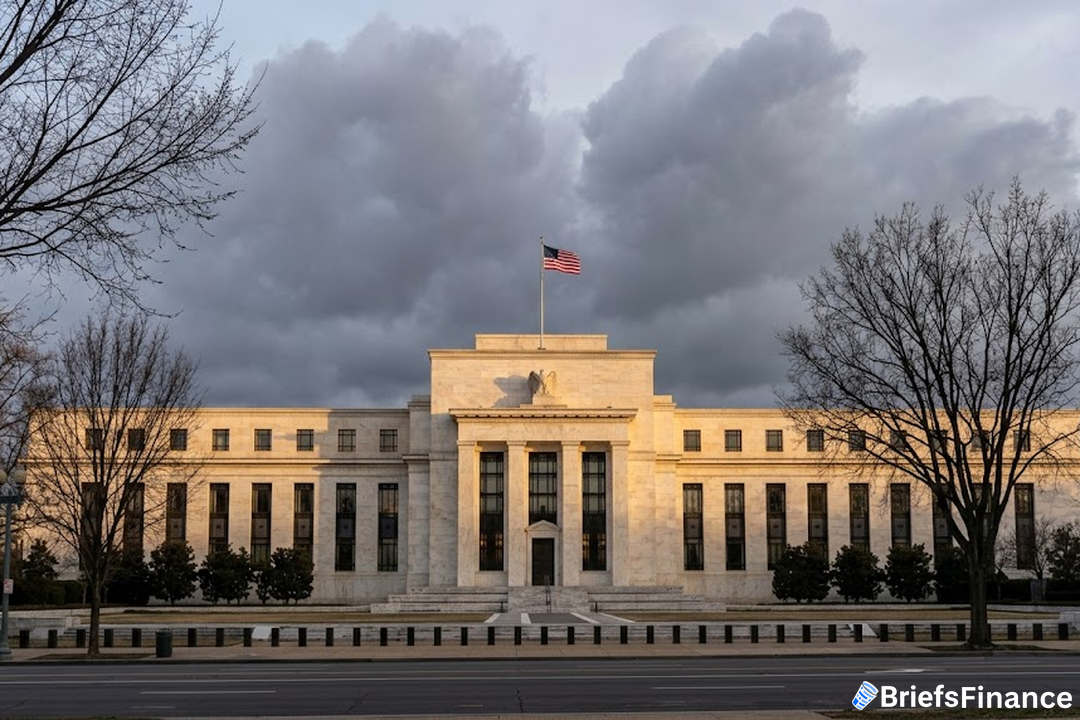
80. Federal Reserve (The Fed)
The U.S. central bank that sets interest rates and controls monetary policy.
The Fed's decisions ripple through the entire economy - when they raise rates, borrowing costs increase and markets often dip.
When they lower rates, it typically boosts stocks and economic activity.
Other countries also have central banks with different names, but the Fed specifically is led by a dual mandate to keep prices in the economy stable and ensure our nation is operating at maximum employment.
81. Interest Rate
The cost of borrowing money, set by the Federal Reserve, which affects investment returns across the board.
Lower rates mean cheaper mortgages and business loans, usually boosting stocks.
Higher rates mean better savings account returns but often pressure stock prices.
Why These Stock Market Investing Terms Matter
These stock market terms hep you to understand what’s actually going on in the markets.
Here's what happens when you know these terms:
You can read financial reports with confidence. No more glazing over when you see "P/E ratio" or "EBITDA." You know exactly what they mean and how to use them.
You understand what analysts are really saying. When CNBC talks about "dividend aristocrats" or "bull markets," you're not lost. You're nodding along because you speak the language.
You make informed investment decisions. Instead of following hot tips or buying whatever's trending, you can analyze whether a stock is actually a good investment for your goals.
You avoid getting fooled by misleading information. When someone tries to sell you on a "can't miss" opportunity, you have the knowledge to dig deeper and spot the red flags.
These 81 terms are your foundation - your investing vocabulary that opens doors to building real wealth.
Remember: Every successful investor started exactly where you are now - learning the basics and building from there.
Warren Buffett read financial statements in his bedroom as a teenager. Peter Lynch analyzed companies as a caddie on golf courses. You're on the same path, just at the beginning.
The difference between where you are now and where you want to be? Action. So take what you've learned and start putting it to work.
To keep reading the language of markets in the news, get the free Market Briefs newsletter, one email every morning on the economy, stocks, real estate and crypto in under 5 minutes.