Something quietly changed in 2025.
For nearly three years, tech stocks were the only game in town.
AI hype, cloud computing, and software growth was the growth some investors were looking for.
Valuations in AI and tech have grown as a result and now, many of these companies are trading at 30 times their earnings, or more.
But now, something has shifted.
In mid-2025, Congress passed the One Big Beautiful Bill Act.
It made the 21% corporate tax rate permanent and brought back 100% bonus depreciation - meaning businesses can now write off the full cost of many physical assets immediately, rather than spreading those deductions out over decades.
Not every asset qualifies. But many physical assets that would typically fully depreciate over 20 years can now be written off right away under current rules.
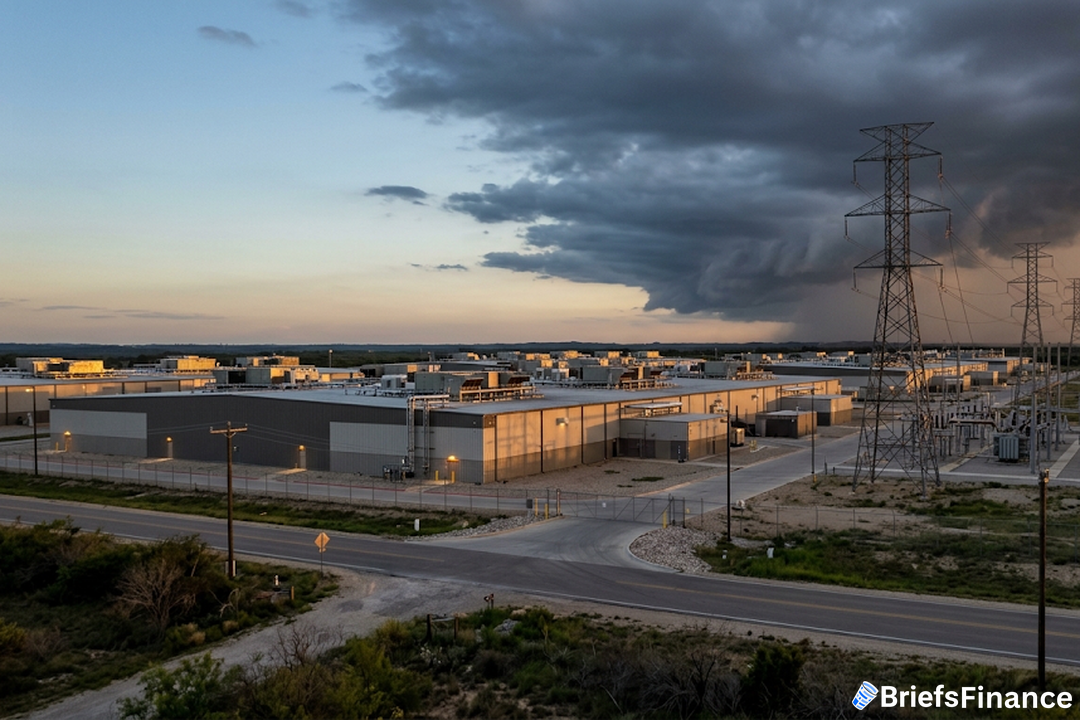
The result? Companies are suddenly being incentivized to spend money on real, tangible things. Factories. Equipment. Buildings. Data centers.
Not software or the cloud.
Now, investors are starting to shift money into the stocks that have real physical assets.
Which ones? Our analysts break down the full list of potential stock market opportunities in Market Briefs Pro.
You can discover them all by subscribing here.
Let’s break the market shift at play here, why investors should care, and what potential profit opportunities may be emerging right now.
From Data to Dollars: The Government Shift in Play
This is what Market Briefs Pro calls a Government Shift - when policy changes redirect capital and reshape entire industries.
Here's what it looks like in practice:
Businesses that benefit from bonus depreciation need loans to fund all that new spending.
They need insurance to protect those physical assets. And they need infrastructure to power their operations.
That means investor capital is rotating - away from speculative tech valuations and into the companies that build, lend, and insure the physical world.
These are the kinds of businesses that have been largely overlooked while Wall Street was busy chasing the next AI breakthrough.
And as more companies increase their spending on physical assets, it creates a bigger opportunity for the financial sector companies positioned to serve them.
The new tax incentives from the One Big Beautiful Bill Act are expected to unlock roughly $2 trillion in corporate spending across the U.S.
That's an enormous amount of capital looking for a home - and financial institutions are in a position to help put it to work.
The Yield Curve Is Doing Something Important
The yield curve is also pointing to a shifting market.
Banks make money by borrowing at short-term interest rates and lending at long-term rates.
For years leading up to 2024, this curve was "inverted" - short-term rates were actually higher than long-term ones.
That's unusual, and it squeezed bank profit margins significantly.
But that's changing.
Long-term rates are now rising faster than short-term rates, which means the curve is getting steeper again.
A steeper yield curve means bigger profit margins for lenders - on every single loan they make.
Fed interest rates did fall in 2025 and are likely to fall more in the short term.
But the chances of them falling back to near-zero levels like we saw from 2020 to 2022 are slim. Many experts believe rates will stay higher for longer.
When rates were at zero, investors were willing to bet on software companies promising growth five years from now.
At higher rates, a bank earning steady, predictable profits starts to look a lot more attractive by comparison.
So combine that with the One Big Beautiful Bill angle and you have some investors shifting focus from speculative AI plays to stocks that may have deeper value.
How The Math Is Changing
From 2020 to early 2023, low interest rates made it cheap for investors to borrow and deploy capital.
That meant even speculative, high-growth tech stocks seemed like reasonable bets - because the cost of waiting for future profits was low.
But as rates rose and stayed elevated, the math changed.
Investors started asking a simple question: why take on the risk of a high-valuation tech stock when a well-run bank is generating real profits today?
That question is driving what investors call a rotation - capital moving from one sector to another based on changing conditions.
In this case, money is moving from speculative growth into what's often called the "real economy" - companies that deal in concrete, steel, and dollars, for example, not just lines of code.
And the companies best positioned to capture this shift aren't obscure startups. They're some of the biggest financial institutions in the world.
Two Names Worth Knowing
The Market Briefs Pro report highlights three companies tracking this shift. Here's a brief look at two of them.
JPMorgan Chase (JPM) - The Banking Play
JPMorgan is the largest bank in the United States - and it sits right at the center of this shift.
About 51% of its revenue comes from net interest income, essentially the difference between what it pays depositors and what it charges borrowers.
As the yield curve steepens, that margin expands, which means more profit on every loan.
Even after hitting a new all-time high in early January 2026, JPM was still trading at a forward price-to-earnings ratio of around 15 - well below the S&P 500 average of 21. That gap is exactly the kind of thing value-oriented investors look for. It suggests the market may not yet be fully pricing in the earnings potential ahead.
KKR & Co. (KKR) - The Private Credit Play
Where JPMorgan finances public companies, KKR has quietly become a major lender to the private market.
KKR is an alternative asset manager that started in private equity - buying companies, improving them, and selling them for a profit.
But its fastest-growing segment today is private credit: making loans to companies that either can't or don't want to borrow from traditional banks.
KKR has also been buying physical assets - data centers, pipelines, fiber networks - and leasing them back to tech companies that need that infrastructure to operate.
The company has fallen in share price this year as some investors rotate out of tech, but has the potential to bounce back.
BTW: Our analysts identified one other potential opportunity within this market shift.
Find out which out by subscribing to Market Briefs Pro and reading our full report.
What Are the Risks?
Policy change is the biggest one. The entire thesis is built on the One Big Beautiful Bill Act staying intact.
Credit risk is real, too. While a company like JPMorgan has a solid balance sheet, many of its clients do not. A recession, a slowdown, or a broader market crash could make it harder for borrowers to repay loans.
And tech could roar back. A major new AI breakthrough or surge in software adoption could pull investor attention right back to the Nasdaq, leaving financials in the dust.
Investors in this shift are effectively betting that tangible assets are finally worth more than digital promises. That could reverse at any moment.
The Bottom Line
For nearly three years, the trade was simple: buy tech, ignore everything else.
That may be changing and the catalyst is a piece of legislation most people haven't thought much about.
The One Big Beautiful Bill Act is redirecting how businesses spend money. And that's redirecting how investors are thinking about where to put their capital.
The companies that build, lend, and insure the physical world have been undervalued for years while Wall Street's attention was elsewhere.
As the market rotates toward the real economy, that may finally be starting to change.
For investors willing to look beyond the tech sector, 2026 could be a rare window - one where understanding the shift matters more than chasing the hype.
Subscribe to Market Briefs Pro if you want more research, data, and potential stock market opportunities.