Earlier in 2025, the U.S. government bought a 15% stake in a mining company.
And it wasn't oil, gold, or even lithium...
MP Materials - the company the U.S. took a stake in - is a rare earth minerals producer.
You've probably never heard of neodymium or dysprosium. So why should investors care?
But without them, your iPhone stops working. Electric cars can't run. Fighter jets stay grounded.
Here's the problem: One country controls almost everything. And it's not us.
The market is shifting and 17 obscure elements are now the most sought after commodities on Earth.
Below we'll explain what they are, what investors need to know, and how you can take advantage of this trillion-dollar market shift.
What Are Rare Earth Minerals?
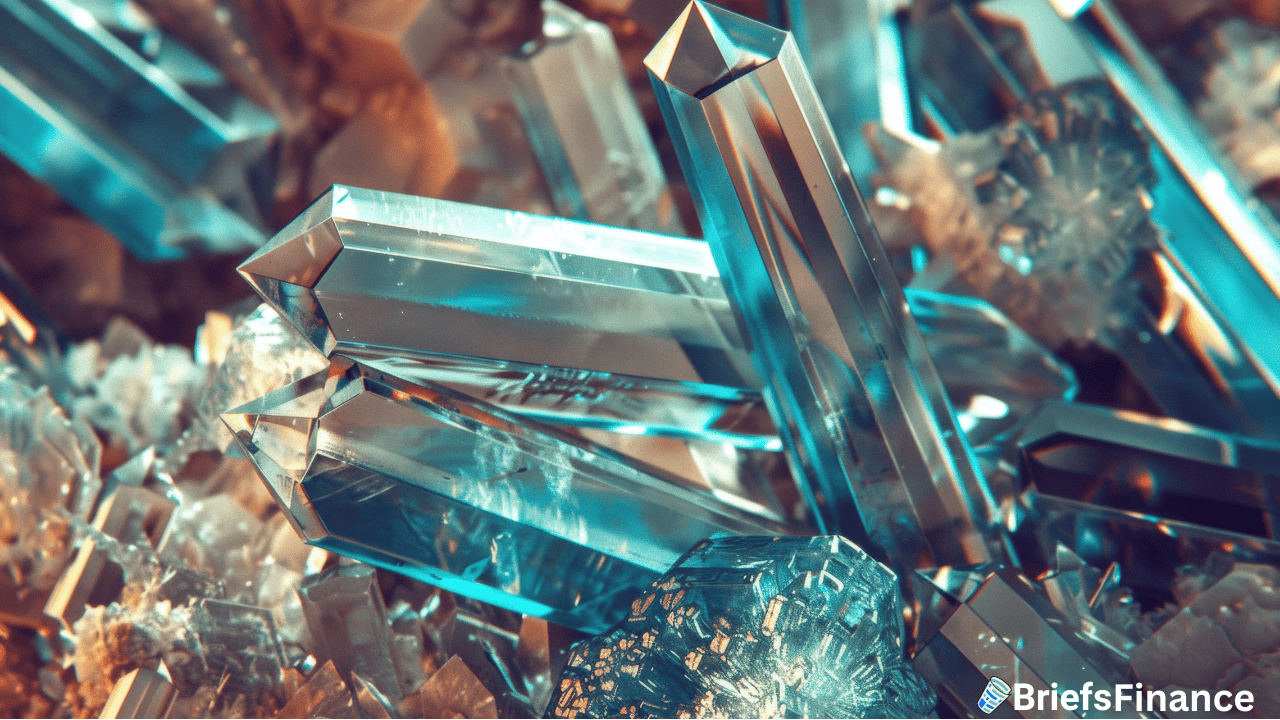
Rare earth minerals are deposits found in the ground that contain very specific materials known as rare earth elements.
Here's the interesting part: These 17 similar metals aren't actually that rare in the Earth's crust.
They get their name because they are rarely found in what are called "economically viable concentrations."
In English: They are only found in really small bits and pieces, which makes them difficult to mine.
Think of it like finding gold dust scattered across an entire beach. The gold exists, but collecting enough to be useful? That's the challenge.
| Element Type | Concentration in Earth's Crust | Mining Challenge |
| Rare Earth Elements | Relatively abundant | Difficult to extract economically |
| Gold | Much rarer | Easier to concentrate and refine |
| Iron | Very abundant | Simple extraction process |
From Rocks to Rocketships: Why Everyone Wants Rare Earths
So why all the fuss about these hard-to-mine minerals?
Here's a short list of technology that is completely dependent on rare earth elements:
- Smartphones
- Hard drives
- Fiber optics
- Electric vehicles
- Missile guidance systems
- Jet engines
- Radar systems
- Satellites
And that's just a very small portion of the total list.
Not only does modern technology depend on these tiny mineral deposits, but so does the technology of tomorrow.
Without rare earth minerals, there's no AI, no quantum computing, no self-driving taxis, or 4-minute drone deliveries.
Dr. Liz Dennett, an astrobiologist and CEO of Endolith (a company using microbes to mine copper), put it bluntly when discussing innovation in the mining industry: "It's happening right now."
She compared the quickening pace of innovation in mining to that of quantum computing or genomics - fields that have drastically outpaced expectations over the past few years.
What Are the 7 Most Significant Rare Earth Elements?
While there are 17 rare earth elements total, seven stand out as particularly critical for modern technology:
1. Neodymium
Used in powerful permanent magnets for electric vehicle motors, wind turbines, and hard drives. It's one of the most sought-after rare earth minerals due to its magnetic properties.
2. Praseodymium
Often paired with neodymium to create high-strength magnets. Essential for hybrid and electric vehicles.
3. Dysprosium
Adds heat resistance to magnets, making them stable at high temperatures. Critical for military applications and advanced electronics.
4. Terbium
Used in solid-state devices and fuel cells. Also important for green energy technologies.
5. Europium
Powers the red phosphors in LED displays and television screens. Essential for modern display technology.
6. Yttrium
Used in lasers, superconductors, and as a cancer treatment agent. One of the most versatile rare earth elements.
7. Lanthanum
Found in hybrid car batteries, camera lenses, and as a petroleum refining catalyst.
The bottom line: These seven elements are the backbone of modern electronics, clean energy, and defense systems. Their availability directly impacts technological advancement.
The New Wealth of Nations
Let's look at a quick timeline of recent events:
- April 30th, 2025 - Ukraine signs a deal promising to supply the U.S. with 50% of Ukraine's rare earth minerals.
- June 11th, 2025 - The U.S. announces the framework for a trade deal with China. A key component? Access to Chinese minerals.
- July 10th, 2025 - The U.S. Government signs a $400 million deal with a domestic rare earth company.
There's a pattern here.
In 1776, Adam Smith wrote The Wealth of Nations, stating that it is labor, not territory or metals, that generates wealth:
"It was not by gold or by silver, but by labour, that all the wealth of the world was originally purchased."
In 2026, we're seeing that Adam Smith may no longer be correct. In the modern economy, the wealth of nations is increasingly determined by access to rare earth minerals.
Control and supply of these minerals isn't just about maintaining the status quo. Whichever country has the strongest rare earth mineral supply chain could potentially leave the rest of the world in the dust.
The China Problem
Here's where things get complicated.
China currently controls the global rare earth supply chain:
| Supply Chain Stage | China's Market Share |
| Mining | Over 60% |
| Refining | Over 80% |
| Magnet Production | Over 90% |
And China is the only country with a fully integrated mine-to-magnet supply chain.
The problem? Critical U.S. defense systems - like radar, missile guidance, and jet engines - rely on rare earth magnets. The Department of Defense doesn't like that virtually all of them are produced in China or using Chinese-sourced materials.
This creates a strategic vulnerability that governments worldwide are scrambling to address.
Blake McLaughlin, a geologist with over a decade of mining experience and Vice President of exploration for Axcap Ventures, explained how the recent shift in mining is geopolitical by nature:
"Now we talk more about global trade...We've had a fairly open supply chain to date...Now we realize that we need to look at the strategic importance of location as well."
Building the U.S. Supply Chain
The United States is working to establish its own rare earth mineral supply chain, but it's not easy.
Currently, domestic production accounts for approximately 15% of the global rare earth mineral supply, with a focus on neodymium-praseodymium - the minerals used in electric vehicles, drones, robots, and defense systems.
The U.S. government has taken several steps to secure domestic supply:
- National Strategic Asset Classification: Designating certain rare earth operations as critically important to the United States, which provides legal and security protection from the U.S. military
- Emergency Control Powers: If designated companies begin to fail, the government can step in and take control
- Direct Investment: Hundreds of millions in government equity and low-interest loans to domestic producers
This level of government involvement isn't unprecedented. Think back to the government's partial nationalization of General Motors in 2008 - similar logic applies here.
The "Mine-to-Magnet" Model
One of the major challenges in rare earth production is creating an end-to-end supply chain.
A "mine-to-magnet" model means:
- Mining the minerals
- Refining the elements
- Producing the magnets
- All within the same company - all in the U.S.
This integrated approach is attractive because rare earth magnets are the critical component in hard drives, radar systems, and defense applications.
Several companies are attempting to replicate China's integrated supply chain model on American soil, but they face significant challenges.
How Rare Earth Minerals Compare to Precious Metals
When people ask "What rock is worth the most money?" they're usually thinking about gold or diamonds.
But in terms of strategic value and economic impact, rare earths tell a different story.
| Mineral Type | Market Value | Strategic Importance | Global Dependency |
| Gold | ~$4,000/oz | Medium (store of value) | Low |
| Platinum | ~$1,500/oz | Medium (catalytic converters) | Medium |
| Neodymium | ~$150/kg | Very High (magnets, EVs, defense) | Extremely High |
| Dysprosium | ~$350/kg | Critical (heat-resistant magnets) | Extremely High |
| Terbium | ~$1,200/kg | Critical (electronics, fuel cells) | Extremely High |
Note: Prices fluctuate significantly based on supply and geopolitical factors.
The key difference: You can live without gold jewelry, but modern civilization cannot function without rare earth elements in electronics, energy systems, and defense technology.
Rare Earth Prices: What Drives Market Value?
Understanding rare earth prices requires looking beyond simple supply and demand.
Primary Price Drivers:
1. Geopolitical Tensions When trade relationships between major powers deteriorate, rare earth prices spike. China has previously restricted exports as a political tool, causing immediate market reactions.
2. Mining Economics It takes between 10 and 16 years between the discovery of a new deposit and its yielding ore, according to industry experts. This creates long lag times between demand increases and supply responses.
Dr. Dennett noted that creating new mines requires "an absurd" amount of money, further constraining supply elasticity.
3. Refining Capacity Bottlenecks Even when ore is mined, refining capacity is extremely limited outside China. This creates pricing pressure at the processing stage.
4. Technology Demand Cycles Surges in electric vehicle production, defense spending, or renewable energy projects directly impact rare earth demand and pricing.
5. Environmental Regulations Rare earth mining and processing creates significant environmental challenges. Stricter regulations in Western nations increase production costs compared to countries with looser standards.
Recent Price Trends:
Rare earth prices were volatile in 2025, with neodymium oxide reaching multi-year highs due to:
- Increased EV production targets globally
- Military modernization programs in multiple nations
- Supply chain diversification efforts away from China
The Pivot: Uranium to Rare Earths
Some companies are pivoting from other critical minerals into the rare earth space.
Take the example of established uranium and critical mineral producers that recently launched pilot programs to pivot into rare earth minerals.
What makes this pivot special? These companies already have extensive experience with complex ore processing and refinement. While the process varies slightly between uranium and rare earths, the foundational knowledge transfers.
Some facilities are the only ones in the U.S. with permits capable of processing monazite ore - a rare earth mineral source.
These pivots have been costly but appear to be paying off:
| Year | Example Company Revenue Trajectory |
| 2016 | $54.5 billion |
| 2020 | $1.6 billion (pivot costs) |
| 2024 | $78.1 billion (all-time high) |
Having equipment, knowledge of mineral production, and effective monopolies on specific ore types positions these companies to rise alongside the rare earth mineral industry.
Want the Full Investment Picture?
This article covers the basics of the rare earth shift - what's happening and why it matters.
But we left out the specific opportunities.
In our full Pro report, we identify:
- The only American rare earth company with full government backing (and why Wall Street thinks it's undervalued)
- A uranium producer that just pivoted into rare earths—and is already beating analyst expectations
- A recent IPO attempting the first U.S. "mine-to-magnet" model (high risk, high potential)
- Three ETFs giving diversified exposure to the rare earth supply chain
We also include exclusive interviews with mining geologists and industry experts explaining where this shift is headed next.
Market Briefs Pro is our premium weekly newsletter for that gives investors an edge on investing opportunties, before the rest of the market hears about them.
We identify market shifts early, explain the companies positioned to benefit, and transparently discuss the risks.
Click here to subscribe to Market Briefs Pro and get our weekly investment research newsletter.
Broader Market Exposure
Investors looking for diversified exposure to the rare earth mineral industry have several options:
Pure-Play Rare Earth Funds
Some ETFs require companies to derive at least 50% of their revenue from rare-earth and strategic metals. These provide concentrated exposure to the sector.
Critical Minerals Funds
Broader funds focus on any material found in "disruptive technology" such as lithium batteries, robotics, and wind turbines - including but not limited to rare earths.
Metals & Mining Funds
The widest approach includes larger mining and refinement companies that may pivot toward rare earth production in the future.
Recent Performance: All major rare earth and critical mineral ETFs have been beating the S&P 500 both year-to-date and over the past 12 months as of mid-2025.
Risks: A Global Shift With Global Problems
Like any major market shift, rare earth minerals come with significant risks.
Government Control and Limitations
The government ownership stakes that come with national strategic asset designation provide funding and protection, but also create constraints:
- Government can step in and take control if they don't like business decisions
- Legal protections prohibit business with certain nations
- Strategic priorities may override profit motives
Profitability Timeline
Here's the uncomfortable truth: Most companies in this space aren't currently profitable.
Creating new mines takes "an absurd" amount of money, according to industry experts. The timeline from discovery to commercial production runs 10-16 years.
This is a long-term shift about supply chain control, not quick returns.
China Could Still Win
China has an extremely established rare earth mineral industry with near-total control of the existing global market.
While there's opportunity as the U.S. and allies establish their own supply chains, when the dust settles, the market might still be under Chinese control.
China has decades of infrastructure investment, refining expertise, and integrated supply chains. Catching up won't be easy or fast.
Environmental Concerns
Rare earth mining and processing creates significant environmental challenges:
- Toxic waste byproducts
- Water contamination risks
- Radioactive material handling (some rare earth ores contain thorium and uranium)
Western nations impose stricter environmental regulations, increasing costs and timelines compared to competitors.
FAQ: Rare Earth Minerals Explained
What is the most sought after rare earth mineral?
Neodymium is currently the most sought-after rare earth element due to its use in powerful permanent magnets. These magnets are critical for electric vehicle motors, wind turbines, hard drives, and defense systems. When paired with praseodymium, it creates some of the strongest magnets available, making it essential for the clean energy transition and modern electronics.
Why are rare earths critical for modern technology?
Rare earth elements possess unique magnetic, luminescent, and electrochemical properties that are difficult or impossible to replicate with other materials.
They enable technologies like smartphone screens, fiber optic cables, advanced batteries, and precision-guided missiles. Without rare earths, most modern electronics simply wouldn't function.
Which countries control rare earth supply?
China dominates rare earth production, controlling over 60% of mining, 80% of refining, and 90% of magnet production as of 2025. Other significant producers include the United States (approximately 15% of global mining), Australia, Myanmar, and smaller operations in other nations.
The U.S. and allied countries are actively working to reduce dependence on Chinese supply chains.
How long does it take to develop a rare earth mine?
According to industry experts, it takes between 10 and 16 years from the discovery of a new rare earth deposit to commercial ore production. This lengthy timeline includes exploration, permitting, environmental assessments, infrastructure development, and scaling to commercial operations.
The high capital requirements and long development cycles make rare earth mining a strategic, long-term investment rather than a quick profit opportunity.
Are rare earth elements actually rare?
Despite their name, rare earth elements are relatively abundant in the Earth's crust - some are more common than copper or gold. They're called "rare" because they're rarely found in economically viable concentrations.
The elements are typically dispersed in small amounts rather than concentrated in rich deposits, making extraction difficult and expensive.
What's the biggest challenge facing the rare earth industry?
The biggest challenge is breaking China's integrated supply chain dominance. While mining operations can be established elsewhere, China controls most refining capacity and nearly all magnet production.
Creating a complete mine-to-magnet supply chain requires massive capital investment, technical expertise, environmental management, and a timeline measured in decades, not years.
Rare Earths: A Different Kind of Trade War
We're not quite ready to dub it "The Mineral Wars," but the global economy certainly seems headed in that direction.
Rare earth mineral supply could very well dictate the world leaders in AI, robotics, and even military power.
The writing is on the wall, and what was true about the power of a nation's economy in 1776 just isn't the case in 2026.
Control and supply of rare earth minerals isn't just about maintaining the status quo. Whichever country has the strongest rare earth mineral supply chain could potentially leave the rest of the world in the dust.
Economics will be rewritten based on the market shifts happening right now. Whether you're a business owner considering supply chain risks or an investor watching capital flows, understanding rare earth minerals is essential to understanding the future global economy.
The question isn't whether rare earths matter - it's who will control them.