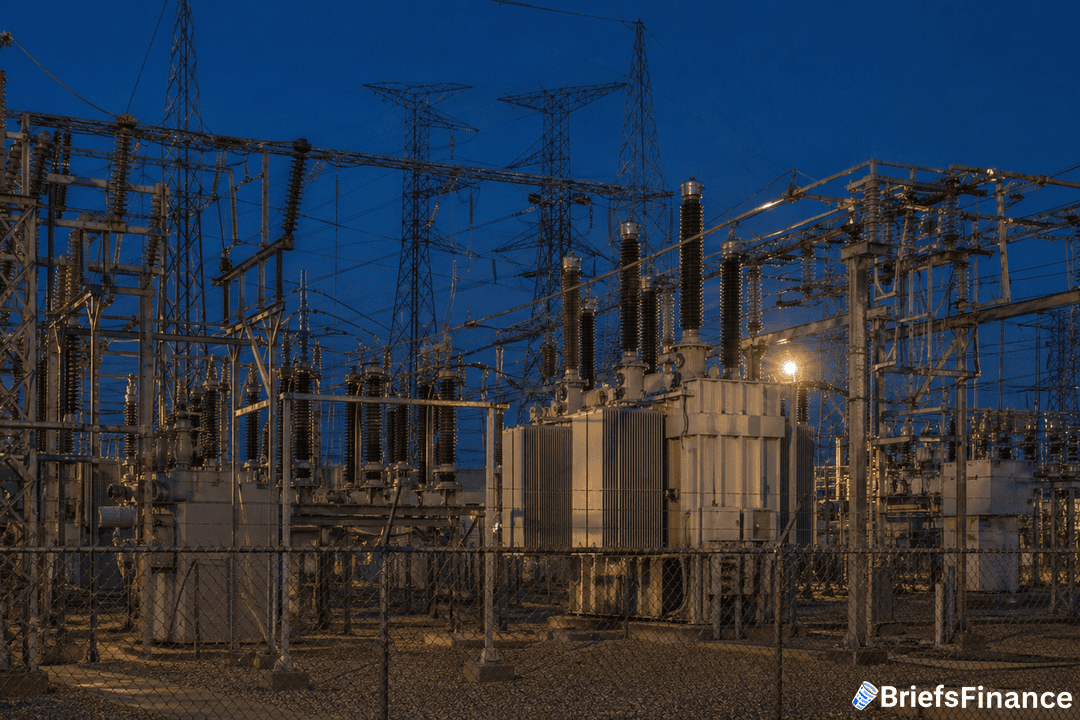
Hyperscalers are sending power firms power requests bigger than the country actually uses.
Across the U.S., more than 2,600 gigawatts of new power are stuck in line. They're waiting to plug into the grid.
That's per Lawrence Berkeley National Lab data through 2024. It's more than twice the country's full set up power.
That sits around 1,280 gigawatts.
That backlog is what's forcing tech firms to find their own power.
The Wait Got Way Longer
When a builder wants to plug a new project into the grid, they file an interconnect request. The power firm then studies the impact, prices the upgrades, and gives the builder a spot in line.
New power plants, battery sites, and big data centers all have to do this.
That line used to take under 2 years to clear. By 2023, the wait was about 5 years, per Berkeley Lab.
For data center firms with AI plans that need to be live in 18 months, 5 years just won't work.
Where The Surge Is Coming From
Utilities and grid runners are getting flooded with new requests. Take Texas.
One power firm there, called CenterPoint Energy, saw big load requests jump 700% in a year.
Requests went from 1 gigawatt to 8 gigawatts.
That's between late 2023 and late 2024, per Camus Energy.
Some of those requests are real. Some are just guesses.
Folks in the field call this "phantom load." That's where one builder files lots of requests in lots of places to see which gets a yes first.
Goldman Sachs thinks AI power demand will hit 92 gigawatts by 2027. The cloud giants are racing to lock in power any way they can.
Utilities like ComEd, PPL, and Oncor are now seeing more pending data center requests than their highest-ever peak demand.
What's Being Done About It
The Department of Energy issued a plan in October 2025. It would put new big loads above 20 megawatts under federal rules.
The goal is to speed up sign-off.
PJM is the biggest U.S. grid runner. It's using AI tools through a Google deal to clear its line faster.
But these fixes take years to filter through. So for now, big buyers are doing the math and skipping the grid.
Why It Matters For Investors
The grid is the bottleneck. The names that make on-site power gear are the ones picking up the slack.
They're also the ones landing the long-term deals.
For investors, the line at the grid is the story. The longer it gets, the more the buildout shifts to private power.
Fuel cell makers like Bloom (BE) win. Gas turbine makers like GE Vernova (GEV) win too.
What To Watch
Quarterly orders at the gear makers are the cleanest read on this story. As the grid backlog grows, those order books should grow with it.
So far, that's exactly what's happening. The trend has only sped up in early 2026.
More on-site power deals are likely on the way. The trend just keeps growing.