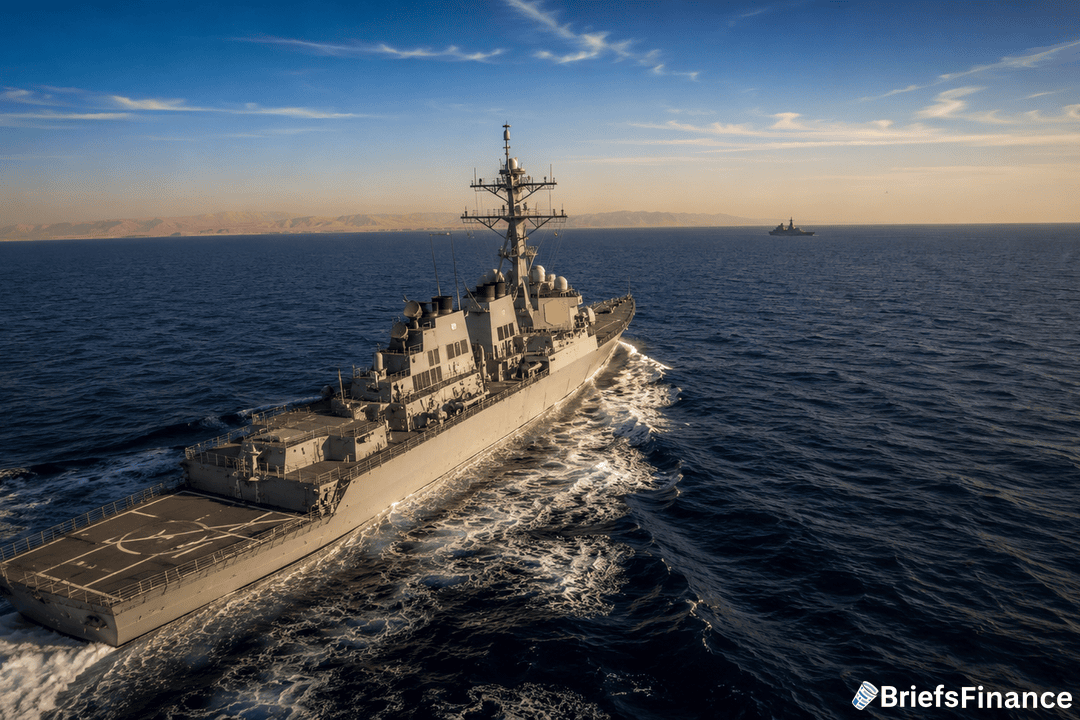
The U.S. Navy just put a number on its Iran blockade: 100 ships turned around in six weeks.
The Strait of Hormuz, the chokepoint that normally carries about a fifth of the world's seaborne oil, has been mostly empty since hostilities began in late February.
What CENTCOM Is Doing
The U.S. has been enforcing the blockade since April 13 against ships of any country trying to enter or leave Iranian ports on the Arabian Gulf and the Gulf of Oman.
More than 200 aircraft and warships are running the mission, including two carrier strike groups and guided-missile destroyers, with Central Command saying the operation has already disabled four ships while letting 26 humanitarian aid vessels through.
CENTCOM Commander Admiral Brad Cooper said the mission has "squeezed Iran economically," redirecting vessels of all nations from Iranian coastal areas.
The blockade is the largest sustained U.S. maritime operation against the Iran war since the conflict began.
We break down the geopolitical moves that actually shift oil prices in Market Briefs every weekday morning, and you get a free investing masterclass when you join.
Why The Strait Of Hormuz Matters
The Strait of Hormuz sits west of the U.S. blockade zone and is the most important oil chokepoint on the planet.
Only a handful of ships per day are making it through right now, with ship-tracking data showing that most of them are Iran-linked tankers that appear to be turning off their tracking signals to avoid detection.
That kind of move tends to push oil prices higher even when the broader market shrugs, which is part of why crude has been bouncing on every CENTCOM update.
Think of it like running deliveries at night with the headlights off. It works for a while, but you are not moving much volume, and everyone knows you are doing it.
Worth Noting
The blockade is six weeks old and already in triple-digit redirect territory, which suggests Iran's export pipeline is not quietly finding workarounds.
Hostilities started in late February following U.S. and Israeli air strikes against Iran, and shipping through Hormuz has been largely halted since, with oil prices touching nearly $120 in one early-war session.
The redirect number is the cleanest data point we have on whether the blockade is doing its job, and at 100 ships, the answer looks like yes.
A six-week blockade with 100 ships redirected is one Tehran cannot quietly ignore.
If you want a daily read on energy markets like this, join 350,000+ investors reading Market Briefs, and you also get a 45-minute investing course as a bonus.