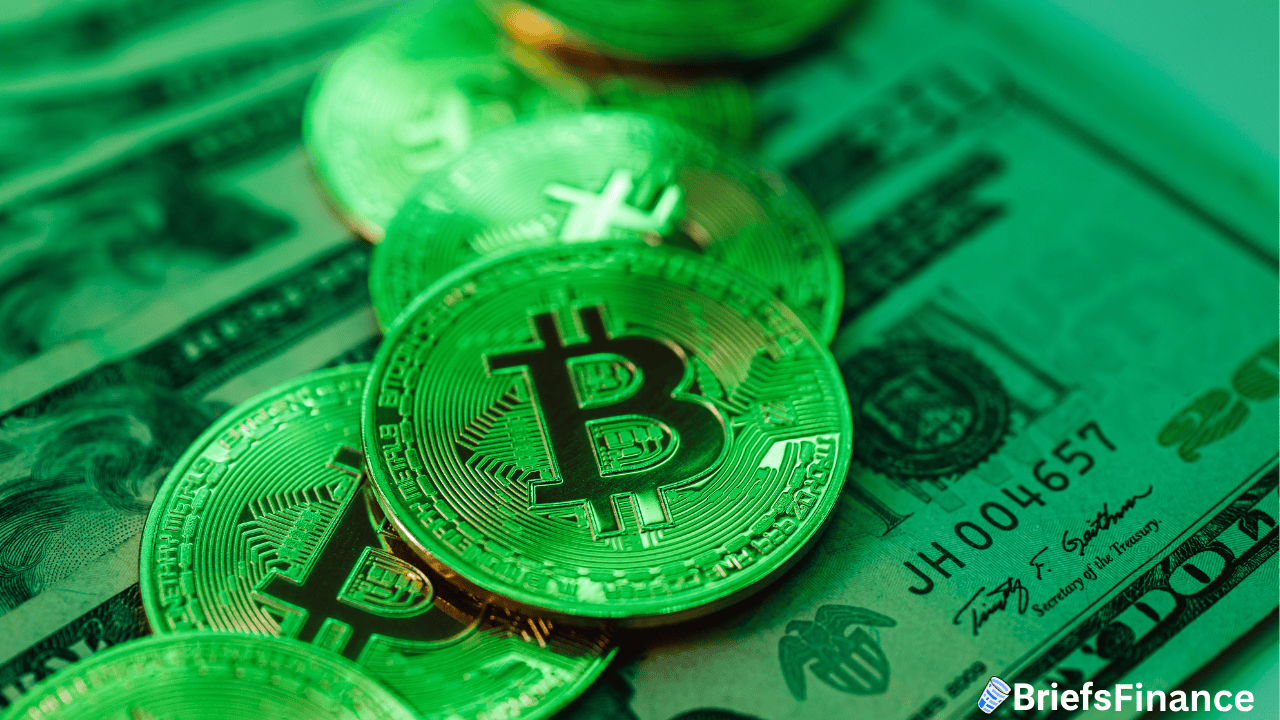
- Blockchain is a digital ledger that records every transaction on a public network.
- Once a transaction is recorded, it cannot be changed or deleted.
- It is the foundation of Bitcoin, Ethereum, and thousands of other cryptocurrencies.


The U.S. economy was supposed to be coasting. Then the Iran war started shoving energy prices around, the Fed went on hold, and the first read on Q1 GDP came in this week.
The number landed at 2% on a yearly pace. That's soft of forecast but sturdier than most feared.
Q4 of last year was just 0.5%, dragged down by a government shutdown that hit business activity. The first quarter mostly avoided that drag.
The bounce is real and a little better than the recession callers expected. It also gives the Fed cover to wait.
Companies plowed money into AI buildouts, which pushed business investment up 8.7% on a yearly pace. Tax cuts that started flowing through the system added to the gain.
Oxford Economics chief U.S. economist Michael Pearce said the AI buildout and the tax cuts are still the engine for the rest of the year. Strip those out, and the growth picture looks much weaker.
Consumer spending, which drives nearly two-thirds of U.S. activity, slowed to a 1.6% pace in Q1 from 1.9% in Q4. Bank of America data showed most of the March gains came from higher-income homes, not the wider middle.
That's a quieter shift, but it matters. It tells you the recovery isn't even.
GDP - the total value of goods and services made in the U.S. - is the broadest read on the economy. A 2% pace is steady but not strong, and the mix of growth says more than the headline.
The Personal Consumption Expenditures Price Index - the Fed's favorite read on inflation - came in at 3.2% on a yearly pace for the quarter. That's well above the 2% target.
The gap is one reason rates stayed on hold this month. The Fed has less room to cut than it did a quarter ago.
Energy is the immediate pressure. The Iran war has snarled traffic in the Strait of Hormuz, the world's busiest oil chokepoint.
Gasoline hit $4.30 a gallon on Thursday, the highest level since July 2022. Brent crude topped $126, setting a wartime high.
EY-Parthenon chief economist Gregory Daco expects the war will trim 0.3 percentage points off full-year GDP. He pegs 2026 growth at 1.8% versus 2.1% last year.
The story under the print is more interesting than the print itself. AI spending is keeping the economy upright, while consumer spending is leaning more on the wealthy.
Inflation is sticky because of oil, and the Fed has fewer cards to play. If oil stays high and consumer spending narrows further, full-year growth could land closer to Daco's 1.8% than the 2% number we just got.
Watch the May jobs report and the next inflation print for the early read. Those will tell the Fed what comes next.
For now, the economy is bending without breaking. Whether that holds depends on whether the AI spending boom keeps doing the work the consumer used to.