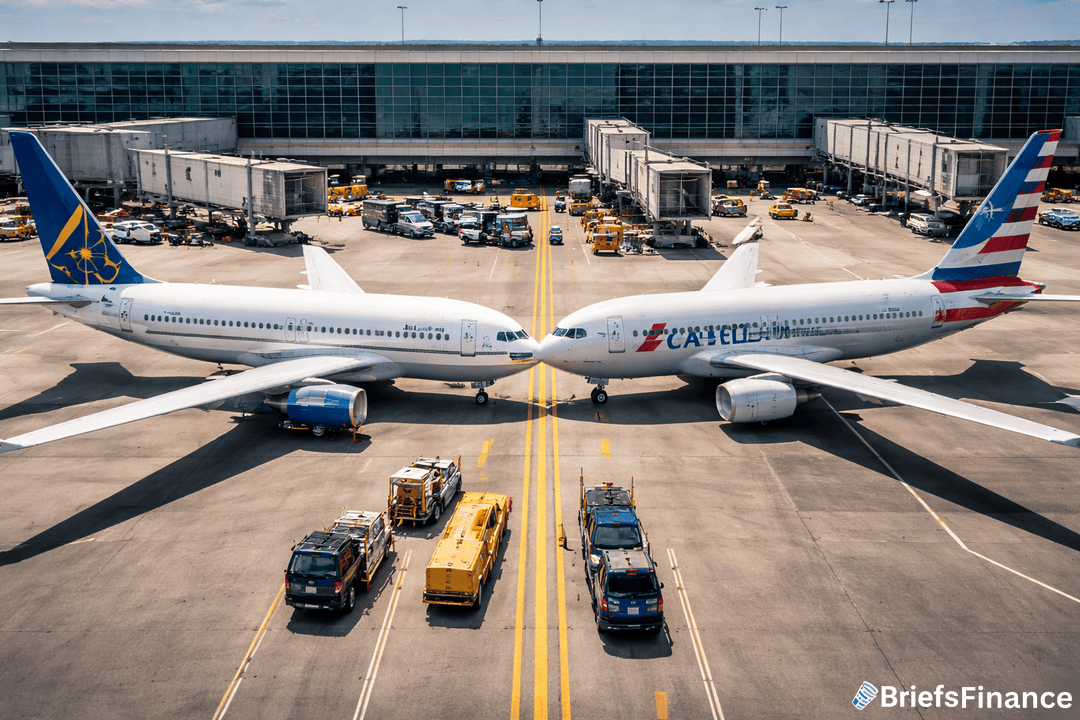
The head of United Airlines has been talking to people in Washington about a huge deal buying rival American Airlines. Bloomberg said Sunday that United CEO Scott Kirby pitched the idea to top government officials. It's not clear if real deal talks have started. Neither airline would comment on the report. If it happens, the deal would create the largest airline on Earth.
The Size Gap Says a Lot
United is worth about $31 billion right now. American is worth about $7.4 billion. That's a massive gap, and it hasn't always been this wide.
American's stock has dropped 27% since the start of the year. Higher fuel costs from the Iran war hit it hard. The carrier was already dealing with high debt and thin margins before oil spiked. United, by contrast, has been one of the best-run airlines in the country. It has posted strong profits, spent big on premium seats, and won over high-end travelers willing to pay more. Why now: The war created the conditions for this kind of deal. When a rival's stock drops 27%, it gets cheaper to buy. A deal that might have cost $15 billion a year ago could be done for less than $10 billion today.
What a Merged Airline Would Look Like
Right now, the U.S. has four big carriers - United, American, Delta, and Southwest. A United-American tie-up would cut that to three. The merged company would have the most routes, the most planes, and the most hubs of any airline in the world. It would also have huge power to set prices on many routes where the two currently compete. In plain terms: Fewer airlines means less choice for flyers. That's the part that makes this deal hard to pull off.
Why It Might Not Happen
The biggest hurdle is the government. Regulators have a long track record of blocking deals that shrink the number of major players in an industry. The Biden White House blocked the JetBlue-Spirit deal in 2024 for that exact reason. The current White House may view things differently - the Trump team has been more open to big mergers in general. But cutting four airlines to three would still face a tough fight. Consumer groups and smaller airlines would push back too. The review alone could take more than a year.
What This Means for the Industry
Even if this deal never happens, the fact that Kirby floated it in Washington sends a signal. It puts airline M&A back on the table for the whole sector. If one big deal gets a green light, more could follow. Delta might look at a partner. Southwest could become a target. The war may have set the stage for a wave of tie-ups.
What to Watch
Watch for any formal talks or filings in the coming weeks. If Kirby keeps making the case in D.C., it means he's serious. If the topic goes quiet, it was likely a test run. Either way, American's low stock price makes it a target for someone.
What This Means for Flyers and Investors
For flyers, fewer airlines means fewer options and likely higher fares on some routes. For investors, the M&A talk alone could lift airline stocks. When deal chatter starts, traders pile in. American's stock dropped 27% this year. If a deal gets real, that stock could bounce hard. United is already up this year. It has less room to run on this news alone. But a bigger, stronger company could mean better long-term returns for United holders too.