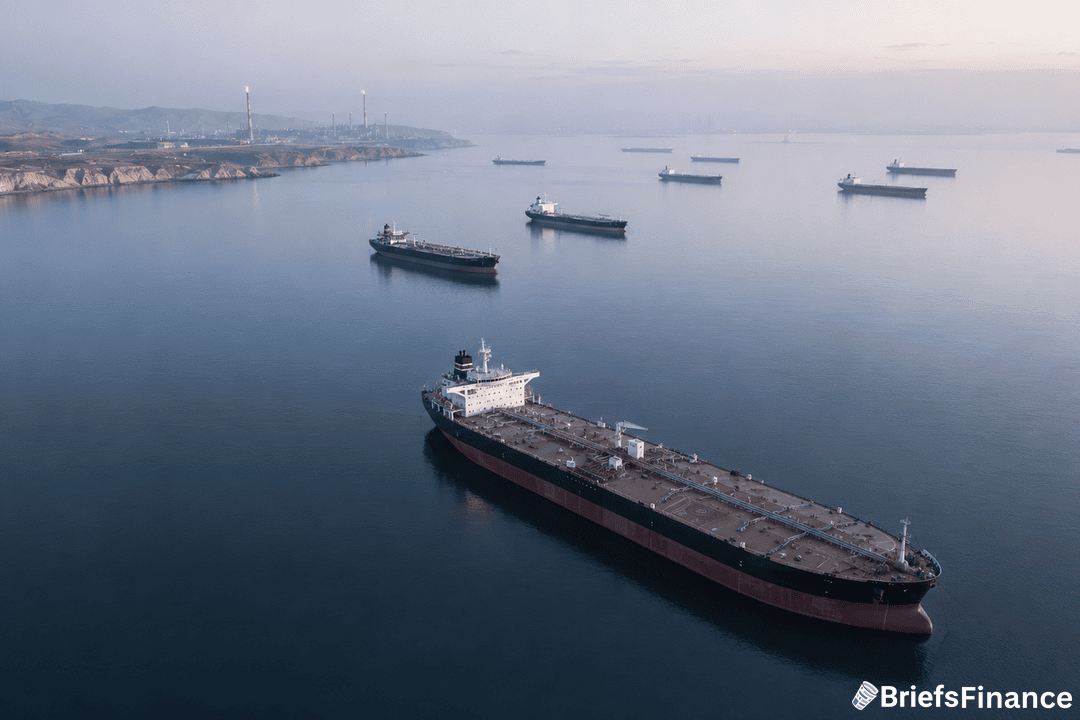
Oil is at $109 a barrel. One-fifth of the world's oil still can't get out of a single waterway.
The one country that could really push Iran into reopening it is staying quiet.
That is where the U.S. and China left things after two days of talks in Beijing.
What Trump Said vs. What China Said
President Trump flew back from China on Friday. He told reporters Xi Jinping agreed Iran must reopen the Strait of Hormuz.
He also said he is weighing whether to lift U.S. sanctions on Chinese oil firms buying Iranian oil.
China is the biggest buyer of Iranian oil, which gives Beijing real leverage over Tehran.
Beijing did not echo Trump's read on the meeting. The country's foreign ministry called the war a conflict "which should never have happened, has no reason to continue."
Xi himself did not publicly speak on Iran after the meeting.
Iran's foreign minister Abbas Araqchi said this week that Tehran would welcome Chinese input on the talks. But he added that Iran does not trust Washington, which has cut off past rounds of talks by launching air strikes.
We cover the moves that swing oil markets every morning in Market Briefs, in five minutes, plus a free investing masterclass when you sign up.
How The Strait Got Closed
The U.S. and Israel launched strikes on Iran on February 28. Thousands of Iranians were killed.
Iran responded by effectively shutting the Strait of Hormuz. That single waterway used to carry one-fifth of the world's oil and liquefied natural gas, so with it closed, prices ran up to where they are now.
The U.S. paused its own attacks last month but started a port blockade. The U.S. military said 78 ships had been redirected and four disabled as of Saturday.
Iran says it will not reopen the strait until the U.S. drops the blockade. Trump says he might restart the attacks if Iran refuses a deal.
On Saturday, Iran's parliament shared a plan. Traffic through the strait will follow a set route, and only ships and parties working with Iran will benefit. Iran will collect fees for the service.
Israel and Lebanon also agreed on Friday to a 45-day extension of a ceasefire that has tamped down their fight with the Iran-backed group Hezbollah.
What To Watch
Talks have been stuck since last week. Iran and the U.S. each rejected the other's most recent proposals.
Pakistan is now mediating between Tehran and Washington.
Trump has a political clock. The war has become a drag on him heading into November's U.S. congressional elections.
Oil traders have a different clock. Every day the strait stays shut, the supply crisis deepens.
Friday's 3% jump to $109 was the market's reaction to the Beijing meeting making no real progress.
China is the leverage. So far Beijing is not using it.
Every barrel that doesn't reach buyers adds to the bill the rest of the world is paying.
Join the 350,000+ investors reading Market Briefs every morning and you also get a free 45-minute investing course as a sign-up bonus.