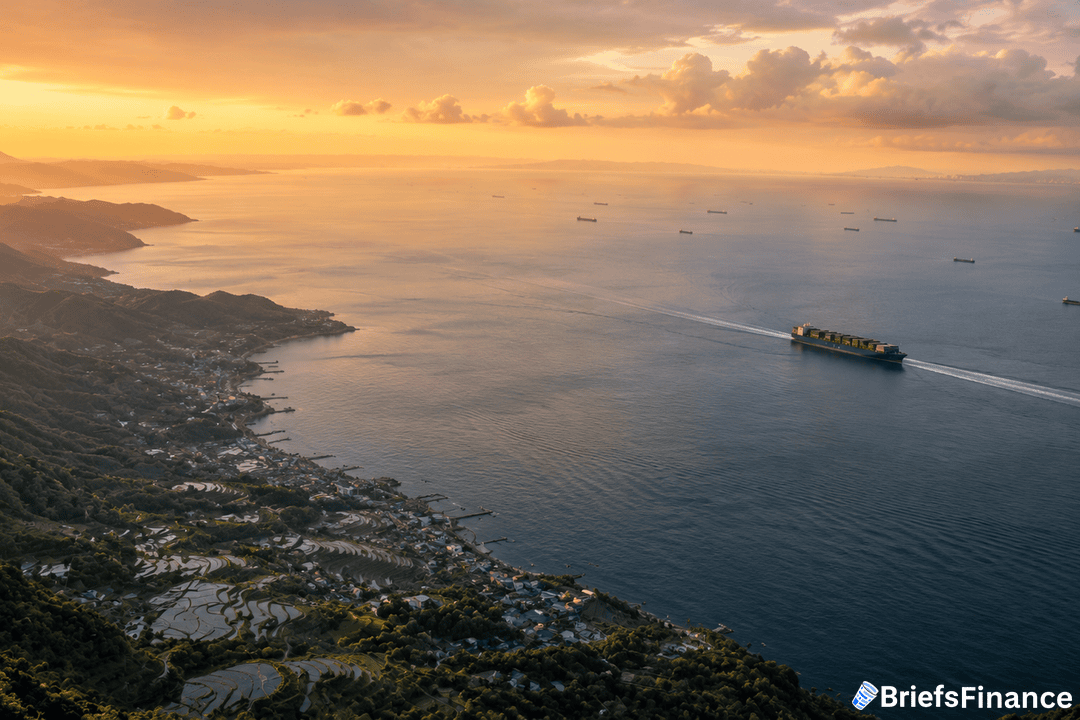
Taiwan makes the most advanced chips on earth, and Nvidia, Apple, and most of Wall Street's AI bets depend on them.
The U.S. president just told the island to "cool it" on independence. That's a shift.
What Trump Actually Said
Trump met Chinese President Xi Jinping in Beijing this week, but the Taiwan arms sales he said would be on the table never really got there.
Secretary of State Marco Rubio told NBC News the topic "did not feature primarily" in discussions, and the White House readout didn't mention Taiwan at all.
Then Trump went on Fox News. "I'm not looking to have somebody go independent, and you know, we're supposed to travel 9,500 miles to fight a war," he said.
He added that Taiwan should "cool it" and so should China. On whether he'll approve a new Taiwan arms package, the president said: "I may do it, I may not do it."
That's a sharp turn from December, when the U.S. announced a record $11 billion arms sale to Taiwan, and it lands while Xi is publicly warning that mishandling Taiwan could put the U.S.-China relationship in "great jeopardy."
We unpack policy shifts like this every morning in Market Briefs - five minutes a day, plus a free investing masterclass when you join.
Why The Market Should Care
Taiwan isn't just a political flashpoint. It's home to the makers of the most advanced semiconductors in the world, which means it sits at the heart of the supply chain behind Nvidia chips, AI data centers, iPhones, and most of the megacap tech trade.
Wendy Cutler, a former acting deputy U.S. trade representative, said Xi's "great jeopardy" line was a direct shot, and she read it as Xi tying economic stability to how Taiwan is handled.
In plain English: Beijing is signaling that trade, AI chips, and farm goods are all in the same basket.
If the U.S. backs further off Taiwan defense to keep China at the trade table, the message to Beijing is that economic ties matter more than the island. If Trump reverses course and pushes a new arms package, expect China to respond on trade.
The Old Rules Still Apply
Officially, U.S. policy on Taiwan hasn't changed, and Trump confirmed that during his Fox News interview. The U.S. still operates under "strategic ambiguity," which means it won't say if it would defend Taiwan in a Chinese attack.
Taiwan's government doesn't see a shift either. The presidential spokesperson said President Lai Ching-te is still committed to keeping the status quo across the Taiwan Strait.
Rush Doshi at the Council on Foreign Relations agrees, telling CNBC he sees "no sign" of a real policy change from the summit. But Trump's choice of words matters, and so does what he didn't approve: a new arms package is sitting on his desk.
Worth Noting
The chips that come off Taiwan power the most valuable trade on Wall Street, so any shift in how the U.S. talks about Taiwan moves the entire semi supply chain into a different risk category.
Trump's tone changed this week. The market hasn't priced that in yet.
Sign up for Market Briefs and get the daily read on what's actually moving the market, with a 45-minute investing masterclass thrown in as a bonus.