Trump went to Beijing hoping Xi would help him pry the Strait of Hormuz back open, and he came home with agreement in words and not much in actions.
What Trump Said, What China Said
Trump told reporters on Air Force One that Xi agrees Iran has to reopen the strait, while also saying he is not asking Xi for a favor - "because when you ask for favors, you have to do favors in return."
China's official readouts barely mentioned Iran, with Beijing's foreign ministry only saying the war "should never have happened" and "has no reason to continue."
No commitment to lean on Tehran, no timeline, no pressure plan was offered. The market noticed quickly, with oil rising about 3% on Friday to roughly $109 a barrel as traders priced in another stretch of disruption.
When oil is near $109 and the Middle East is still in flux, Market Briefs gives you the read in five minutes a day, with a free investing masterclass thrown in when you join.
Why The Strait Matters
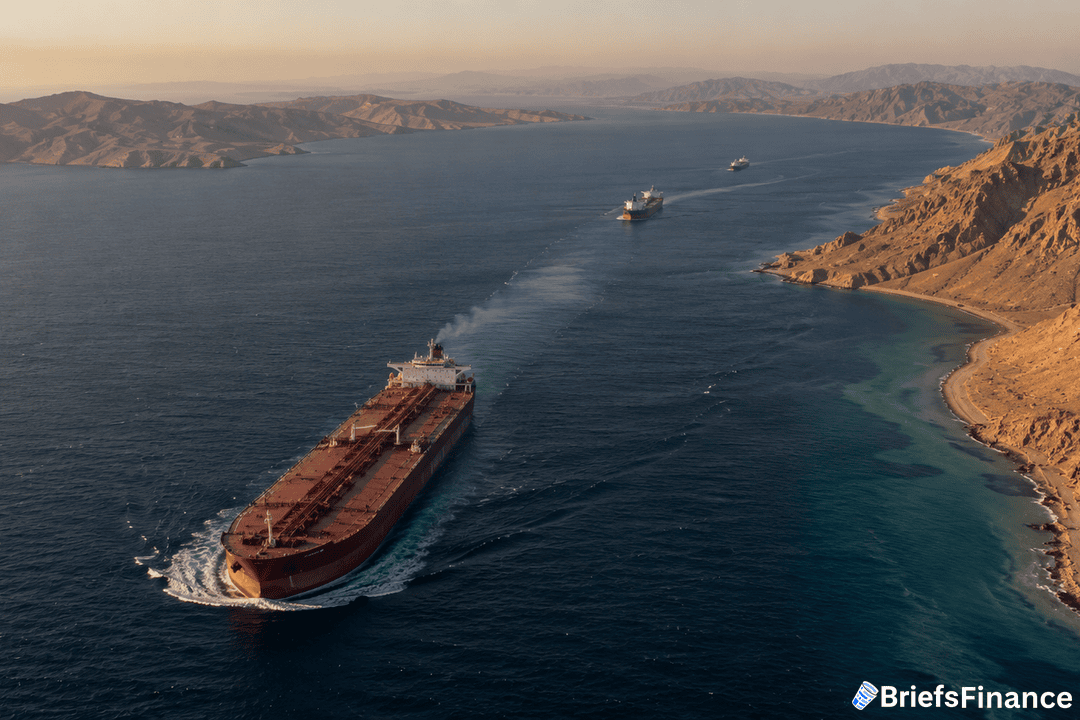
Before the U.S. and Israel launched attacks on Iran on February 28, the Strait of Hormuz carried about one-fifth of global oil and LNG (liquefied natural gas) shipments. Think of it like a single highway lane every truckload of Middle East energy has to drive through.
Iran has effectively shut the strait, and the U.S. answered with a port blockade that has now stopped or disabled dozens of ships.
As of Saturday, 78 commercial ships had been redirected and four disabled, per the U.S. military.
Iran's parliament said it is finishing a "designated route" plan that would let some commercial vessels through - but only those cooperating with Tehran, and only after fees. That is not an opening. It is a tollbooth.
What Iran Wants And What Trump Just Threatened
Iran has said it will not unblock the strait until the U.S. drops the blockade, while Trump has threatened to resume strikes if Iran does not move.
Trump told Fox News' "Hannity" on Thursday that he is losing patience with Iran. Pakistan has been mediating between the two countries, with Iranian Interior Minister Eskandar Momeni holding "detailed" discussions with his visiting Pakistani counterpart.
The Iranian foreign minister, Abbas Araqchi, said Tehran has received messages from Washington signaling willingness to keep talking, but Tehran does not trust the U.S. after past rounds of talks were cut short by strikes.
What To Watch
The U.S. congressional elections in November have already turned the war into a political risk for Trump, which raises the odds of either a deal or a new round of strikes.
There is also a humanitarian and political layer that keeps stretching the timeline, with thousands of Iranians killed in U.S. and Israeli airstrikes and Iran's judiciary reporting 39 executions tied to alleged spy work or armed unrest since the war began.
Oil prices are going to keep telling investors which side is winning the standoff.
Join 350,000+ investors reading Market Briefs every morning - a 45-minute investing course comes with the sign-up.