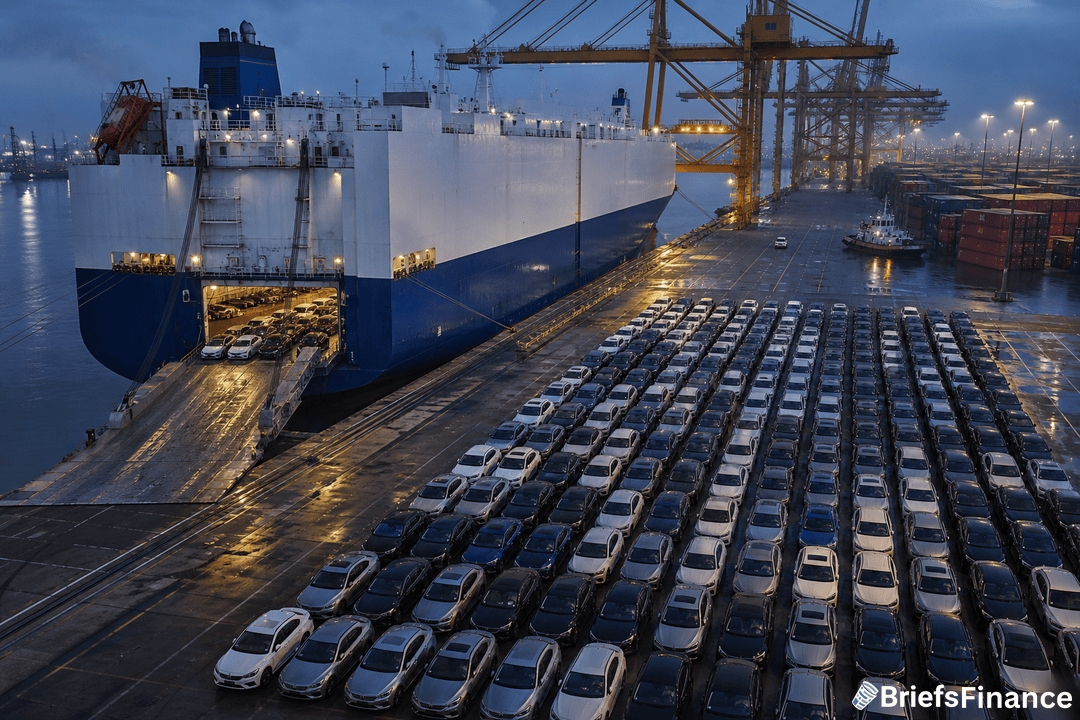
Trump just blew up the EU auto tariff truce in a Truth Social post. The president said he will raise tariffs on EU cars and trucks to 25% next week.
He says the EU is not holding up its end of an existing trade deal.
The Tariff Itself
Trump posted Friday that the EU "is not complying with our fully agreed to Trade Deal." His fix is a 25% tariff on EU cars and trucks coming into the U.S.
That is up from the rate now in place.
He left an out for EU carmakers that build in the U.S. "If they produce Cars and Trucks in U.S.A. Plants, there will be NO TARIFF," he wrote.
The president did not name the legal basis he was using. The White House later said the hike will run through Section 232.
That is the law that lets a president put tariffs in place on national security grounds.
The team already used Section 232 last year. They put a broad 25% tariff on cars and certain auto parts coming into the U.S.
That detail matters. Section 232 is still on the books.
The Supreme Court ruled in February in a 6-3 vote. The court said Trump's "reciprocal" tariffs did not have a legal basis.
Those tariffs were built on a 1977 law called IEEPA. The court said that law "does not authorize the President to impose tariffs."
After that ruling, Trump signed an order with a new 10% global tariff in place of the IEEPA duties. The order came with a 150-day clock under the 1974 Trade Act.
He later said he would lift the global rate to 15%.
The European Response
The EU is already on edge about the U.S. relationship. After the February tariff shake-up, Brussels held off on its planned vote on the trade deal.
A European Commission spokesperson said Friday the EU is staying in close contact with the U.S. The same statement floated a warning.
"Should the US take measures inconsistent with the Joint Statement, we will keep our options open to protect EU interests," the spokesperson said. That is diplomatic talk for "tariff hits back are on the table."
A White House staffer said the EU has "failed to make substantial progress on their agreed-upon commitments" under the trade deal. The staffer said the president keeps the right to change tariff rates if a trade partner does not stick to its deal.
What To Watch
Mercedes, BMW, and Volkswagen are the three names most exposed. Each one ships a big share of its U.S. cars from plants in Europe.
A tariff is a tax that gets paid somewhere. Most of the time, that "somewhere" is shoppers in the form of higher prices.
The 25% rate could push up sticker prices at U.S. dealers. It could eat into carmaker margins.
Or it could speed up plans to move output to U.S. plants.
Watch for the first carmaker to flinch and pass the cost on.