The Quiet Rotation Nobody Is Talking About Over the last […]

Six weeks ago, South Korea's president was calling it a "Korea premium." Wednesday, it became something else entirely.
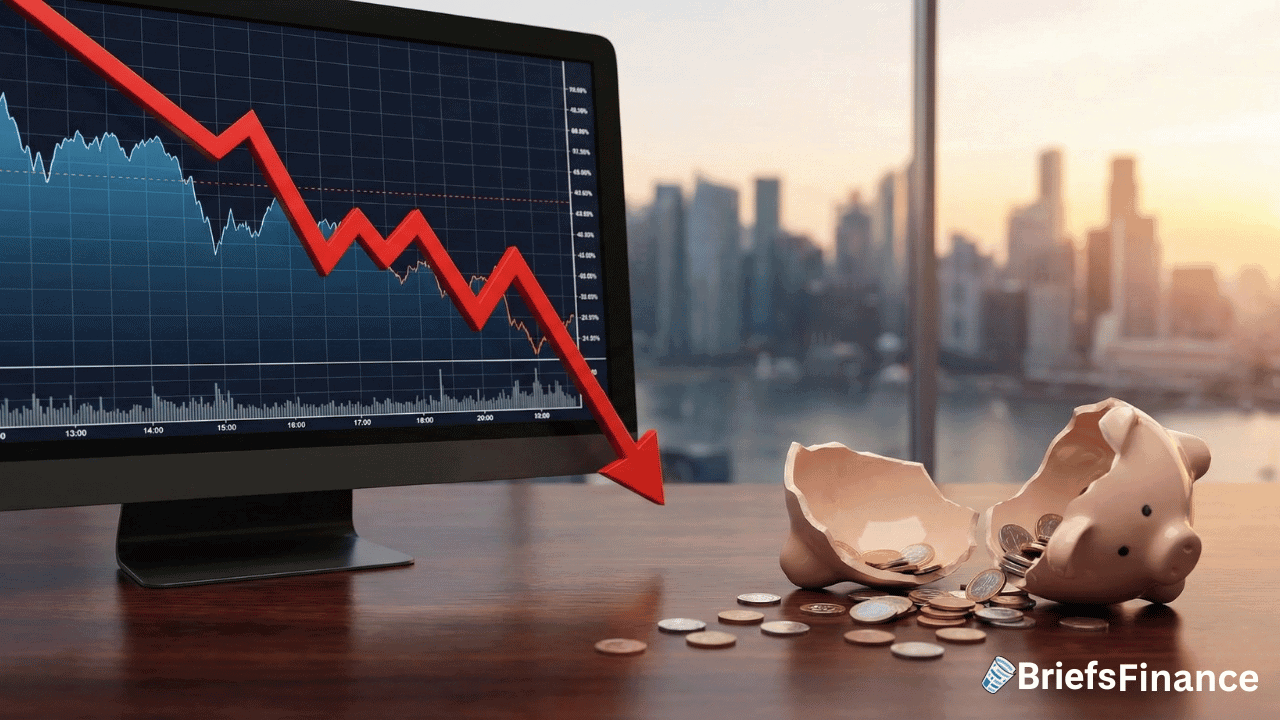
South Korea's benchmark KOSPI index fell 12.1% on Wednesday, closing at 5,093 — its worst single-day drop ever, surpassing even the 12.02% plunge recorded after the September 11 attacks. The selloff came on the heels of a 7.2% drop on Tuesday, making it the steepest two-day crash in decades. Trading was halted for 20 minutes early in the session after losses crossed the 8% threshold that triggers South Korea's circuit breaker. Of the more than 800 stocks on the index, only 10 finished in the green.
Samsung Electronics fell nearly 10%. SK Hynix, the memory chipmaker, dropped more than 11%. Hyundai Motor lost nearly 12%. The Korean won weakened alongside stocks, compounding losses for foreign investors.
The Iran war rattled markets globally, but South Korea felt it more than most. Korea imports nearly all of its fossil fuels, with about 70% of its oil and up to 30% of its liquefied natural gas coming from the Middle East — all of it transported by tanker through the same waters now under threat.
There's also a valuation problem. The KOSPI had surged more than 100% over the past 12 months, driven almost entirely by Samsung and SK Hynix on the back of the AI chip boom. Those two stocks alone make up more than a third of the entire index. When they fall, everything falls. Jay Woods of Freedom Capital Markets called it a "capitulation" after a monster run, not a structural collapse.
Despite this week's carnage, the KOSPI is still up more than 20% in 2026 and roughly 100% over the past year. That context matters. Euronews reported that oil's "war premium" is likely to persist even with Trump's pledge to escort tankers through the Strait of Hormuz — higher insurance costs alone could add $5 to $15 per barrel.
The question now is whether this is a violent correction in a still-healthy bull market, or the start of something worse. For an economy that imports almost all its energy and built its recent rally on two chip stocks, the answer depends almost entirely on how long the Middle East stays hot.
The Quiet Rotation Nobody Is Talking About Over the last […]
When you hear investors talking about “the market” they’re most […]
What Is a Market Disruptor? A market disruptor is a […]
For years, the "smart money" in defense went to cyber […]
If you want to understand what you’re investing in, you […]
The Federal Reserve is an independent agency from our government […]
You know the drill: You got paid Friday. By Wednesday, […]
We live in a capitalist economy - that means the […]
The Old Defense Playbook Is Broken For the last decade, […]
Most investors are watching AI stocks and interest rates. But […]