The US wants broader chip tariffs. Just not yet.
USTR Jamieson Greer spoke at a Micron plant in Virginia on Friday. He laid out the plan: protect US chip plants first, wait until they can fill the gap, then turn the screws on imports.
The Tariff Timing Question
The math is simple. The US makes only about 10% of the chips it uses.
Slap tariffs on the other 90% now and you blow a hole in every supply chain. That hits laptops, cars, and AI data center parts all at once.
That is why Greer's Section 232 chip review is moving slow. The study could justify duties on imports, but not in the near term.
"What's even more important than having protection for facilities like this is making sure we do it on the right timing and in the right amount," Greer said.
Tariffs are coming, just not today. Firms can keep importing during what Greer called the "reshoring phase." That buys time for US builders to scale up.
Every weekday morning, Market Briefs breaks down what policy shifts like this mean for your money - in five minutes, plus a free investing masterclass when you join.
Why Micron Is The Symbol
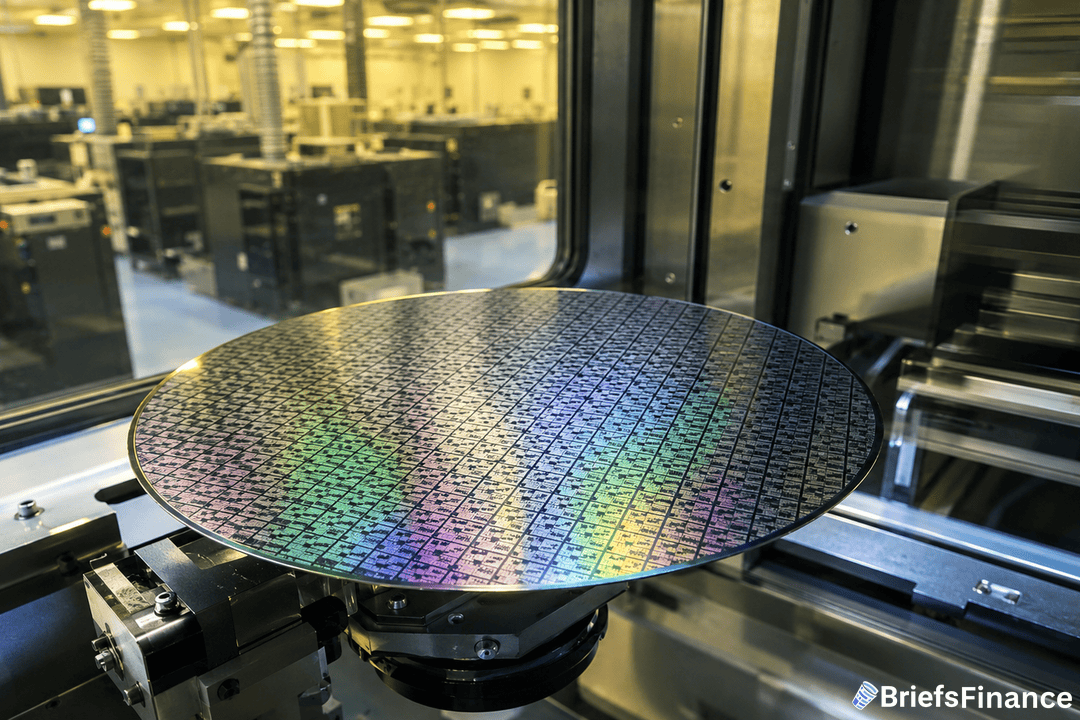
Greer picked the venue on purpose. Micron just started making 1-alpha DRAM wafers in Manassas. These are the most advanced memory chips ever made on US soil.
The firm is pouring $30 billion into new US investments. That is part of a planned $200 billion build-out.
Some of the bill has Washington's fingerprints on it. In late 2024, the Commerce Department signed off on $6.2 billion in CHIPS Act money for Micron's New York and Idaho plants. It was one of the biggest awards under the $52.7 billion law.
Memory chips like Micron's High-Bandwidth Memory aren't just in your phone. HBM is the kind of memory that sits next to AI chips and feeds them data fast enough to keep up.
That puts the reshoring race and the AI race on the same track.
US chip rivals are pouring concrete too. TSMC has put $165 billion into its Arizona plants, while Intel's Fab 52 in Chandler runs its newest chip tech.
Worth Noting
For investors, the story is the sequence.
Greer told chip importers to stockpile while they can, while pushing US builders to scale fast. The wall goes up the moment US firms can fill the gap.
That makes near-term winners the chip names already pouring concrete. Think Micron in Manassas and Boise, TSMC in Arizona, and Intel in Chandler.
A wider Section 232 ruling could also pull in equipment makers like ASML and AI chip names like Nvidia, since their supply chains run through the same plants. Greer did not float a tariff rate, but Trump's January order already set a 25% duty on a narrow tier of advanced AI chips.
The sequence is the actual policy, and the tariff is just the deadline.
Join 350,000+ investors reading Market Briefs every morning - you also get a 45-minute investing course thrown in as a bonus.