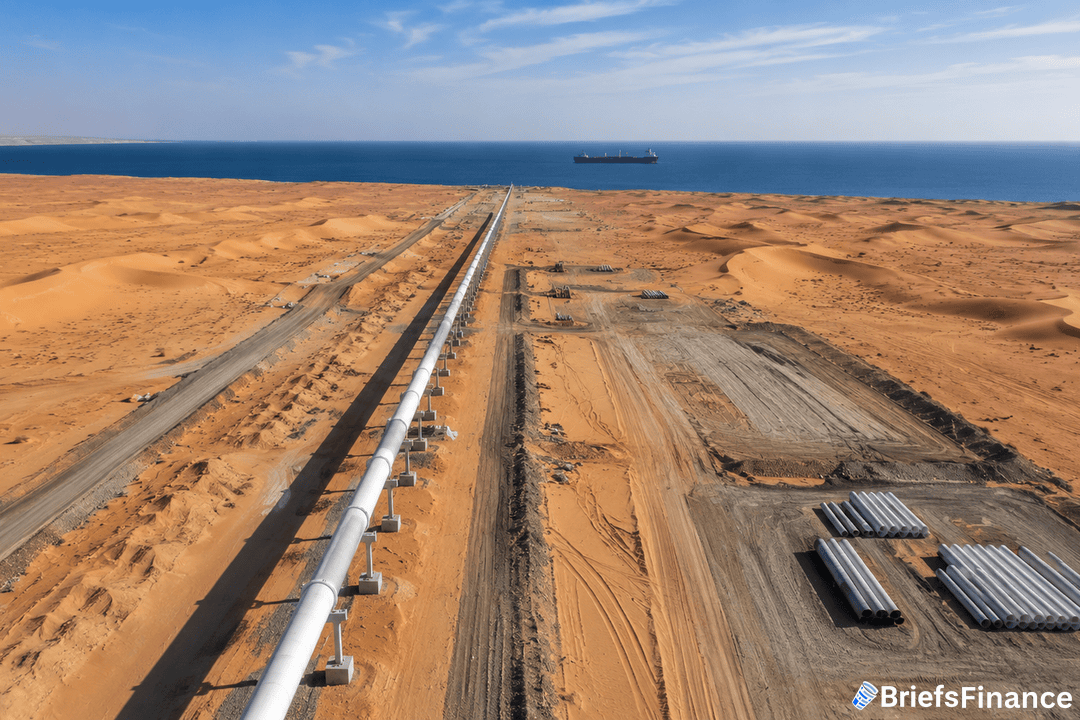
The UAE has a problem. Most of its oil exits through the Strait of Hormuz. The Strait of Hormuz is barely flowing right now. So Abu Dhabi is pushing to finish a second pipeline that runs around it.
The plan is simple. Build a new route to the open sea. Cut the country's reliance on a Strait that the war could shut off at any time.
The Project
The new West-East pipeline will run to Fujairah on the Gulf of Oman. That route skips the Strait. It is set to come online in 2027. Once it is up, it will double the export size of the Abu Dhabi National Oil Company (ADNOC).
Abu Dhabi Crown Prince Sheikh Khaled bin Mohamed bin Zayed Al Nahyan asked ADNOC's top team on Friday to build the pipeline faster. The UAE already has one pipeline that does this job. It is called the Abu Dhabi Crude Oil Pipeline, or Habshan-Fujairah. It can move up to 1.8 million barrels a day around the Strait.
That is not enough.
Market Briefs covers the oil and energy stories that actually move markets. It's delivered every morning, with a free investing masterclass when you join.
Why The Rush
The war has hit UAE output hard. Before the fighting, Abu Dhabi was pumping just over 3 million barrels a day. Now it is between 1.8 and 2.1 million. The country had been aiming to grow that to 4.9 million.
Attacks on energy sites and shipping in the region have cut what the UAE can actually move. Flows through the Strait of Hormuz are also "severely limited," per CNBC.
The pipeline push is a bet on two things. One: the chokepoint will not get safer anytime soon. Two: long-term oil buyers need a route that does not depend on it.
A faster route to the open sea matters for buyers in Asia and Europe. They do not want to rely on a Strait that can shut at any time.
The new pipeline will double ADNOC's export capacity once it opens. That is a big jump in option value for a country that wants to stay in the oil game for the long haul.
What To Watch
The other piece of this story is what the UAE did last month. On April 28, Abu Dhabi said it would exit OPEC, the producer group it had been a member of since 1967.
Put the two moves together and the picture is clear. The UAE wants to set its own output targets. It wants to ship through its own routes. It does not want to be tied to OPEC quotas or to the Persian Gulf.
That is a big shift in how one of the world's biggest oil producers runs its business. Oil markets will watch the pipeline build closely. A 2027 start would give the UAE far more room to grow output if the war ends.
Sign up here for the daily newsletter and grab a 45-minute investing masterclass as a bonus.