The Strategic Petroleum Reserve is America's emergency oil stockpile. It's now at its lowest level in over 40 years.
The last time it held this little oil was the summer of 1983 - back in Ronald Reagan's first term. As of June 12, the reserve sat at 340.3 million barrels.
What The Reserve Actually Is
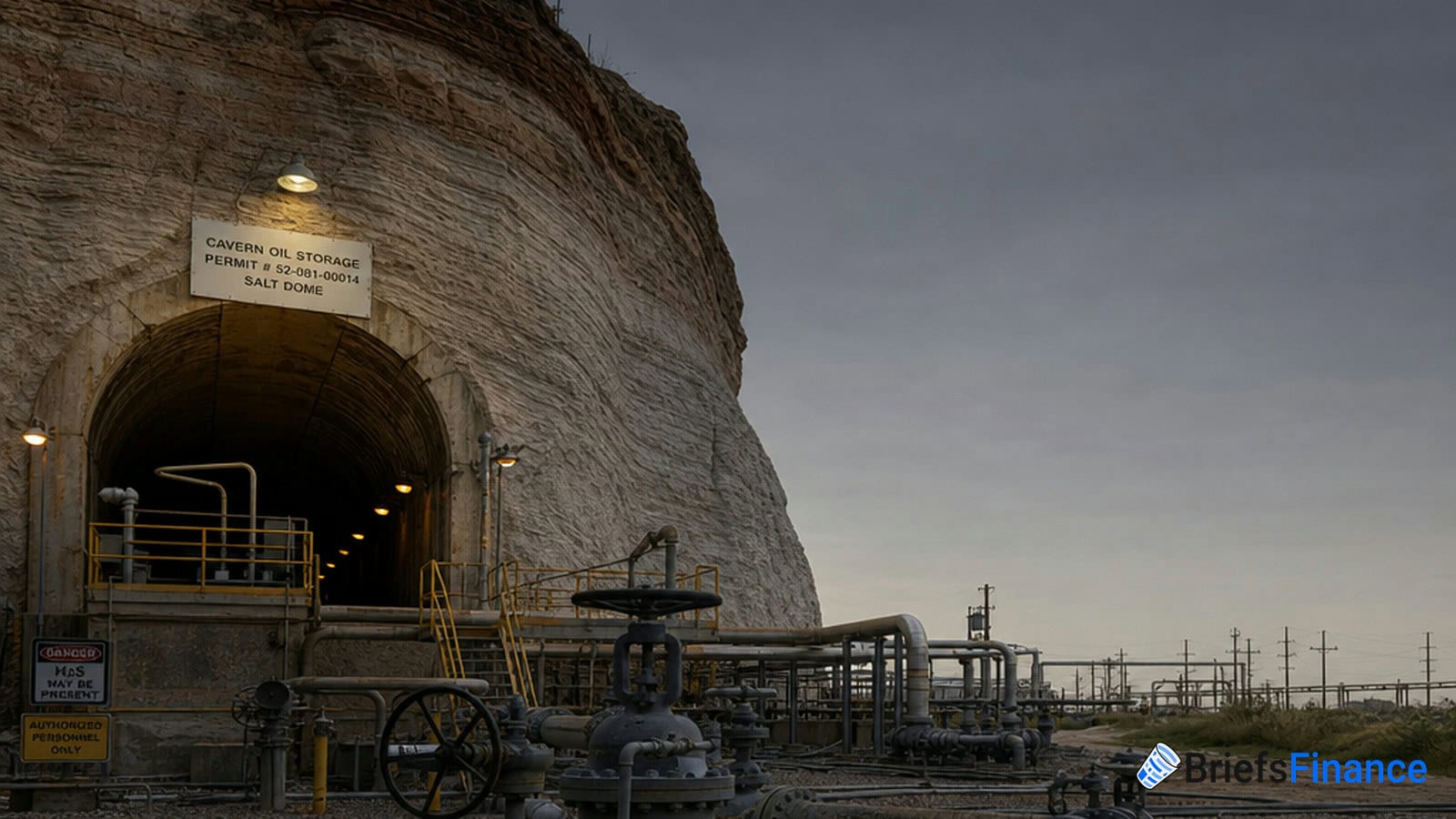
The Strategic Petroleum Reserve - or SPR - is the U.S. government's oil safety net. It sits across four underground sites along the Texas and Louisiana coast, each carved into natural salt domes that can hold crude at scale.
The reserve gets tapped when supply gets cut off or prices spike out of control.
Congress set it up after the 1970s oil shocks, when long gas lines taught the country a hard lesson about leaning on imported oil.
The first oil flowed in by 1977, and the SPR has been America's main backstop for energy emergencies ever since.
At its peak in December 2009, the SPR held about 727 million barrels - enough to cover months of U.S. oil imports if shipments were ever cut off. Today the reserve sits well below that mark.
Every morning, Market Briefs breaks down energy moves like this in five minutes - and you get a free investing masterclass when you sign up.
How It Got Here
The most recent drawdown is the immediate driver. Since late February 2026, the Trump administration has released about 75 million barrels from the SPR to blunt the supply shock from the war with Iran - including roughly 8.9 million barrels in the latest week alone.
That release pushed the reserve below its prior post-Cold War low of 346.7 million barrels, set in July 2023.
The bigger backdrop: the record 180-million-barrel release in 2022, after Russia invaded Ukraine and oil prices spiked. The White House pulled that crude over six months to keep pump prices from running away.
It worked - gas prices eased - but the reserve was cut close to half.
That 2022 release was the largest single sale in SPR history. It rolled out in waves over six months as the White House tried to blunt the energy shock from the war.
Why refilling has been slow: The government has been buying barrels back at a careful pace. Moving too fast would push oil prices up, so officials waited for cheaper crude to lock in better deals.
The Biden administration said in late 2024 that it had secured the full 180 million barrels back - about 59 million through direct purchases at an average price below $76 a barrel, plus 140 million in canceled congressionally mandated sales.
But the 2026 Iran-war release has wiped out much of that progress and then some, leaving the SPR well below pre-2022 levels.
Some barrels have come back through routine purchases, but the pace has frustrated lawmakers on both sides who want the reserve restored faster.
Each round of buying typically added only a few million barrels at a time, which is a small dent against the size of the 2022 release.
What To Watch
The SPR matters most when something goes wrong - a war in the Middle East, a hurricane in the Gulf, a pipeline outage. Those are the moments the reserve was built for.
Past releases during the Gulf War, Hurricane Katrina, and the Libya conflict helped steady prices when supply got squeezed. None came close to the size of the 2022 release.
Less oil in storage now means less of a cushion if the next shock hits - and industry experts have warned the depleted reserve leaves the country vulnerable to potential hurricane disruptions this summer.
For investors tracking energy, the setup has flipped. Instead of steady government buying putting a quiet floor under prices, the Trump administration's exchange program requires market participants to repay the oil from late 2026 through 2029 with an in-kind premium - meaning future buying demand is locked in, but the near-term flow is still net releases.
The U.S. is still the world's biggest oil producer. But the emergency tank hasn't been this low in 40 years.
If you want this kind of read on the market every day, join 350,000+ investors reading Market Briefs - a 45-minute investing course is thrown in as a bonus.