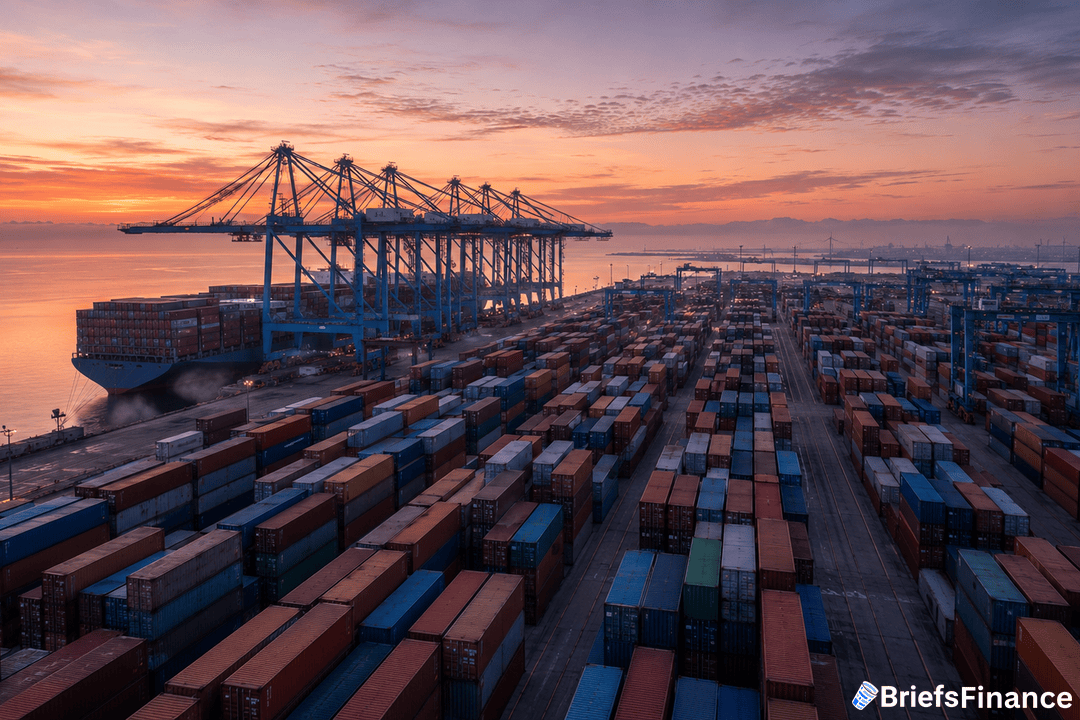
The U.S. isn't just complaining about Chinese overcapacity anymore.
It's running 16 economies through a formal probe, and the trade envoy says tariffs could follow if investigators find what they're looking for.
What Greer Actually Said
The Office of the U.S. Trade Representative wrapped four days of public hearings in Washington earlier this month, with around 150 witnesses from companies, foreign governments, and think tanks lined up to testify.
The probe was opened in March under Section 301 of the 1974 Trade Act, with Greer saying the next step depends on what investigators find. Beijing has already pushed back on the entire premise, calling the overcapacity allegation untenable.
For now, it's a process story. The action only starts if the findings give Greer the cover he says he needs.
Tariffs and trade rules can move stocks fast. Market Briefs translates moves like this in plain English every morning - you also get a free 45-minute investing masterclass as a welcome gift.
Section 301 Is The Big Lever
Section 301 is the same statute the Trump administration used to slap tariffs on Chinese goods during the first term, letting the executive branch act on unfair trade practices without congressional approval.
The USTR has cited a shrinking U.S. trade deficit with China and a rising share of manufacturing in GDP as evidence the strategy is working, with select sectors reshoring production. Translation: the White House sees tariffs as a working tool and is comfortable using the same playbook again.
Why It's Not Just China
The probe covers 16 economies rather than just one, broadening the trade fight into something closer to a global overcapacity review.
That list includes China, the European Union, Singapore, Switzerland, Norway, Indonesia, Malaysia, Cambodia, Thailand, South Korea, Vietnam, Taiwan, Bangladesh, Mexico, Japan, and India. Greer said it's in every country's interest to confront overcapacity, "whether that's from China or that's from Vietnam or Indonesia."
What To Watch
The USTR has not set a public deadline for findings, so any tariff move depends on when the probe wraps up and what it concludes.
The Supreme Court is separately weighing whether the White House can use the International Emergency Economic Powers Act for tariffs, and if those tariffs get struck down, Section 301 becomes the main fallback lever. Sixteen economies is a wide net. Which fish get caught is still TBD.
Trade policy changes how money moves, and where stocks go. Read Market Briefs every morning - a 45-minute investing course lands in your inbox as a bonus when you join.