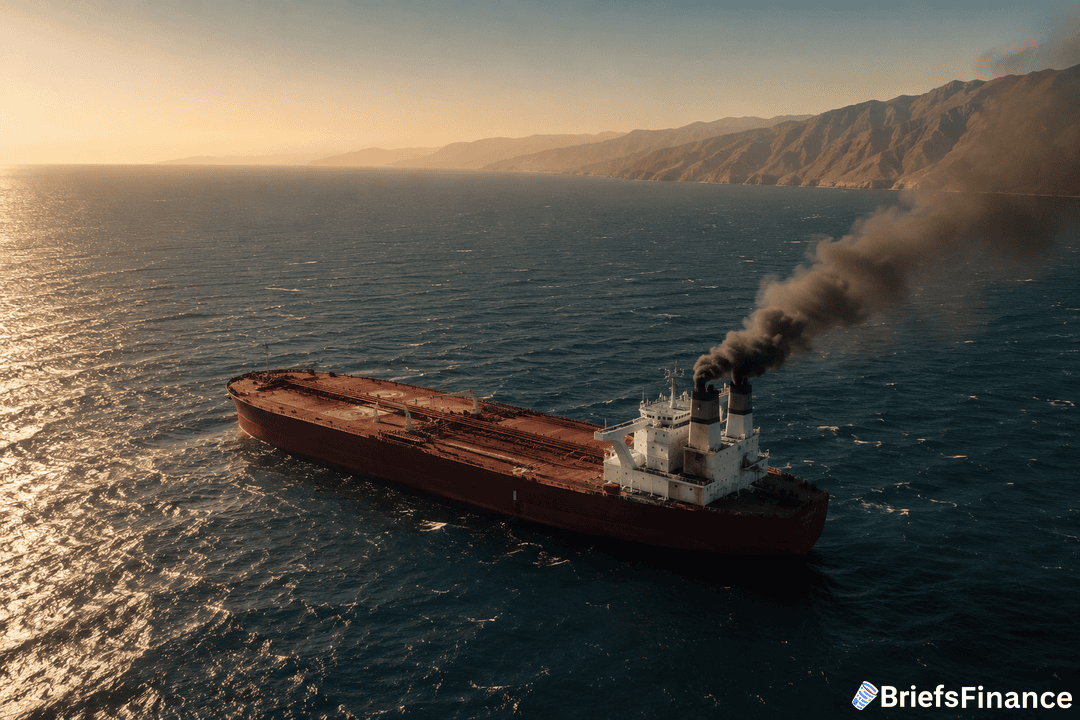
A U.S. fighter jet hit two Iran-flagged oil tankers in the Gulf of Oman on Friday morning.
Both ships were trying to skirt a U.S. naval blockade and reach an Iranian port. The pilot fired what U.S. Central Command called precision munitions into the smokestack of each ship, disabling both tankers.
CENTCOM released video of the strikes, and the Iranian government has not responded publicly.
The Second Armed Clash In Two Days
Friday's strike came one day after U.S. and Iranian forces traded fire in the Strait of Hormuz, with each side accusing the other of opening the shooting.
President Trump told ABC News that Thursday's exchange was "just a love tap." On Truth Social, he warned Iran would face more strikes if it does not come back to the table on a nuclear deal.
The Strait normally carries about 20% of the world's oil. That flow has been choked since the war began on February 28, when Iran effectively closed the waterway and the U.S. responded with a blockade of Iranian ports.
Energy markets have been off the rails ever since, with the International Energy Agency calling the situation "the biggest energy security threat in history."
Iran Is Still Reviewing The U.S. Proposal
A nuclear deal proposal from the U.S. is sitting on the desk in Tehran, with Iran saying Thursday it is reviewing messages relayed by Pakistani mediators.
Axios and other outlets reported the two sides are close to a 14-point memorandum of understanding to wind down the war and reopen nuclear talks.
Secretary of State Marco Rubio, speaking from Rome after a visit with Pope Leo XIV, said Friday morning the U.S. expects to hear back from Iran later in the day.
"The hope is it's something that can put us into a serious process in negotiation," Rubio told reporters.
Rubio also flagged a fresh wrinkle, with reports that Iran is trying to set up an agency to police traffic in the Strait of Hormuz. He called that "unacceptable."
The Strike Fits A Wider Campaign
Friday's tanker hit is part of a broader U.S. military effort tied to Operation Epic Fury, the joint U.S.-Israel operation that opened the war on February 28.
The unladen tankers had been heading toward an Iranian port in violation of the blockade, which CENTCOM has used to choke shipping in and out of Iran since the conflict began.
That blockade and Iran's effective closure of the Strait of Hormuz have paired up to drive the global energy supply shock now in its third month.
Worth Watching
The military timeline and the diplomatic timeline are running in opposite directions, with shooting escalating as the proposal sits in Tehran.
One of those is going to break first.