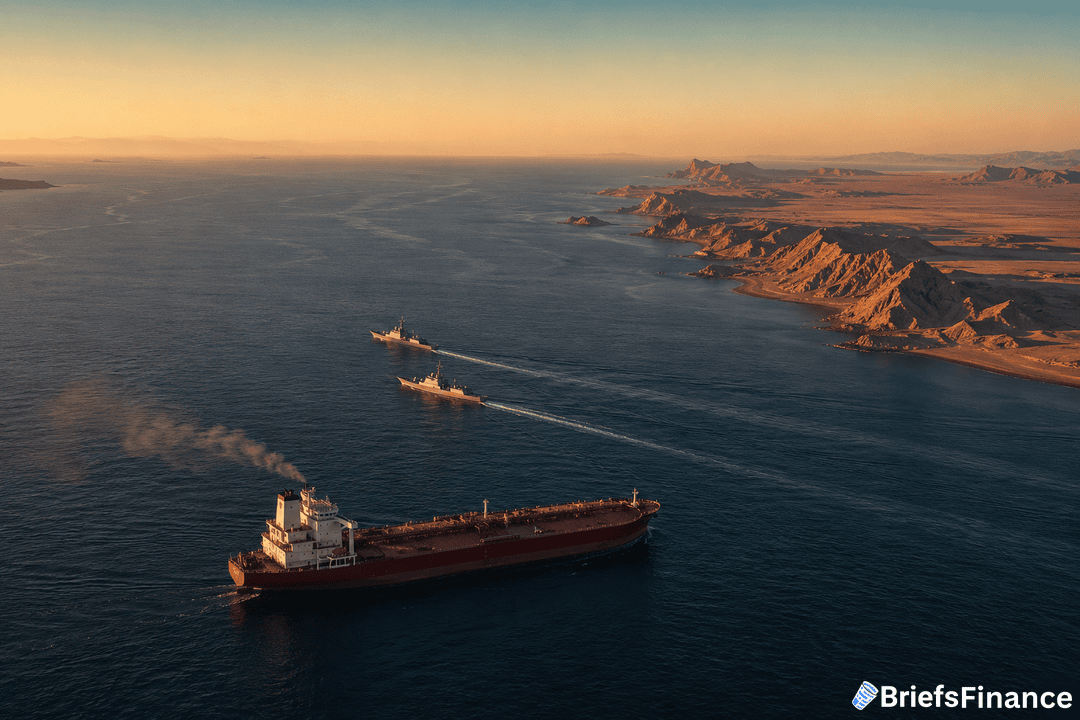
A month-long ceasefire between the U.S. and Iran is supposed to be holding. American warplanes are still hitting Iranian tankers, and Iran is still threatening to fight back.
Markets are watching one number: the price of oil moving through the Strait of Hormuz, the choke point that handles a big share of the world's daily oil trade.
A Ceasefire That Doesn't Look Like One
On Friday, U.S. Central Command said American jets crippled two Iranian oil tankers that were attempting to slip past Washington's blockade of Iran's coast. CENTCOM published video of the smokestacks getting hit by an American fighter, and earlier in the week U.S. forces said they shot down attacks on three Navy destroyers and struck Iranian launch sites and command nodes inside the strait.
President Trump told ABC News the strikes were "just a love tap" while saying the ceasefire is still in effect. He also warned Iran that if Tehran does not sign a deal soon, the next round will be "a lot harder, and a lot more violently."
Iran calls all of it a violation, with Foreign Minister Abbas Araghchi accusing the U.S. of choosing "a reckless military adventure" every time a deal looks close. Araghchi posted on X that Iran's missile inventory and launcher capacity are at 120% of their February 28 starting point, not the 75% the CIA had floated.
For investors, that gap matters because two governments with very different read-outs on Iran's military strength are negotiating the war's end. We unpack stories like this every weekday in Market Briefs, and you get a free 45-minute investing masterclass when you join.
What Each Side Says It Wants
Washington is waiting on Iran's response to a fresh proposal that would end the war, reopen the Strait of Hormuz, and roll back Tehran's nuclear program, per multiple reports.
Iran is talking, sort of, with Pakistani Prime Minister Shehbaz Sharif, who has been running shuttle diplomacy, saying his team is in contact with the U.S. and Iran "day and night." Russia and Saudi Arabia called for a "sustainable, long-term agreement," and Egypt and Qatar's top diplomats said diplomacy is the only way out.
Bahrain, which hosts the U.S. Navy's Fifth Fleet, said it arrested 41 people it claims are linked to Iran's Revolutionary Guard. The war on Tehran began on February 28, and the ceasefire took effect April 8 as a two-week truce that Trump unilaterally extended.
What To Watch
The next move is Iran's, and if Tehran signs the proposal, oil tankers can move through Hormuz again and oil prices have room to ease. If Tehran walks away, Trump has already promised harder strikes with more violence than the past week's exchanges.
This is a deal where every headline can move the price of fuel.
Sign up for Market Briefs and you'll get the daily newsletter delivered every weekday, plus a free investing course as a bonus.