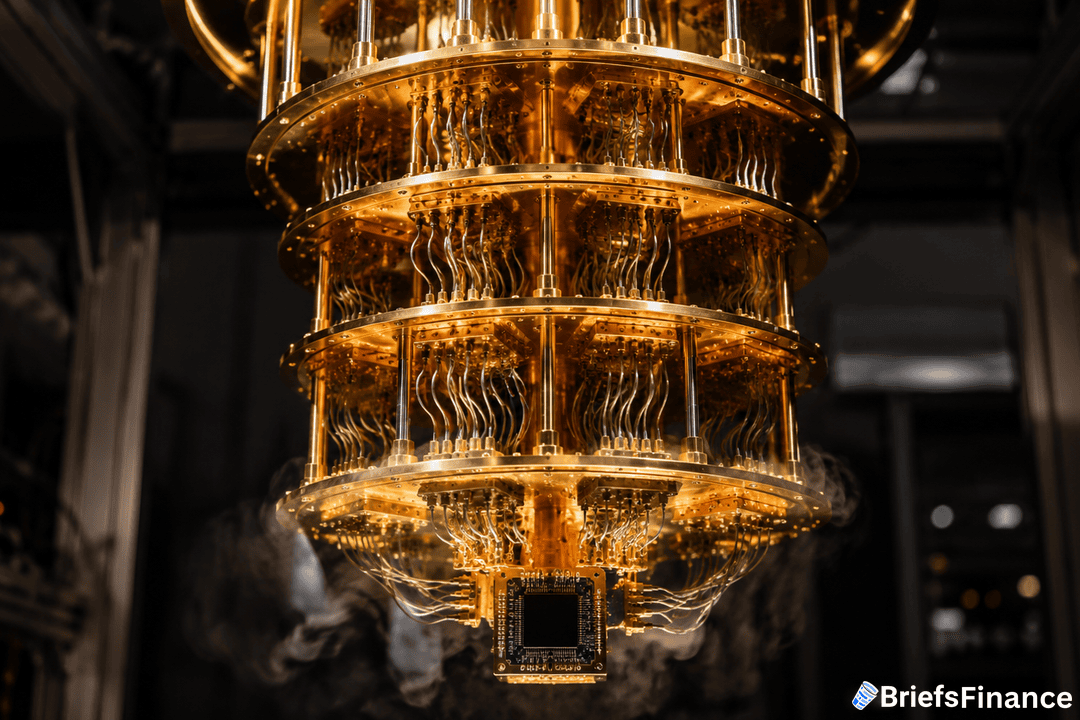
The U.S. government just made itself a partner in the quantum computing race. The Trump administration is awarding $2 billion in grants to nine quantum firms, and Washington is taking equity stakes in the companies as part of the package.
That's a big shift from how the U.S. has backed strategic tech in the past, where federal money used to come with strings but not ownership.
Who Gets What
IBM lands the largest piece at about $1 billion, with semiconductor manufacturer GlobalFoundries taking roughly $375 million on top of that. D-Wave Quantum, Rigetti Computing and Infleqtion are each in line for about $100 million.
Australian quantum startup Diraq picks up around $38 million, while IBM is also putting another $1 billion of its own into a new quantum chip foundry called Anderon, headquartered in Albany, New York.
The funding comes from the 2022 CHIPS and Science Act, which was originally passed to boost domestic semiconductor production.
Markets liked the news on Thursday, with IBM up 6%, D-Wave Quantum jumping 19%, Rigetti climbing 15%, and IonQ adding 9% in premarket trading. Across the publicly traded names tied to the package, stocks rose between 7% and 21%.
We unpack the policy moves and stock reactions that actually matter for your money in Market Briefs every weekday morning - new readers also get a free investing masterclass thrown in.
Why Equity Stakes Change The Game
Government grants for strategic tech are not new, but taking ownership stakes alongside those grants is, after the Trump administration already used the same playbook with chipmaker Intel and rare earth miner MP Materials.
Think of it like a venture capital deal where the U.S. Treasury is the investor. If the quantum firms hit it big, taxpayers share in the upside, and if they flame out, the government wears some of that loss too.
The driver behind all of this is China, with Washington ramping up direct investment in industries it sees as strategic for national security to keep pace with Beijing's state-backed buildout.
The Tech Still Has To Deliver
Quantum computers use the rules of quantum physics to crunch numbers in ways classical computers cannot. The theoretical use cases include drug discovery, materials science, logistics and cracking modern encryption.
The practical use cases are much thinner, with today's quantum systems spending most of their power correcting errors in their unstable qubits, the building blocks of quantum information. As of now, they don't outperform regular computers on real-world business problems, and that gap is what the $2 billion is trying to close.
What To Watch
The exact structure of the equity stakes hasn't been disclosed yet, and Commerce, IBM, GlobalFoundries, Rigetti, D-Wave and Infleqtion all stayed quiet when asked for comment. The deal still needs to be finalized, and the structure will tell investors a lot about how aggressive Washington plans to get with future tech bets.
If you want this kind of plain-English breakdown of where the money is moving, sign up for Market Briefs - five minutes a day, plus a 45-minute investing course as a bonus when you join.