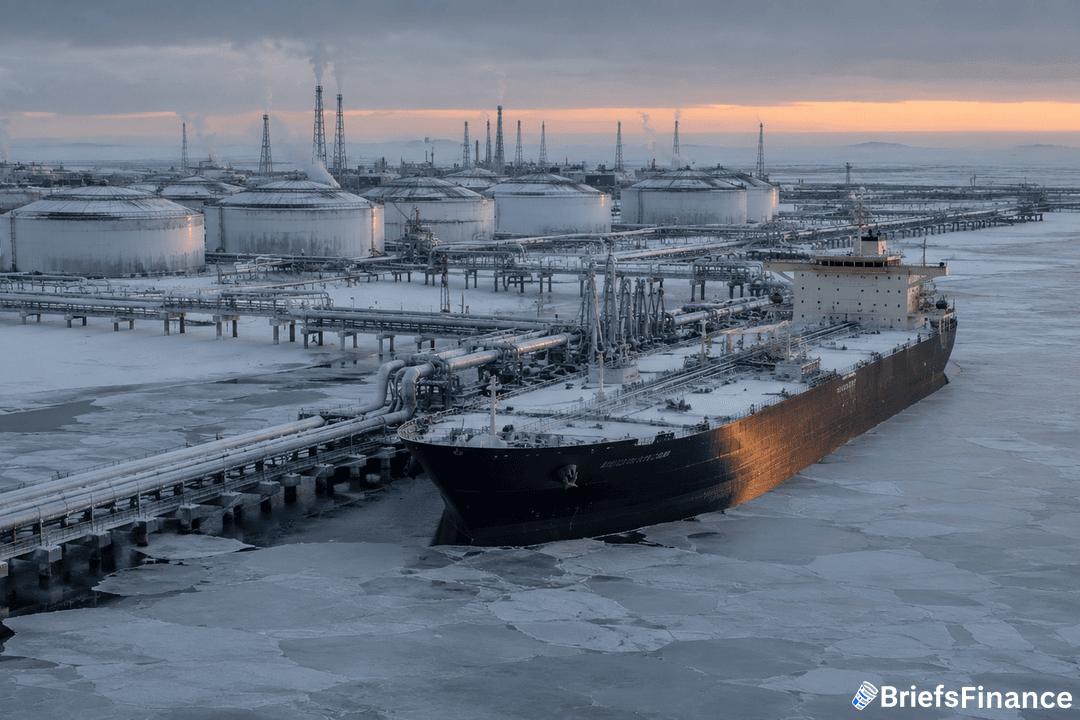
A war in the Middle East is making the ruble the world's hottest money.
Russia's ruble is up roughly 12% on the dollar since April 1. On Tuesday, the dollar rate briefly dropped under 71 rubles.
That had not happened in more than three years.
How Oil Did It
The Iran-Israel-U.S. conflict pushed oil prices higher. It also messed with shipping through the Strait of Hormuz.
That should be bad news for oil buyers around the world.
It has been very good news for Russian oil sellers instead.
Urals crude is Russia's main oil grade.
It went from $44.60 a barrel in February to $77 in March. By April it averaged $94.90.
That's more than double in two months.
Every dollar of that increase pumps more foreign cash into Russia's banks.
Net foreign cash sales by Russia's top sellers tripled in April to $7.3 billion, per central bank data. Sellers have to swap a chunk of those dollars into rubles.
That swap pushes the ruble's price up.
Want a daily read on the energy stories moving global markets? Market Briefs breaks it down each weekday morning, plus a free investing class as a bonus.
Why Russia Doesn't Love It
A strong ruble might sound good for Russia. The Kremlin has mixed feelings about it.
The government runs its budget on the ruble price of oil.
When the ruble strengthens, sellers get fewer rubles for each dollar of oil sold. That squeezes profits, dividends, and tax receipts.
Even Russia's own forecasts didn't see this coming. The government recently cut its expected 2026 ruble rate to 81.5 per dollar from 92.2.
But the currency is already trading near 72.6. Both calls now look badly off.
Finance Minister Anton Siluanov tried to wave it off. He said the ministry isn't worried as long as the ruble price of oil covers planned spending.
Economy Minister Maxim Reshetnikov was more direct. He warned the ruble may stay stronger "than many would like" under the current setup.
About 60% of Russia's imports are now paid in rubles instead of foreign cash. That keeps demand for dollars and euros low.
Add tight Russian interest rates and weak imports. There's just not much pressure pulling the ruble down.
What To Watch
Iskander Lutsko is a senior fund manager at Istar Capital. He said the ruble could climb further to 65 or 70 per dollar.
The other risk is the central bank pauses its rate cuts at the June meeting. That would be likely if Middle East tensions stick around.
It would keep the ruble even stronger for longer.
There's also a small offset from Russia's fiscal rule. Oil money earned above $59 a barrel gets used to buy foreign cash for the rainy-day fund.
That smooths some of the swings.
But the current oil windfall is so big that those buys are not enough to cap the rally. Russia bought 110 billion rubles worth of foreign cash and gold for the fund in May.
A war thousands of miles from Moscow is funding the country waging another one closer to home.
Sign up for Market Briefs for the morning version, plus a free 45-minute investing course when you join.