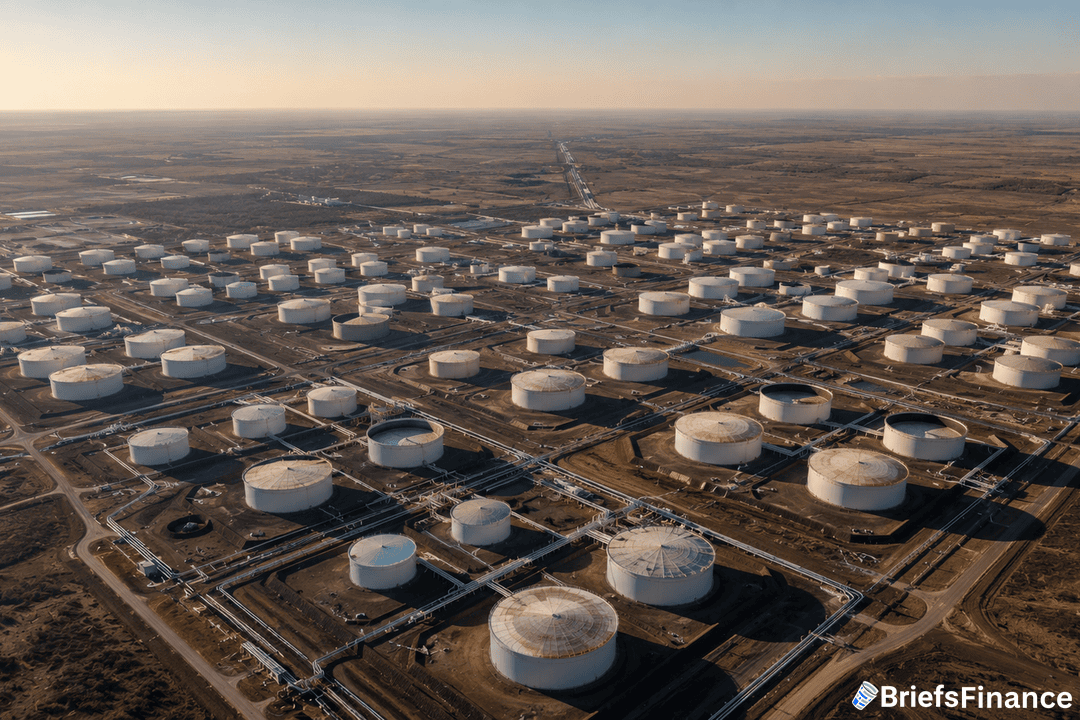
In late February, oil markets had a surplus. Stocks were full.
Forecasts called for more supply than demand all year. That story is gone.
Where The Oil Went
IEA chief Fatih Birol said Monday that oil stocks held by traders, refiners and storage firms have only "several weeks" of cushion left.
He said they are "declining rapidly." He was speaking from a G7 finance leaders meeting in Paris.
Two things flipped the picture. The U.S. and Israel attacked Iran at the end of February.
The Strait of Hormuz has been closed to shipping since then. That strait normally carries about a fifth of the world's oil.
With shipments stuck or rerouted, those stocks fell 246 million barrels in March and April. That was a record pace, the IEA said in its latest monthly report.
Last week, the IEA said global oil supply will fall short of total demand this year as the Iran war hits Middle East output.
The agency had earlier forecast a surplus for 2026.
Market Briefs breaks down moves like this in five minutes a day - and a free investing masterclass comes with the join.
The Reserve Cushion Is Thinning
The 32 IEA member countries pulled their biggest reserve release ever in March. They approved 400 million barrels.
About 164 million had been released by May 8.
That is adding 2.5 million barrels a day to global supply. It has bought time.
The release was meant to calm markets after the Iran war hit Middle East oil output.
But Birol made clear those reserves are not endless, and the rest of the year gets harder.
Spring planting in the Northern Hemisphere is starting now. Summer driving and flying season come next.
Both pull hard on diesel, fertilizer, jet fuel and gasoline.
That mix of demand drains stocks fast. This year is not normal.
IEA Cuts Its 2026 Supply Forecast
The agency now expects global oil supply to fall 3.9 million barrels a day across 2026. That is more than double the 1.5 million it had forecast earlier.
Birol described "a perception gap in the markets between the physical markets and the financial markets" for oil.
The physical market is tight. The financial market has not yet priced in the squeeze.
That gap usually closes one of two ways. Either new supply returns, or prices catch up to reality.
What To Watch
Brent crude and WTI are the two main global oil benchmarks. They are the cleanest tells.
So is the U.S. Strategic Petroleum Reserve, the country's main emergency oil stockpile.
Watch for any sign that Iran might restart shipping. That would be the fastest way to refill global stocks.
The other big tell is daily output from the Gulf. If barrels start moving again, the squeeze eases.
Watch oil futures too. A jump there would mean traders are catching up to the physical squeeze.
If reserves keep draining without new supply coming online, the cushion runs out faster than the calendar.
Sign up for Market Briefs and you will also get a 45-minute investing course thrown in for free.