Three weeks ago, Siemens CEO Roland Busch said the firm would send its AI cash to the U.S. and China, not Europe, over the EU's AI Act. The EU just made the rules he hated optional.
Lawmakers worked through the night and signed off in the early hours of May 7. They pushed the law's hardest parts to late 2027, more than a year past the old date. They also cut most factory AI from the law's scope.
What Industrial AI Means
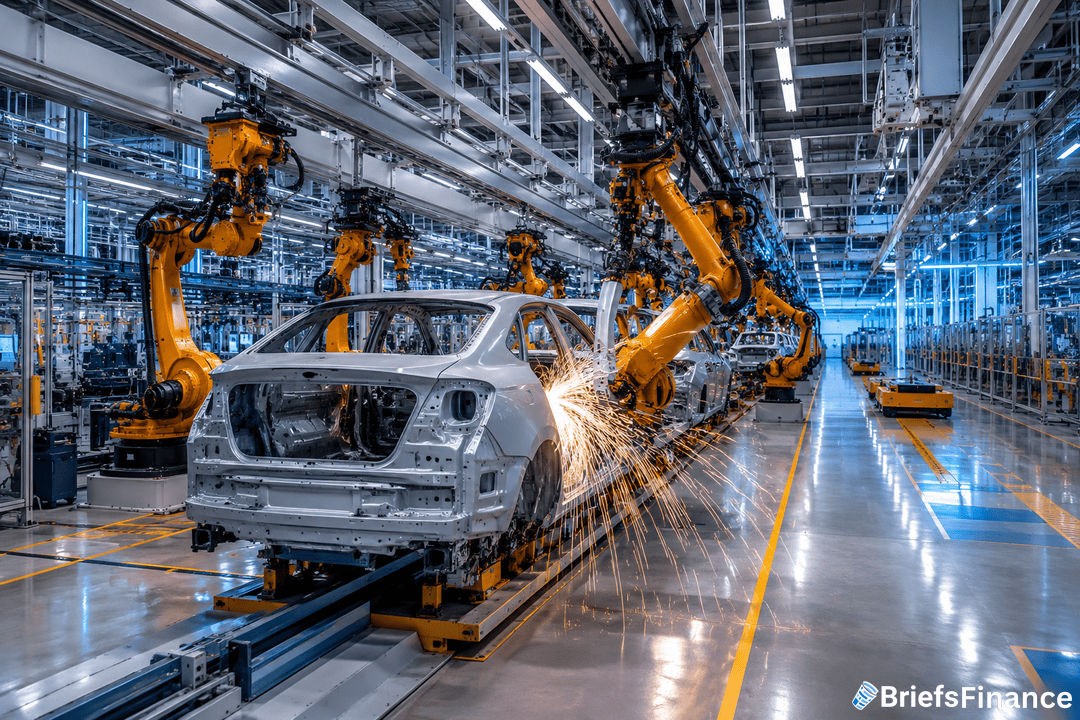
Industrial AI is the software that runs on factory floors and inside heavy machines. Think vision tools on assembly lines, wear sensors on turbines, and robotic control loops.
It is not the kind of AI that picks who gets a loan or who shows up in a deepfake. Siemens, Bosch, and other German firms argued for months that machine data is not the same as personal data.
The deal now agrees with them. Most factory AI uses will fall under old machine rules, not the AI Act.
Siemens alone has a stack of these tools across its plants in Munich, Erlangen, and beyond. The carve-out clears a path for Siemens to scale them up at home.
What Stayed In The Law
The deal is not a full retreat. Rules to label AI content still apply, and firms now have only three months to comply, not six.
The deal also added clear bans on AI-made deepfakes that show real people in sex acts and on AI-made child abuse content. Medical device AI was up for debate but did not get a pass.
EU Commission chief Ursula von der Leyen said the deal "provides a simple, innovation-friendly environment" while "strengthening protections for our citizens."
Why This Matters For Investors
This is the first big rollback of EU tech rules in years. Threats to pull cash from a small group of CEOs, backed by ASML, Airbus, SAP, Ericsson, Mistral, and Nokia, just moved the rules faster than years of public pushback.
For Siemens, the deal lifts a big drag on its AI plans in Europe. Germany's most valuable firm can now keep more of that work close to home.
For European tech as a whole, it's the clearest sign yet. Brussels is willing to compete on AI, not just write rules.
The Act was set to come into full force in August. That date now slips by more than a year for the rules that bite the most.
What To Watch
The deal still needs final formal sign-off. The political deal is locked.
The EU AI Act was set to be the toughest tech law on Earth. It just got a lot less tough.
Watch how German and French firms shift their AI spend now that the carve-out is in place. The rules just changed. The map of where AI dollars land in Europe will follow.
For investors holding shares of Siemens, ASML, or SAP, this is a near-term tailwind. For U.S. tech giants, it's one less wall to climb when selling AI tools into Europe.