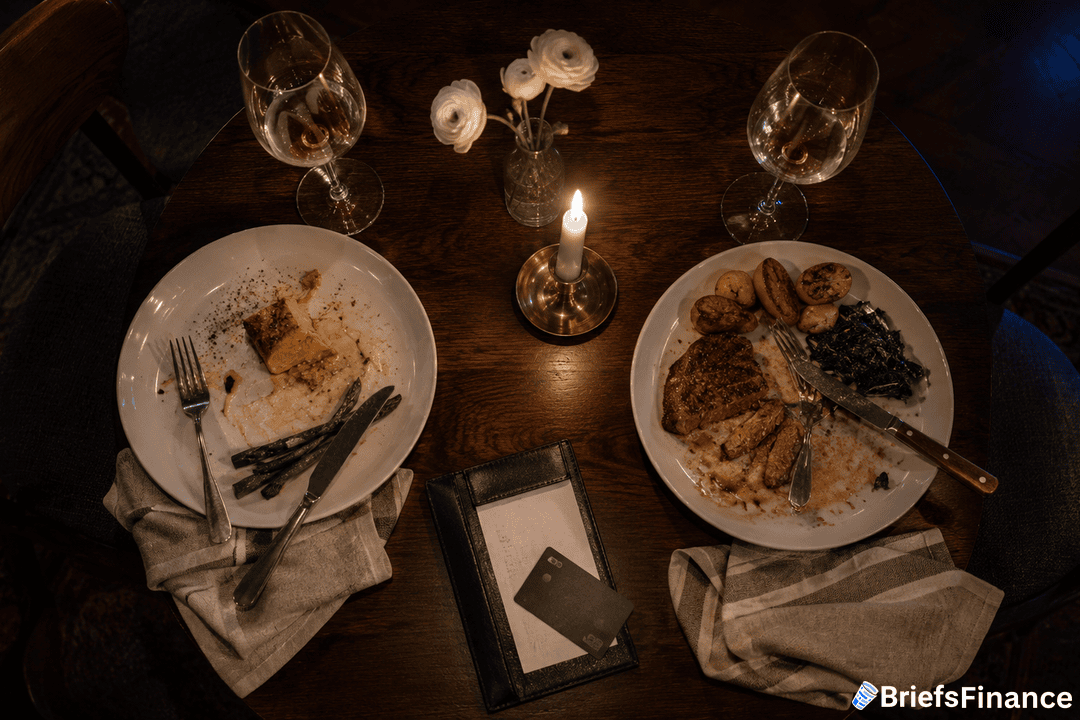
The cost of dinner is up, but the cost of a date is up a lot more. A new BMO survey pegs the average all-in date at $189, which is a 12.5% jump in a year that runs nearly five times the 2.7% inflation rate BMO measured it against.
The Generational Gap
The squeeze is hitting millennials hardest, with date spending climbing to $252 on average from $191 a year ago, a $61 jump in twelve months. Gen Z came in at $205 and Gen X at $173, while baby boomers actually trimmed a dollar, dropping from $127 to $126.
BMO's count includes everything: dinner, drinks, pre-date grooming, and even the gas to get there. The bank surveyed 2,501 adults from late December through January, and inflation has only worsened since, with the April Consumer Price Index, which is the government's main gauge of how fast prices are rising, climbing 3.8% year over year per the Bureau of Labor Statistics.
The behavior shift is showing up too, since half of Americans who date say they have gone out less often or downgraded plans because of cost. About 44% have rejiggered date plans entirely for financial reasons, while annual date count dropped from 14 in 2025 to roughly 12 today.
Romanoff told CNBC the higher cost is also pushing daters toward lower-stakes formats, with people choosing coffee or a walk over dinner because the financial risk of a dud first date keeps climbing.
If you want a five-minute morning read on how inflation is actually showing up in everyday life, Market Briefs covers it every weekday, and you get a free investing masterclass when you sign up.
Who Pays Got More Complicated
Higher prices revived an old debate over who covers the bill. About 71% of men told BMO they expect to pay for everything early in a relationship, while 52% of women want to split the bill roughly evenly and 38% expect the other person to cover it.
Sociologist Jess Carbino, formerly of Tinder and Bumble, told CNBC that economic uncertainty tends to push people back toward traditional gender roles "to buffer and to try to cope" with the moment.
Clinical psychologist Sabrina Romanoff pointed to a separate driver. She said social media is creating "gendered echo chambers" that feed men and women opposite scripts on dating money, with one side selling expensive first dates as proof of value and the other selling don't-spend-anything as the smart move.
Romanoff added that algorithms reward outrage, which means the loudest and most polarizing financial dating takes are the ones reaching the most people. That dynamic shapes which expectations land in the wild before anyone sits down at the table.
Worth Noting
When the average outing now runs $189, fewer dates happen and the ones that do show up come pre-loaded with expectation. That's a behavior shift dating apps, restaurants, and entertainment companies are already responding to, the same way consumer confidence at record lows is reshaping every consumer category.
Romanoff put it plainly when she said love is shrinking to fit people's budget, and the spending data agrees.
The underlying squeeze tracks with what the Bureau of Labor Statistics shows in the broader cost picture, with overall prices up 3.8% year over year through April.
Want the same plain-English read on inflation that just powered this article? Sign up for Market Briefs and join 350,000+ investors getting the daily, plus a 45-minute investing course on the house.