Free NewsletterPro Login

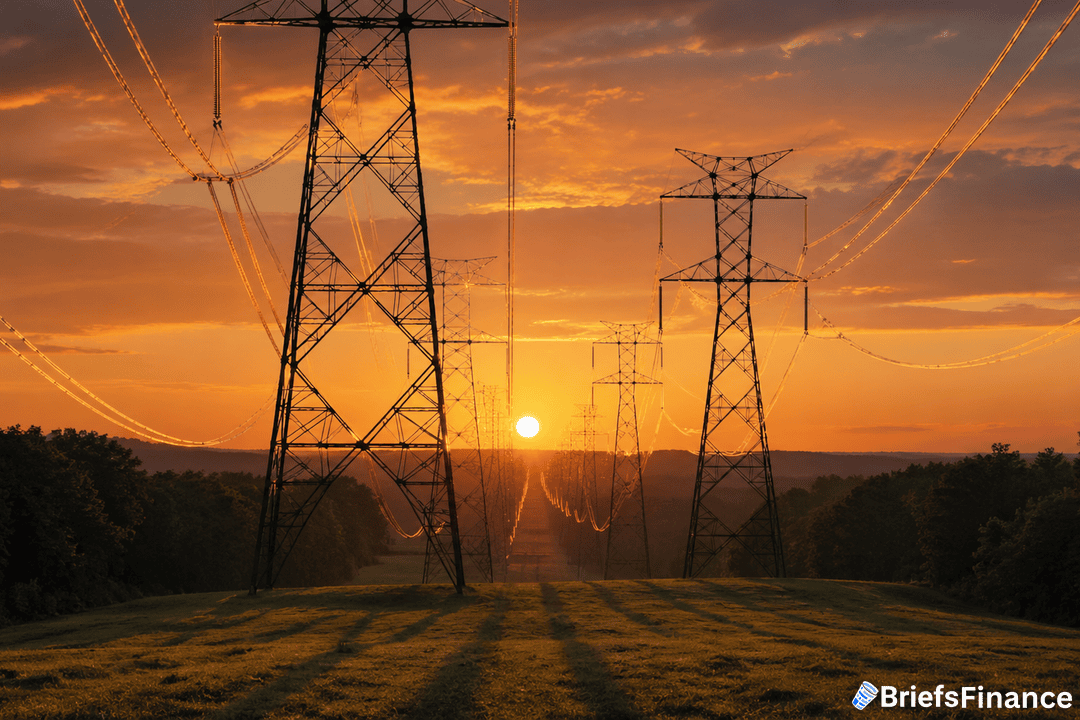
The AI Boom Is A Power Story, Not Just A Software One

Published Apr 25, 2026
Share:
Summary:
  • U.S. data center power demand is set to rise from 224 TWh in 2025 to 606 TWh by 2030.
  • McKinsey thinks meeting that demand will need roughly $500 billion in new gear and grid work.
  • Bain says U.S. power firms will need to add 100 to 200 gigawatts of new power by 2030 to keep up.

Most of the AI buzz is about chatbots, models, and the firms making them. Most of the money is going somewhere else.

The firms powering AI are signing 10 and 20-year deals. They're posting backlogs at record highs.

The list is broad. It includes power firms, gas turbine makers, and nuclear firms.

Add fuel cell makers and transformer suppliers.

Investors who only watch the chip and software side are looking at half the board.

Where The Money Is Flowing

McKinsey thinks meeting data center demand through 2030 will need roughly $500 billion in new gear. That covers power plants, grid work, and water cooling.

That money lands with power makers and gear makers. Not Nvidia.

Some of the receipts are public:

  • GE Vernova's total backlog reached $163 billion in Q1 2026, with gas turbine slots booked into 2029.
  • Constellation Energy locked in $2.2 billion in revenue from a single PJM auction.
  • Bloom Energy booked $7.65 billion in data center deals in just the first 90 days of 2026.

These are not guesses. They are signed deals.

Cloud giants are building AI supply now.

Why The Math Forces This

AI data centers run hot and run all day. Bain thinks U.S. power firms need to add 100 to 200 gigawatts of new power by 2030.

That's the same as 100 to 200 large nuclear plants. All built in just 5 years.

That's not happening through the existing grid. Lawrence Berkeley National Lab data shows the average new project now waits about 5 years to plug into the grid.

So cloud giants are building power on-site. Turbines, fuel cells, and small reactors are getting bought in bulk.

The buyers are Amazon, Microsoft, Oracle, and Google direct.

The buildout under the AI boom is real, signed, and already in motion.

Why It Matters For Investors

For investors, the power layer is where the AI boom shows up first. Chips and software get all the press.

But the firms making turbines, running nuclear plants, and selling fuel cells are winning. Their backlogs stretch into 2029.

That doesn't mean the chip story is over. It means there's a second leg to the AI trade.

It gets less press but just as much cash.

Several names are tied to this story. The list includes GE Vernova (GEV), Bloom Energy (BE), Constellation Energy (CEG), Vistra (VST), and Talen Energy (TLN).

Each has a piece of the buildout.

Worth Noting

The IEA thinks the U.S. will lead global data center demand growth this decade. Worldwide, data center power use is set to nearly double by 2030.

The cash flowing into U.S. power gear is one slice of that.

The chatbots get the headlines, but the power plants get the contracts.

For long-term investors, the question isn't whether AI is real. It's where to find the cleanest play on the buildout.

The chip names trade at high price tags. They have big expectations baked in.

The power names trade at lower price tags. They get less press too.

That gap is what makes this story worth watching now.
Disclosure

Get Market Briefs delivered to your inbox every morning for free!

No fluff. No noise. No politics. Just finance news you can read in 5 minutes.

Blogs

June 16, 2026
Tech Stocks: A Simple Guide for New Investors
  • Tech stocks are companies in the information technology and related sectors, from software to chips to the internet giants.
  • They've driven much of the market's growth, but they can be volatile and richly valued.
  • The smart approach is to understand what you own and not let one sector run your whole portfolio.
Read More
June 16, 2026
What Is a Joint Stock Company? A Simple Guide
  • A joint stock company is a business owned by many people, each holding shares of stock that represent a slice of ownership.
  • It's the basic idea behind every public company you can buy on the stock market today.
  • Owning a share makes you a part-owner, entitled to a piece of the profits and growth.
Read More
June 16, 2026
Capital Gains Tax in California: A Simple Guide
  • Capital gains tax is what you owe when you sell an investment for more than you paid for it.
  • How long you held it matters: long-term gains are taxed more gently than short-term gains at the federal level.
  • Smart investors lower the bill with tools like tax-loss harvesting and holding for the long run.
Read More
June 15, 2026
Top Covered Call ETFs: How to Compare Them
  • Top covered call ETFs are income funds that own stocks and sell call options against them to generate steady cash.
  • The best one for you is the fund whose income, holdings, and fees fit your goals, not simply the one with the flashiest yield.
  • They all share one trade-off: more income today, less upside in a big rally.
Read More
June 15, 2026
What Are Stock Options? A Plain-English Guide
  • Stock options are contracts that give you the right, but not the obligation, to buy or sell a stock at a set price by a set date.
  • There are two kinds: calls (the right to buy) and puts (the right to sell).
  • Options can multiply gains or wipe out your money fast, so they suit investors who already know the basics.
Read More
June 15, 2026
EBITDA Margin: What It Is and How to Calculate It
  • EBITDA margin measures how much core profit a company keeps from each dollar of sales, before interest, taxes, and accounting deductions.
  • The formula is EBITDA divided by revenue, shown as a percent.
  • A higher, steadier EBITDA margin usually signals a more efficient, more durable business.
Read More
June 15, 2026
What Is Taxable Income? A Simple Guide for Investors
  • Taxable income is the portion of your money the government can tax after deductions are applied.
  • Not all income is taxed the same: job income, investment income, and passive income face different rates.
  • Investors and business owners get more tools to legally lower their taxable income, which is a big edge over time.
Read More
June 15, 2026
What Is a Covered Call? How the Strategy Works
  • A covered call is an options strategy where you own a stock and sell someone the right to buy it from you at a higher price.
  • You collect cash, called the premium, up front, and keep it no matter what happens.
  • The trade-off: if the stock soars, your shares get sold at the set price and you miss the extra upside.
Read More
June 15, 2026
What Is Gross Margin? A Simple Guide for Investors
  • Gross margin is the share of each sales dollar a company keeps after paying the direct cost of whatever it sold.
  • The formula is simple: revenue minus cost of goods sold, divided by revenue, shown as a percent.
  • A steady or rising gross margin points to pricing power, and it is one of the first things smart investors check.
Read More
June 15, 2026
What Is a Dividend? A Plain-English Guide for Investors
  • A dividend is a cash payment a company sends you just for owning its stock, usually every three months.
  • Dividends are one of two ways stocks pay you, the other being the share price going up.
  • Dividends are never guaranteed, so the strength of the business behind the payment matters more than the size of the payment.
Read More
1 2 3 23
Share via
Copy link