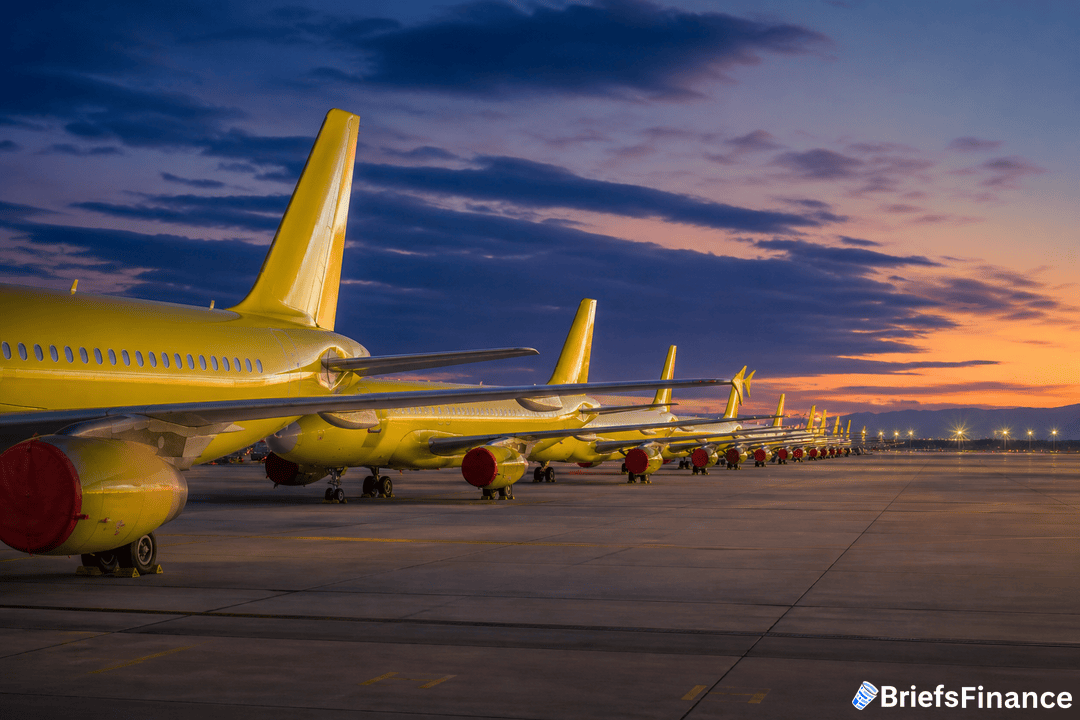
The plan was to be flying again by summer. Now Spirit is selling off its planes.
The low-cost airline filed for its second bankruptcy last August. It cut a deal with creditors to shed billions in debt.
Then the Iran war pushed jet fuel prices up. The math stopped working.
By 3 a.m. Saturday, every Spirit plane was on the ground for good.
The wind-down filing makes the Florida-based airline the first big US firm to fall to the new oil shock. It won't be the last, judging by jet fuel prices.
The numbers behind the wind-down
Spirit's court filing put a price tag on what's left of the airline:
- Jets and engines: about $1.3 billion
- Spare parts: $167 million
- Buildings, land, and gear: about $154 million
- LaGuardia takeoff and landing slots: $86.7 million
Spirit will try to cut sale deals with the lenders that hold liens on the planes. If a deal can't be reached, it will walk away from those jets.
Why? Keeping them costs more than they're worth.
Why the fuel spike was the final blow
Fuel is the second-biggest bill an airline pays. Worker pay is the biggest. So when oil and jet fuel prices jumped after the US-Iran war started, budget carriers like Spirit took the hit straight on the chin.
CFO Fred Cromer said in court papers that Spirit ate nearly $100 million in extra fuel costs over March and April alone.
The Trump White House floated a $500 million rescue. In return, the firm would have given up a stake. But a group of creditors and some GOP lawmakers pushed back. Late last week, Cromer said the deal was off the table.
By Friday, Spirit was running short on cash. By Saturday, every plane was parked.
What Spirit looked like before
Spirit was based in Dania Beach, Florida. It traced its roots back to the early 1980s.
The airline was the first big "ultra low-cost" carrier in the US. It built its model around tiny base fares and add-on fees for things like bags and seats.
When Spirit filed Chapter 11 last August, it had more than 11,200 workers. By the wind-down filing, that number had grown to about 14,000 direct staff. Spirit will keep about 150 workers on hand to run the wind-down. That number drops to 40 after the first few months.
Most of those 14,000 jobs are now gone.
What happens to flyers
Spirit told flyers to ask their card issuer for a refund on tickets that won't be flown. The airline will not be issuing refunds itself. Other carriers may step in to honor some routes. No formal deal has been struck yet.
What happens next
Rival airlines fought to buy Spirit when it was alive. A US judge blocked the JetBlue (JBLU %) deal in January 2024 on antitrust grounds. A revived Frontier (ULCC %) merger in this latest court case went nowhere.
Now those same carriers will bid on Spirit piece by piece. The most prized assets are the LaGuardia slots. They're worth $86.7 million on paper but could fetch more in a bidding war.
Asset sales are likely to start within weeks. The wind-down team will set the order based on what brings in cash fastest.
Worth Noting
A 34-year-old airline survived two bankruptcies and got beaten by a fuel bill.