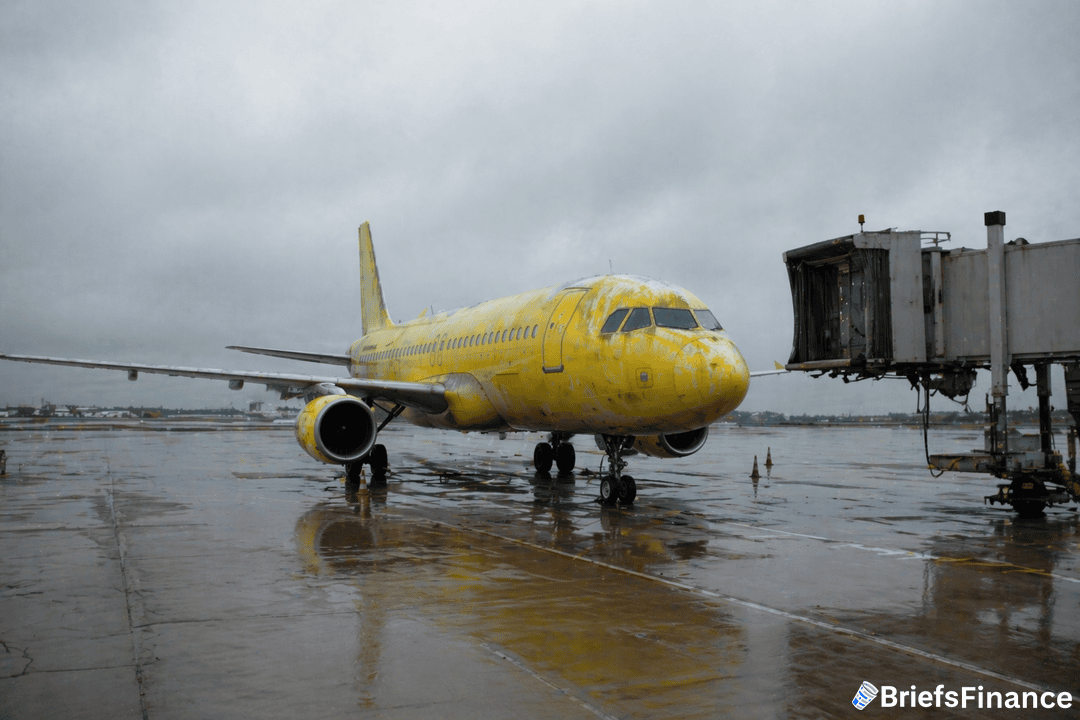
Spirit Airlines is close to a $500 million rescue package from the federal government, according to people familiar with the talks. The deal includes warrants that could give the U.S. government up to 90% ownership of Spirit once it emerges from bankruptcy.
That ownership structure would make it the first government rescue of a commercial U.S. airline since the post-9/11 CARES Act era.
How the Deal Would Work
The package starts as a short-term loan that keeps Spirit running during bankruptcy. Once Spirit exits Chapter 11, the loan converts into longer-term financing with attached warrants.
If the government exercises those warrants, taxpayers would own the majority of Spirit, similar to the 2008 auto bailout blueprint. The government would then sell the stake back into the market once the airline is stable, recouping funds for the Treasury.
How Spirit Got Here
Spirit filed its second Chapter 11 bankruptcy in August 2025, less than a year after its first, as losses piled up on unit economics the airline could not fix. Right before the Iran war started on February 28, Spirit announced a plan to emerge from bankruptcy by summer 2026.
The problem: the war killed that plan, since jet fuel costs have roughly doubled since February. Spirit warned in its March annual financial report that the fuel jump would have an "immediate and substantial negative impact" on its finances.
Fitch Ratings added to the pressure by warning that "financially weaker airlines...could default and/or return aircraft early" if fuel stays elevated.
Trump's Take
Trump hinted at the rescue during a CNBC Squawk Box appearance on Tuesday.
"Spirit's in trouble, and I'd love somebody to buy Spirit. It's 14,000 jobs, and maybe the federal government should help that one out," he said.
That public comment telegraphed what the administration had been negotiating behind the scenes, which also likely pushed Spirit's bond prices up as traders repriced the recovery odds.
The Broader Airline Impact
A Spirit rescue also buys the rest of the industry time, because a disorderly Spirit liquidation would dump planes and pilots onto a weak market and drag rival valuations lower. Delta, United, and American have all seen their credit default swaps widen as jet fuel prices climbed through March and April.
Lessors, airports, and regional carriers tied to Spirit routes would also take immediate hits in a liquidation scenario. A structured rescue keeps those dependencies intact while the government works through restructuring plans.
What to Watch
A government stake in a commercial airline is unusual outside of major crises. If the deal goes through, it signals that the administration sees Iran war damage to airlines as serious enough to intervene, and it could pull other weak carriers toward similar negotiations.
Watch JetBlue and Frontier commentary for early signs of more rescue asks.