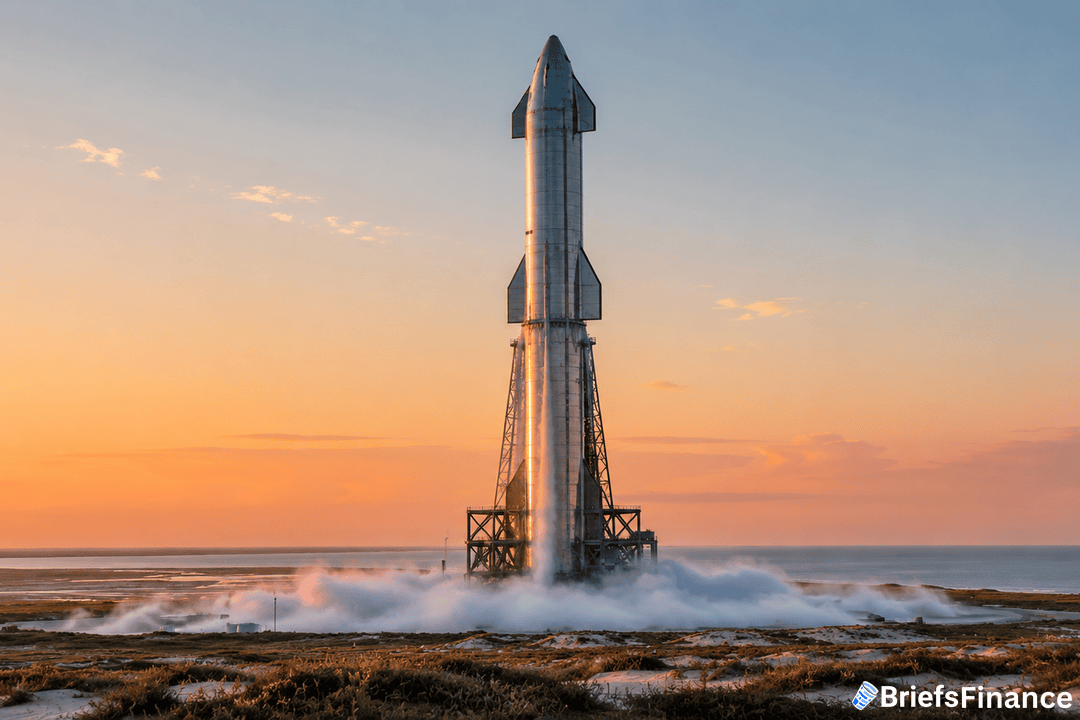
SpaceX just sent the biggest rocket ever built into the sky. Two days earlier, it filed paperwork to take the whole company public.
Those two events are not unrelated, and the timing tells you everything about how the company plans to sell itself.
Starship V3's Test Flight
Starship V3 lifted off from Starbase, Texas on Friday. It carried 20 dummy Starlink satellites and flew halfway around the planet before splashing into the Indian Ocean and erupting in flames on impact.
That part was planned. SpaceX wasn't trying to recover anything on this run, and the booster also crashed into the Gulf of Mexico, which was also planned.
The 407-foot V3 is taller, heavier, and more powerful than earlier Starship models. Musk called it "an epic" launch.
The ship lost one engine during the flight but completed most of its planned objectives. The booster failed its return burn, which was less clean - but with nothing being recovered on this run, the failure was internal data, not a public setback.
If you want a five-minute daily read on the IPOs, deals, and tech moves driving markets, Market Briefs is delivered every weekday morning - and a free investing masterclass comes with sign-up.
The IPO Sits Behind It
This is the 12th test flight of Starship. It's the first since SpaceX confirmed plans to go public at a reported $1.75 trillion valuation, which would make it one of the largest listings in U.S. history.
In an SEC filing this week, SpaceX disclosed it has invested more than $15 billion in Starship development. That number matters now, because public investors will want to see what they're buying.
Think of this launch as a pre-IPO demo. It's a chance to show the most expensive rocket program in the company isn't just a money pit, it actually flies.
The other half of the IPO pitch is Starlink. The satellite internet business is the actual cash engine inside SpaceX, and its $11.4 billion in 2025 sales is what makes the rest of the math work.
NASA's Moon Plan
NASA is paying SpaceX billions of dollars to deliver lunar landers for the Artemis program. Jeff Bezos' Blue Origin is also building a lander with NASA money.
Whichever company is ready first - and safer - gets to land astronauts back on the moon. The first crewed landing under Artemis IV could happen as soon as 2028.
Blue Origin's Blue Moon lander hasn't flown yet, while Starship just notched another working test flight. That gap is one of the more concrete arguments for SpaceX's valuation, since it suggests the company is closest to closing on contracts that span the next decade.
What To Watch
The IPO is the bigger event for investors. SpaceX has been the most valuable private company in the U.S. for years, and a listing would reset benchmarks across the space and defense sectors.
A successful launch days before the filing details get scrutinized is exactly the kind of headline a banker wants on the table.
Join Market Briefs here for the daily morning recap - and we'll throw in a 45-minute investing course as a bonus.