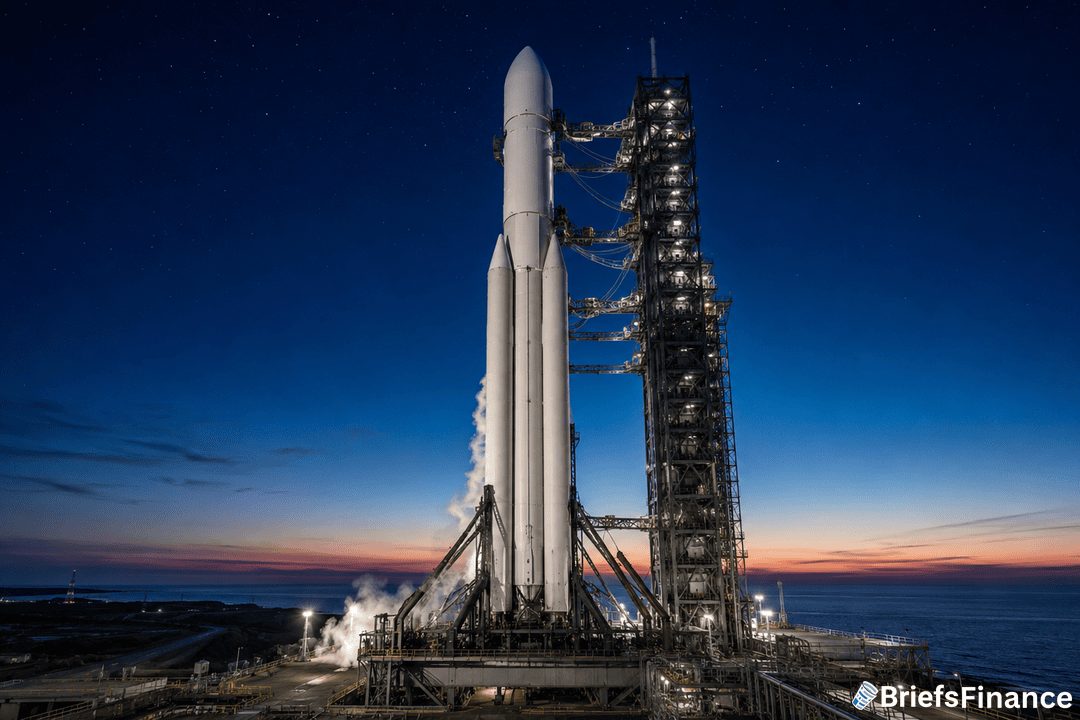
The biggest U.S. IPO ever happened in 2014, when Alibaba raised $22 billion - and SpaceX is about to triple that.
Elon Musk's rocket and satellite company is targeting up to $75 billion in a June offering, according to a prospectus released to the SEC on Wednesday, and in a twist from how most IPOs work, regular investors are getting a real shot at the offering price.
Why Retail Investors Are Getting A Bigger Slice
For most "hot" IPOs, about 95% of shares go to big institutional investors like Wall Street banks - but SpaceX is reportedly flipping that math, opening as much as 30% to retail through Robinhood, Fidelity, and Charles Schwab.
Jay Ritter, who runs the IPO initiative at the University of Florida, says Musk has a reason for it. Tesla has a huge retail shareholder base, and SpaceX wants the same setup, since customers who own the stock are more likely to subscribe to Starlink or use X.
Just don't expect to get all the shares you ask for. "A client of Schwab or Fidelity who asks for 500 shares ... will [likely] receive fewer shares than requested," Ritter said.
If you want a 5-minute morning read on stories like the SpaceX IPO, Market Briefs has you covered - and you get a free 45-minute investing masterclass when you join.
The Catch: A Tiny Float
Float is the slice of a company's stock actually available to the public, and SpaceX is rumored to go to market with about 5% - which IPO experts say is unusually small.
"Anything below 7%, you have to be really careful," said Josef Schuster, founder of IPO research firm IPOX Schuster - because a tiny float can spark a first-day pop but also makes the stock far more volatile if anything goes wrong.
From 1980 through 2025, IPO stocks have averaged a 19% pop on their first day of trading, per Ritter. But on average, the move from open to close on day one is about zero.
Worth Noting
The numbers do work in SpaceX's favor on one front. Companies that go public with at least $1 billion in trailing sales tend to keep up with the market over the next three years, while smaller companies usually underperform.
Both Ritter and Schuster say not to dump a big chunk of your portfolio into any single IPO, and they point out a lot of IPO winners were actually cheaper to buy months after their debut than on day one.
Investors who want a piece without the day-one risk can already get one through mutual funds - Baron Opportunity, for instance, holds 13.8% of its portfolio in SpaceX at last report.
The biggest IPO in U.S. history is also the rare one welcoming everyday investors. The size of the door doesn't change the size of the risk.
Join 350,000+ investors reading Market Briefs every morning - and snag a free 45-minute investing course when you sign up.