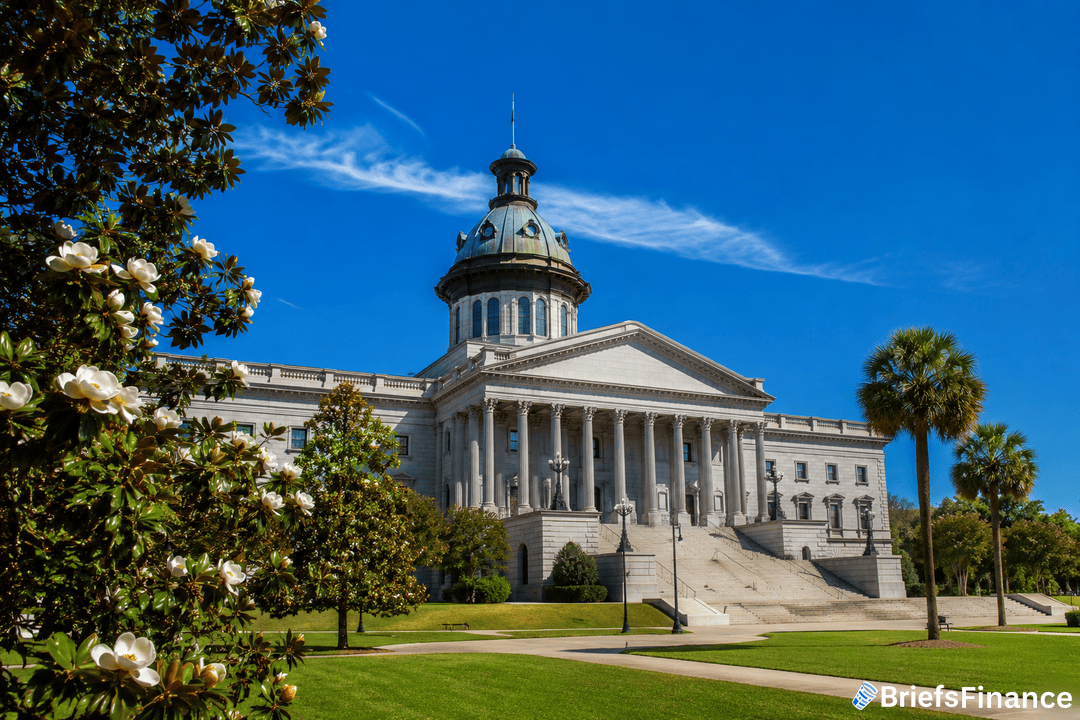
South Carolina just drew two lines in the sand. People can hold Bitcoin in self-custody and use it to pay for things.
The state, though, cannot touch a federal digital dollar.
Governor Henry McMaster signed Senate Bill 163 into law on Tuesday. The bill adds a new chapter to the state code just for crypto rights.
What The Law Says
The bill came from state Senators Daniel Verdin and Matthew Leber. It took 17 months to pass.
The bill cleared the state Senate 38-1 and the House 110-1.
The law protects:
- The right to use crypto to pay for legal goods and services
- The right to hold crypto in self-hosted or hardware wallets
- Crypto mining sites in zones set for industry
- Node runners, stakers and coders, who do not need money-mover licenses
State and city offices cannot charge extra tax just because a payment was made in crypto.
Local rules that single out miners with strict zoning or noise limits, while other firms get a pass, are blocked too.
That last bit matters for big mining sites. They can now plan builds without fear of one-off rules.
We break down what state crypto policy means for investors in Market Briefs. Five minutes a day, with a free investing masterclass when you join.
The Federal Dollar Ban
The same law bans state offices from taking payments in a federal digital dollar. It also blocks them from joining any Fed test or pilot.
A CBDC, under this law, is a digital coin sent out by the Fed or a federal office.
Private stablecoins backed by treasuries, like USDC, are not part of the ban. They stay legal in the state.
That gap matters. Private stablecoins keep running. A federal digital dollar gets locked out.
The law tells the federal side to stay out. But it leaves the door open for private firms to keep building stablecoin tools.
Why It Matters For Investors
The law keeps the state's top lawyer in charge of fraud cases. That includes fake mining or staking offers.
So buyer guards stay in place.
Large miners may still need to share power deals with the state grid panel. That helps prove they can ease grid stress at peak times.
The rules give crypto firms a clear set of guardrails in a state that has been one of the more careful US states for finance.
Clear rules like these can pull more capital and jobs into the state.
Worth Noting
Nine other states have passed similar "Bitcoin Rights" laws. South Carolina just made it ten.
The Satoshi Action Fund has been pushing model bills like this through state houses.
The 38-1 Senate vote is a bigger sign than just crypto policy. In this state, Bitcoin rights is no longer a left-right fight.
Watch what other states do next. The same model bill keeps moving through statehouses across the country.
For now, the state has set a clear line. Crypto stays.
A federal digital dollar does not.
The lopsided floor votes show how much support the model has built up.
The split makes sense. Voters want cash they hold. They do not want the Fed in their wallet.
That view now cuts across both parties.
If more states pass laws like this, the road to a US CBDC gets longer. Each "no" at the state level raises the bar.
Join Market Briefs for the daily read on crypto, policy and markets. Delivered weekday mornings with a 45-minute investing course thrown in as a bonus.