
- Blockchain is a digital ledger that records every transaction on a public network.
- Once a transaction is recorded, it cannot be changed or deleted.
- It is the foundation of Bitcoin, Ethereum, and thousands of other cryptocurrencies.

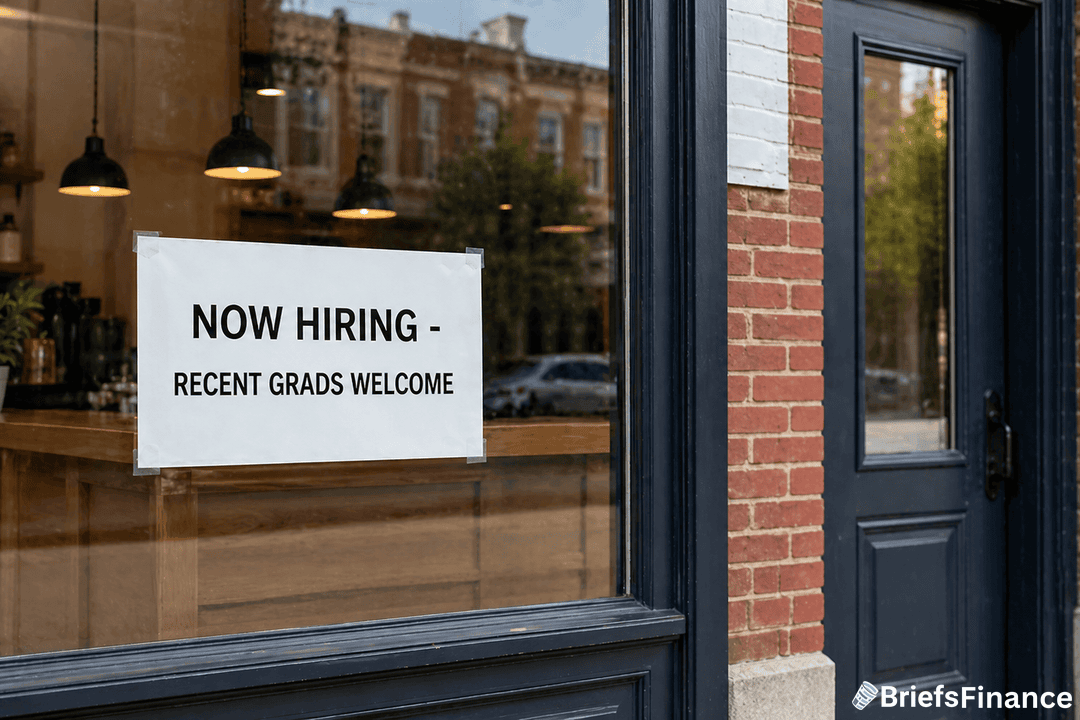
The job market for new grads looks rough on paper. Big firms are slowing hires, AI is chewing through entry-level work, and layoff headlines keep coming.
The people writing offer letters this spring tell a different story. They run small shops, and they want to staff up.
Gusto's read of more than 500,000 small employers shows close to 1 million new-grad hires this season. That's a hair above last year's pace.
Zoom out to the full class of 2026 and hiring plans are up 5.6% from 2025, per the National Association of Colleges and Employers. The bigger picture is steadier than the panic headlines suggest.
Hiring at small firms peaked above 1.3 million in 2021 before falling 29% to a low in 2023. It has held just under 1 million for three years running, which means this is the floor, not a fall.
Aaron Terrazas, an economist at Gusto, told CNBC that small firms soak up most of the workforce. They can also pivot fast when the market shifts, so some of the panic from new grads is early.
Pay is moving up too. Starting pay for new grads ages 20 to 24 at small firms now averages $65,734, up from $62,801 a year ago.
Higher prices have eaten through most of that gain, but the trend is still up. That matters for the consumer story we'll get to.
The grim story isn't fake, just smaller than the headlines suggest. From January 2023 through November 2025, total small-business jobs grew 9.6%, while jobs in roles most exposed to AI grew just 3.4%.
Workers ages 22 to 28 in those AI-exposed roles have seen headcount drop, even as the wider small-business workforce kept growing. That gap is the real story under the surface.
Mark Cuban told CNBC new grads should aim at small and mid-sized firms, even if it means lower starting pay. His pitch is simple: the class of 2026 spent all of school in the AI era, and small firms need that skill in the door.
Cuban also said more grads will start their own firms, since starting one is cheaper than ever. That fits with what Gusto sees on the ground.
Drexel found a different read, with small firms under 500 workers 30% more likely than big ones to skip new-grad hiring this year. Even with that group, the wider trend still points to roughly 1 million new hires.
The class of 2026 is walking into a split labor market. Big tech and AI-heavy white-collar roles are tightening, while small service firms are leaning the other way.
For investors, the real signal is in spending power. A million new grads earning around $65,000 each pumps a lot of fresh payroll into the consumer economy.
That's the line Wall Street will track next. Watch retail and travel data in the second half of the year for early signs.









