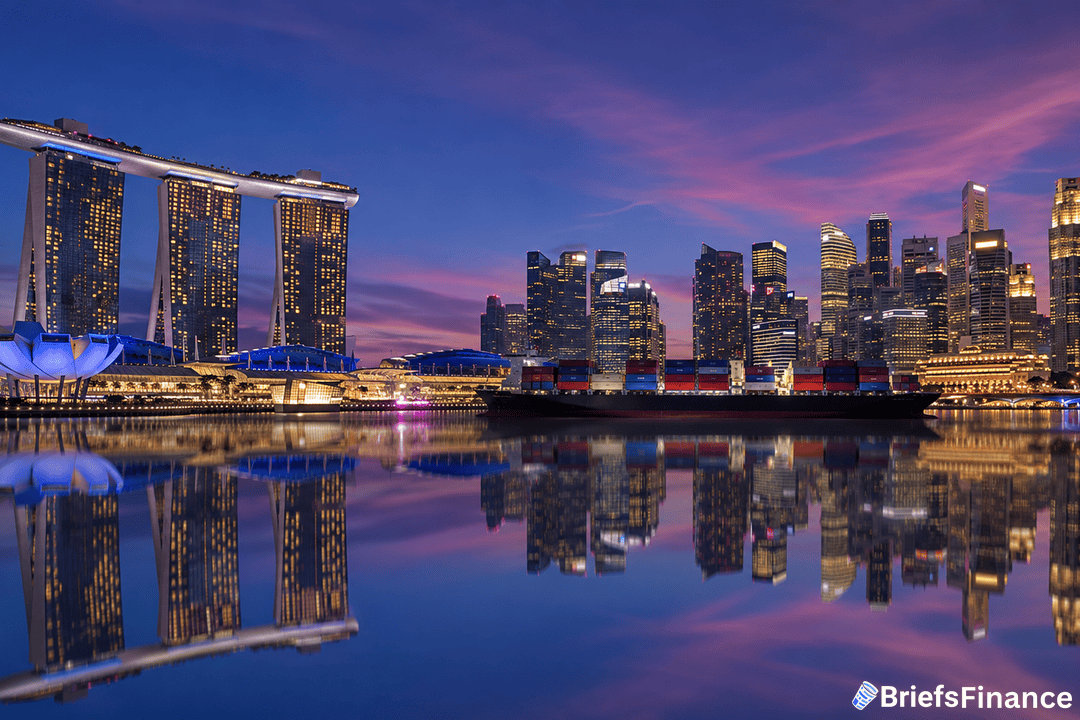
Singapore had a good Monday on paper, with growth coming in stronger than anyone expected and inflation coming in softer.
Then the warning landed.
The Monetary Authority of Singapore and the trade ministry put out a joint note saying imported cost pressures from the Middle East are about to "pick up and broaden in the months ahead." In plain English: enjoy this print while it lasts.
The Numbers Surprised To The Upside
April's consumer price reading was the headline, with Singapore reporting a 1.8% rise in prices vs the 2% that Reuters-polled economists had penciled in.
Core inflation, the version that excludes private transport and accommodation, registered 1.4% against a 1.7% forecast. Services, retail, and other goods inflation all ran cooler than expected, which echoes the broader pattern of inflation cooling across developed economies this year.
The growth number was even better. The country bumped its Q1 GDP figure up to 6%, a sharp jump from the 4.6% it reported in advance estimates, and well above the 5.1% economists were looking for.
Zavier Wong, who covers markets at trading platform eToro, called the reading "a mild positive surprise."
Wong pointed to progress in Middle East peace talks and recent easing in oil prices as factors that could open a "credible path to some imported cost relief" later in the year.
For investors trying to read what global growth signals mean for their portfolio, Market Briefs breaks it down every morning in five minutes - and you get a free investing masterclass when you join.
The Middle East Risk Is Still Coming
Here is the catch. The MAS expects headline and core inflation to land between 1.5% and 2.5% for all of 2026, a range wide enough to include both "fine" and "not fine."
The reason is simple: Singapore imports almost everything it uses. Higher energy costs and supply chain disruptions in the Middle East do not show up in the local price data right away, since they flow through global shipping and supply chains first, then hit later.
The country's trade and industry ministry said full-year growth should land between 2% and 4% in 2026, partly because of the Strait of Hormuz situation. That is a much slower pace than the 6% Singapore just put up in Q1.
Worth flagging: the MAS tightened policy in April for the first time in around three years, according to CNBC reporting.
Singapore manages money differently than most countries. Instead of changing interest rates, it guides the Singapore dollar inside a band against a basket of currencies, so the fact that the central bank tightened at all says something about how seriously policymakers took the inflation risk.
Worth Noting
Singapore is a global trade barometer. It runs on imports, exports, shipping, and finance, so its economic numbers tell investors a lot about whether the world economy is holding up.
Right now the picture is mixed: growth is hot, inflation is cool, the Middle East is a wild card, and the central bank is already on alert.
The next few months will show whether the cost wave actually arrives, or whether Iran talks and softer oil keep it offshore.
If you want this kind of look at the global economy every weekday, join the investors reading Market Briefs and grab the 45-minute investing course that comes free with your signup.