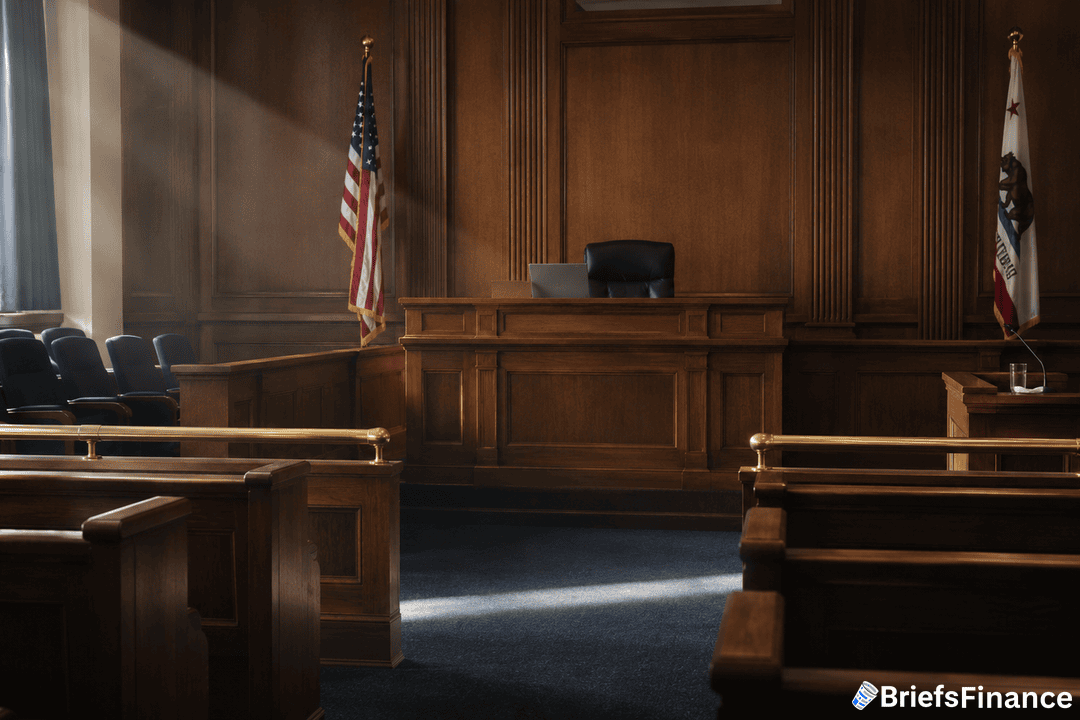
When Sam Altman walked into federal court Tuesday, the case wasn't really about the roughly $38 million Elon Musk donated nearly a decade ago. It was about who has a claim on a company now worth close to a trillion dollars.
Musk sued Altman, OpenAI, and president Greg Brockman in 2024, arguing they broke their founding promise to keep the company a nonprofit. Altman's answer from the witness stand was simple: Musk walked away first.
The "Left For Dead" Version
Altman testified that OpenAI's co-founders spent late 2017 and 2018 fighting over how to fund their AI research, needing billions for computing power and debating several for-profit structures without ever reaching a clean agreement.
Musk left the board in February 2018, and Altman said employees worried about funding and feared Musk would seek "vengeance."
Others on staff treated the exit as a "morale boost," according to Altman. His blunt line about Musk: "I don't think Mr. Musk understood how to run a good research lab."
He pointed to a December 2018 email from Musk that put OpenAI's odds of mattering at "0%" without a dramatic change in resources. Altman said that line was "burned into my memory."
If you want a clean read on how the AI court fights affect the investments you actually own, Market Briefs delivers it every weekday in five minutes. Joining also gets you a free investing masterclass.
The Cross-Examination
Musk's lawyer Steven Molo tried to flip the script and paint Altman as unreliable, opening by asking whether Altman is "completely trustworthy."
"I believe so," Altman said.
"But you don't know whether you're completely trustworthy?"
"I'll just amend my answer to yes."
Molo also brought up Dario Amodei, who founded rival AI lab Anthropic after leaving OpenAI and has criticized Altman, before revisiting Altman's brief 2023 firing by the OpenAI board, which said at the time he had not been "consistently candid."
Altman testified he was "completely caught off guard" by the move. He also said Musk once offered him a Tesla board seat in exchange for merging OpenAI into Tesla, which he turned down because, in his view, a car company couldn't carry OpenAI's mission.
What To Watch
Closing arguments are slated for Thursday, and the nine-person jury is advisory - meaning the verdict guides but does not bind Judge Yvonne Gonzalez Rogers, who has the final call.
OpenAI's for-profit subsidiary is now worth more than $850 billion, so the trial won't change that number tomorrow. It will set how much control its earliest backer can still claim over what used to be a research charity.
If you want this kind of read on the market every morning, join Market Briefs. You also get a 45-minute investing course as a bonus.