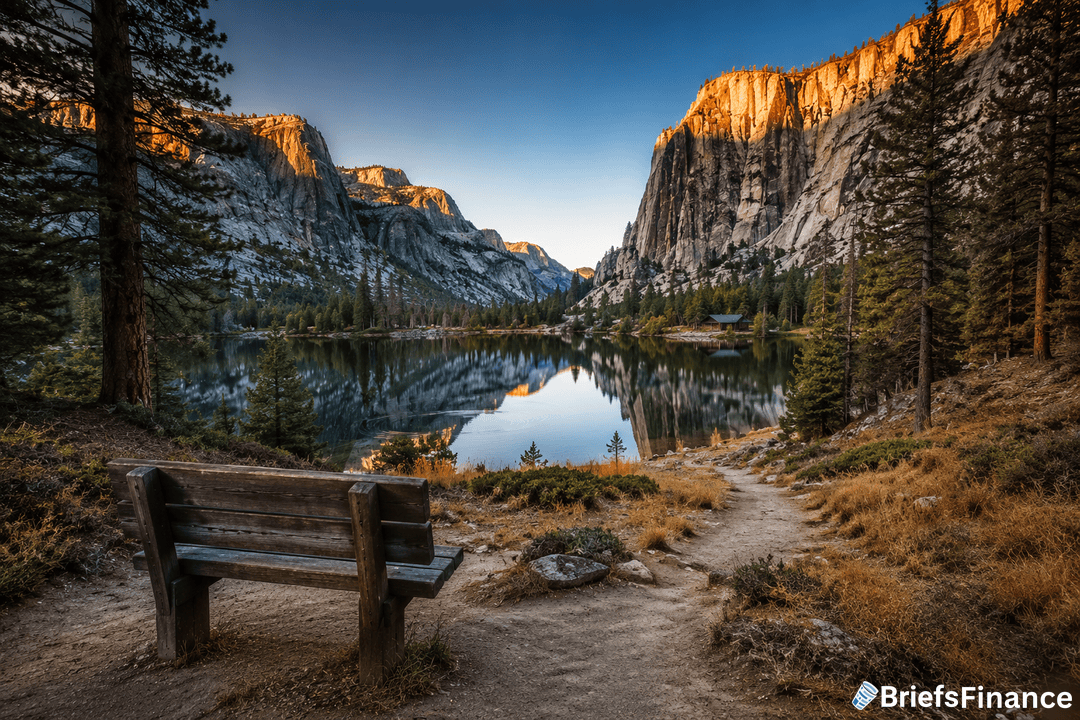
REI sells a lot of tents. Patagonia sells a lot of fleeces. Both companies need one thing to keep that money flowing - a national park people actually want to drive to. So when Congress started fighting over how to pay for park repairs, the retail industry quietly picked a side.
A $1.2 Trillion Industry Wants Cleaner Trails
Outdoor recreation drives $1.2 trillion in U.S. economic output a year and supports 5 million jobs, according to the Outdoor Recreation Roundtable. Federal lands and waters add about $351 million in daily economic activity, which the group compares to hosting eight Super Bowls a month.
That spend has slowed though. The U.S. outdoor goods market grew every year from 2015 to 2022, then shrank 6% between 2022 and 2025, according to GlobalData. Discretionary spending on coats, helmets, and hiking boots has dragged with it.
That dip is why retailers from REI and VF Corp (which owns The North Face and Timberland) to big-box players like Walmart and Target want fresh money flowing back into the parks. Cleaner parks bring more visitors, and more visitors buy more gear.
A new spending bill timed to the country's 250th birthday could be the marketing campaign retailers can't pay for themselves.
For the moves Wall Street is actually watching every morning, Market Briefs delivers them in five minutes, and a free investing masterclass is part of the welcome package.
The Toll Fight In Congress
The bill is a sequel to the Great American Outdoors Act, a law President Trump signed in his first term that has since expired. The maintenance backlog has only grown since, which is why Congress is racing to pass a successor before the 250th anniversary.
House Republicans want to pay for the new version with tolls on federally run roads around Washington, including parts of the network used by tens of thousands of daily commuters. Rep. Bruce Westerman, who chairs the House Natural Resources Committee, calls his plan the "Next 250 Fund."
Democrats are calling it dead on arrival. "All the colleagues I've talked to that represent those areas say it's a nonstarter, poison pill," said Rep. Jared Huffman, the top Democrat on the committee.
The Senate version, called the "America the Beautiful Act," skips tolls entirely. It would funnel oil and gas royalties from federal energy development into a fund for park upkeep, the same mechanism the original GAOA used, and it has 52 Senate sponsors.
What To Watch
The backdrop matters. Trump's 2027 budget proposal would cut the National Park Service overall budget by 34% and slash its construction spending by 72% versus 2025, on top of staff reductions that already shrank the agency by nearly a quarter last year.
The White House has also endorsed a $100-a-day surcharge for non-U.S. visitors at the most popular parks. International tourism to the U.S. fell 5.9% in Trump's first year back, according to the nonpartisan Congressional Research Service.
Three things to watch for retail investors:
- Whether the Senate's royalty-funded bill clears the chamber and becomes the template
- Whether House Republicans hold firm on tolls or fold to get a deal done
- Whether REI, VF Corp, and other outdoor names start guiding to a sales tailwind in second-half earnings
If either bill passes, retailers get a tailwind. If both stall, the gap between what parks need and what they get keeps growing.
If you want this kind of read every weekday morning, join 350,000+ investors reading Market Briefs. A 45-minute investing course comes with the sign-up.