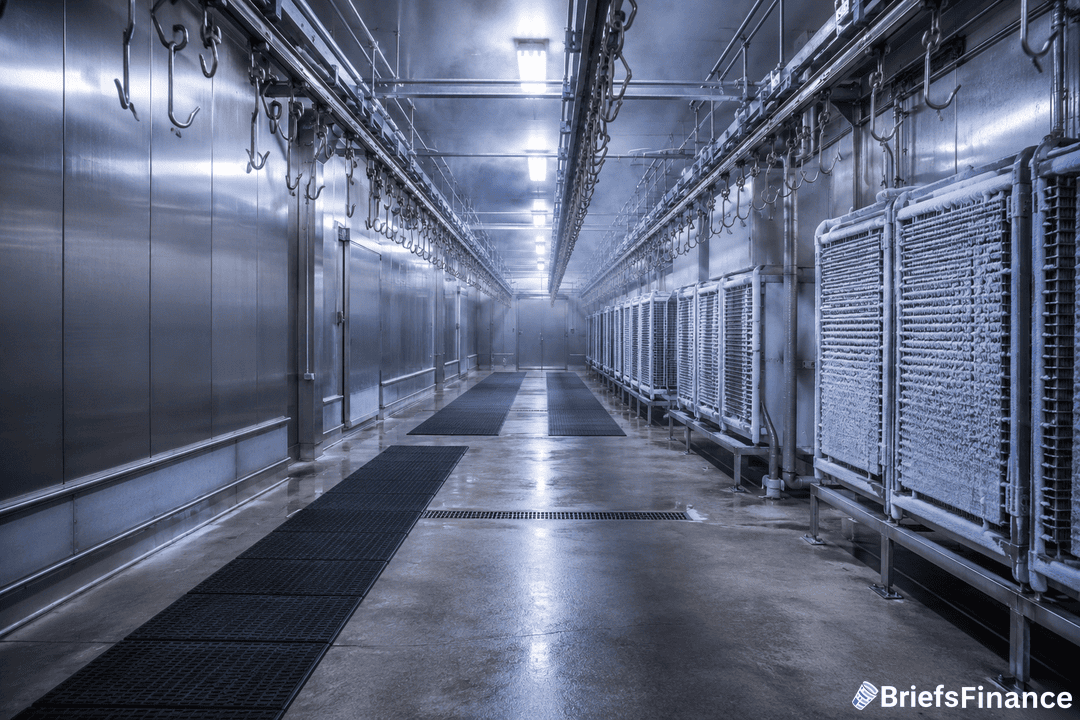
The grocery aisle is the visible end of the food chain. The middle is much louder.
Between the farm and the shelf sits the processing layer. That is where meat plants, dairies, bakeries, and frozen food plants run around the clock. These sites are some of the most energy hungry in the country. Energy is one of the few costs they cannot easily cut.
That is why an oil spike at the well shows up months later as a higher wholesale price on a pound of beef.
Why Chilling Is The Real Culprit
Food and drink making is 6% of all U.S. plant energy use. Around the world, the sector takes in about 30% of all energy used in food. That covers making, packing, and storing.
Chilling is where the bill stacks up. Research on meat plants shows chilling can be 50% to 93% of all power use at a meat plant. Chilling alone is 45% to 55% of weekday power demand in the meat trade.
A "fresh" tomato gets chilled at four or five stops before it reaches a cart. Each stop has a meter ticking. Gas often heats the same building.
The Cost Squeeze And The Shopper
When power prices rise, plants face higher costs. They cannot easily pass them through right away. So they raise wholesale prices first. Those prices show up on store shelves three to six months later.
Cornell professor Christopher Barrett told Newsweek that shoppers on fixed, low incomes will face hard food choices. He said food prices are rising faster than wages. The result, he said, is often "choosing cheaper, less nutritious diets."
That loop is one reason the USDA watches food costs so closely. The same dollar at the till buys less. What families eat starts to shift.
Where The Pass-Through Shows Up First
Wholesale food prices move before grocery CPI does. So does the producer price index for processed foods. Both are a useful early read for when the shock will reach the store.
Earnings calls from the big food makers are the other leading signal. When Tyson, JBS, or the big dairy and bread names flag power as a bigger drag, the wholesale to retail handoff is a quarter or two away.
Power rates in big plant states like Iowa, Nebraska, and Texas are also worth a look. The bill feeds right into plant math.
One More Layer
Labor is the other big input in the plant layer. When power and labor both rise at once, the squeeze gets harder. Wholesale prices tend to rise faster in those years. The move to the shelf speeds up.
What To Watch
Watch the next round of earnings calls from the big food makers. If a CEO flags power as a bigger drag this quarter, that is the first sign the oil shock is hitting wholesale.
Wholesale price moves lead retail moves by three to six months. That lines up with the lag pattern the FRED Blog has shown in past shocks.
Sources: U.S. Department of Energy; ScienceDirect (food manufacturing energy mapping); Newsweek (February 2026).