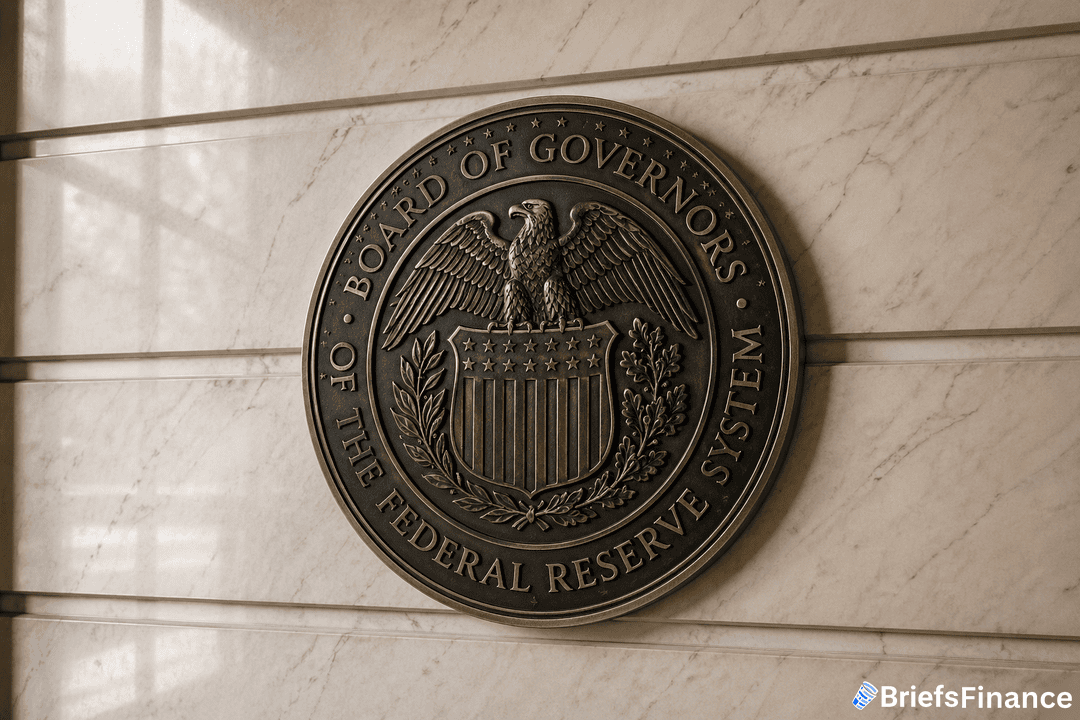
For most of his eight years running the Fed, Jerome Powell got the committee to vote in lockstep - until his final meeting Wednesday, when four officials voted against him.
The Federal Open Market Committee held the benchmark funds rate steady at 3.5% to 3.75%, while four members refused to sign on to the language hinting at more cuts ahead.
A Split That Hasn't Happened Since 1992
One Fed governor wanted to cut rates outright, while three regional presidents wanted to scrub language pointing toward future cuts.
Governor Stephen Miran voted for a quarter-point cut, joining a side he's been on since he arrived at the central bank in September 2025.
Cleveland's Beth Hammack, Minneapolis's Neel Kashkari, and Dallas's Lorie Logan agreed with the hold but pushed back on one sentence in the post-meeting statement.
The disputed phrase referenced "additional adjustments" to the rate range, which most economists read as the Fed quietly flagging that its next move would be a cut.
The dissenting trio thought saying so was too soon with inflation stuck above 3% since late 2023.
The takeaway: four dissents puts Powell's last meeting on par with October 1992 - the last time this many policymakers broke ranks in the same vote.
Powell Isn't Going Anywhere
Powell's term as chair ends May 15, 2026, with the Senate Banking Committee already advancing Kevin Warsh's nomination on a party-line vote.
Normally, a Fed chair leaves the board entirely once a successor takes over. Powell signaled Wednesday that he plans to stay on as a governor while an investigation into Fed renovations wraps up.
His governor term runs through January 2028, and if he serves it out he'll be the first outgoing chair to remain on the board since Marriner Eccles in 1948.
The Eccles standoff with the Truman administration eventually led to the 1951 Treasury-Fed Accord, which formalized Fed independence - and Warsh has said he wants to reopen and modernize that same accord.
What This Does To The Board
If Powell stays on as a governor, Trump can't fill his seat. Warsh would replace Stephen Miran instead, leaving the policy lean roughly where it sits today.
"This means that the addition of Kevin Warsh to the FOMC will not swing the balance between doves and hawks," ClearBridge Investments analyst Josh Jamner said.
That's a critical detail for investors trying to gauge how fast the Fed cuts next year, since a more dovish board would have reset rate expectations across stocks, bonds, and real estate.
Markets are now pricing in zero more cuts this year and through most of 2027 - a sharp shift from the easing path the Fed laid out at its March meeting.
What To Watch
The next FOMC decision lands in June, with Powell's news conference expected to fill in the rest of the picture.
Inflation data for April lands ahead of that meeting, and a hot reading would harden the case the dissenters made Wednesday. If the splits widen, the Fed's projected neutral rate near 3.1% may slip further out of reach for the rest of the year.