Free NewsletterPro Login

OPEC Pumping More Oil Won't Help If No One Can Ship It

A stylized illustration of a cylindrical cup with blue arrows and lines indicating a swirling or rotational motion inside the cup.
Published Mar 2, 2026
Share:
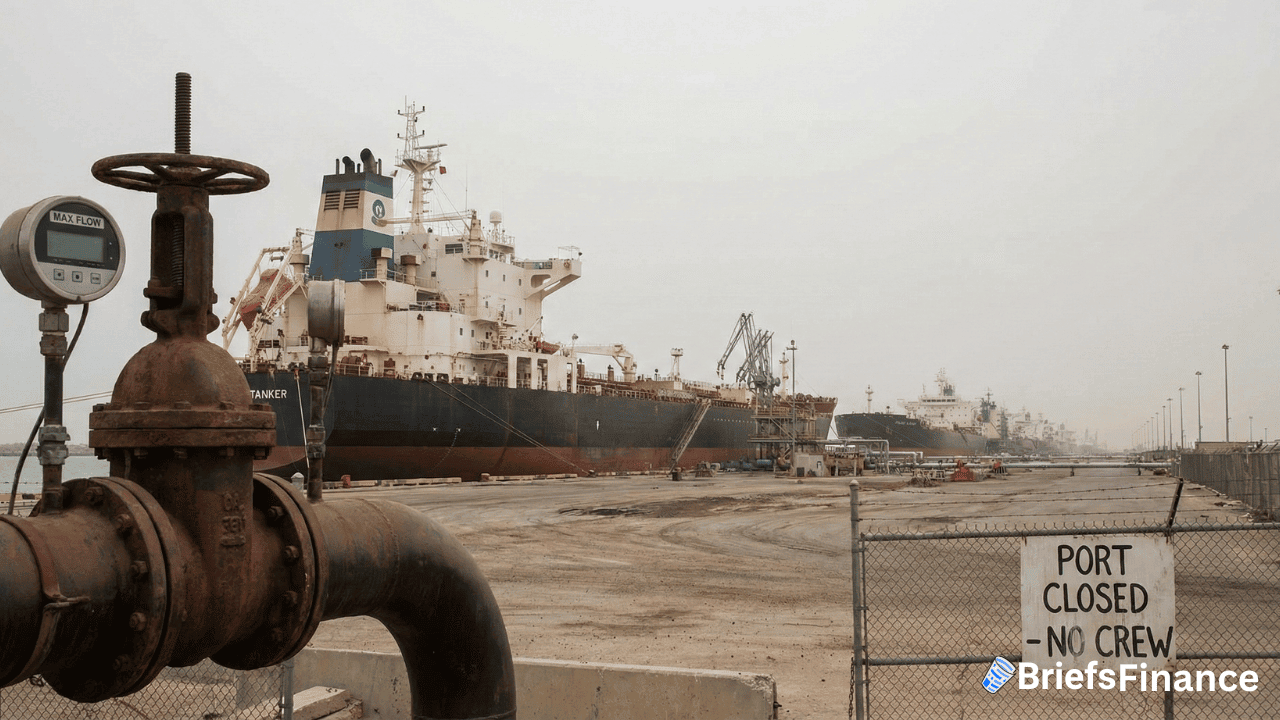
Several large cargo ships docked at an industrial port, a sign reading "PORT CLOSED NO CREW" near a fenced area, industrial pipes in the foreground—evidence of disrupted oil shipping impacting OPEC and global oil production.
Summary:

  • OPEC+ agreed to boost output by 206,000 barrels a day in April — but tanker traffic through the Strait of Hormuz has nearly stopped.
  • More than 20% of the world's daily oil supply moves through the strait, and ships are anchoring rather than risking it.
  • Oil hit $80 a barrel over the weekend, with analysts warning prices could hit $100 if the blockage drags on.

OPEC+ held an emergency meeting Sunday and voted to pump more oil. Markets shrugged.

The Problem Is the Pipes, Not the Production

The day before, US and Israeli forces struck Iran. Iran struck back — and warned ships not to pass through the Strait of Hormuz, a 21-mile-wide waterway off Iran's coast that handles over 20% of the world's oil supply. Tanker traffic dropped roughly 70%. Hundreds of ships dropped anchor. Major carriers including Maersk and Hapag-Lloyd suspended all transit through the route.

OPEC+ responded Sunday by adding 206,000 barrels per day of new supply for April. It sounds like a lot. It's less than 0.2% of global daily demand — and most of it still needs to be loaded onto tankers in the Persian Gulf.

Jorge Leon, head of geopolitical analysis at Rystad Energy, put it plainly: "You can announce higher production, but if tankers face constraints in Hormuz, the physical market remains tight."

What Gas Prices Could Look Like

Brent crude jumped to around $80 a barrel over the weekend. Analysts at ICIS said prices could open "much closer to $100" if the strait stays effectively closed. Barclays and RBC are saying the same thing.

Alternative pipeline routes exist through Saudi Arabia and the UAE, but their combined spare capacity — about 2.6 million barrels per day — covers only a fraction of normal Hormuz flow. Citi's baseline call is that the conflict wraps in one to two weeks. If it doesn't, prices at the pump will feel it fast.

The only number that really matters right now isn't barrels produced — it's ships moving.

Disclosure

Get Market Briefs delivered to your inbox every morning for free!

No fluff. No noise. No politics. Just finance news you can read in 5 minutes.

Blogs

April 28, 2026
Core-Satellite Portfolio: The Best of Both Worlds
  • A core-satellite portfolio splits investments into stable core holdings and higher-risk satellite picks.
  • The core is usually 60% of the portfolio, with satellites at 40%.
  • It blends passive index investing with active opportunity bets.

Read More
April 28, 2026
Bond Ladder Strategy: The Income Plan With Built-In Flexibility
  • A bond ladder is a series of bonds with staggered maturity dates, often one to five years apart.
  • It gives you regular access to cash, predictable income, and protection from rate changes.
  • It works for Treasuries, corporate bonds, municipal bonds, and CDs.
Read More
April 28, 2026
Silver vs Gold Investing: Which One Belongs in Your Portfolio?
  • Gold is the stable store of value, used as crisis insurance during recessions and conflict.
  • Silver is both a precious metal and an industrial metal, with more volatile pricing.
  • Most investors hold a mix in their alternative investment allocation, often 5% to 12% of portfolio.
Read More
April 28, 2026
What Is a Dividend Reinvestment Plan? The Wealth Snowball Explained
  • A dividend reinvestment plan, or DRIP, automatically uses dividend payments to buy more shares.
  • DRIPs power compound growth - dividends buy shares that pay dividends that buy more shares.
  • Most brokerages offer DRIPs free, and many include fractional shares so every penny goes back in.
Read More
April 28, 2026
How Tariffs Affect the Stock Market
  • Tariffs are extra fees on goods imported into a country, and they hit company profit margins.
  • The S&P 500 dropped over 3% in one day after the 2025 tariff announcement.
  • Tariffs reshape trade flows, creating both losers and unexpected winners.
Read More
April 28, 2026
What Is a 13F Filing? The Smart Money Tracker
  • A 13F filing is a quarterly disclosure of stock holdings from large institutional investors.
  • It shows what hedge funds and asset managers bought, sold, and held last quarter.
  • You can find any 13F free on SEC EDGAR.
Read More
April 28, 2026
Debt-to-Equity Ratio: The Number That Tells You If a Company Is Drowning
  • The debt-to-equity ratio compares what a company owes to what shareholders own.
  • The formula is total liabilities divided by total shareholder equity.
  • Lower ratios mean less risk - one of the value markers Warren Buffett looks for.
Read More
April 28, 2026
Non-Financial Analysis of Stocks: The 4-Step Method
  • Non-financial analysis evaluates a company's business, not its financial ratios.
  • It covers four things: business model, CEO, innovation, and moat.
  • It's how investors find companies with long-term staying power.
Read More
April 28, 2026
SEC EDGAR Tutorial: The Free Tool the Pros Use
  • SEC EDGAR is the official free database of public company filings.
  • You can pull 10-Ks, 10-Qs, 8-Ks, and insider trades by ticker or company name.
  • It's the source journalists and analysts use to write their stock stories.
Read More
April 28, 2026
How to Read a 10-Q (Without Losing Your Mind)
  • A 10-Q is a public company's three-month financial update, filed with the SEC.
  • It shows revenue, profits, debt, and cash flow between yearly reports.
  • You can find any company's 10-Q for free on the SEC's EDGAR site.
Read More
1 2 3 18
Share via
Copy link