Free NewsletterPro Login

Oil Just Crashed 17% in a Single Day - Its Biggest Drop Since the Gulf War

Published Apr 8, 2026
Share:
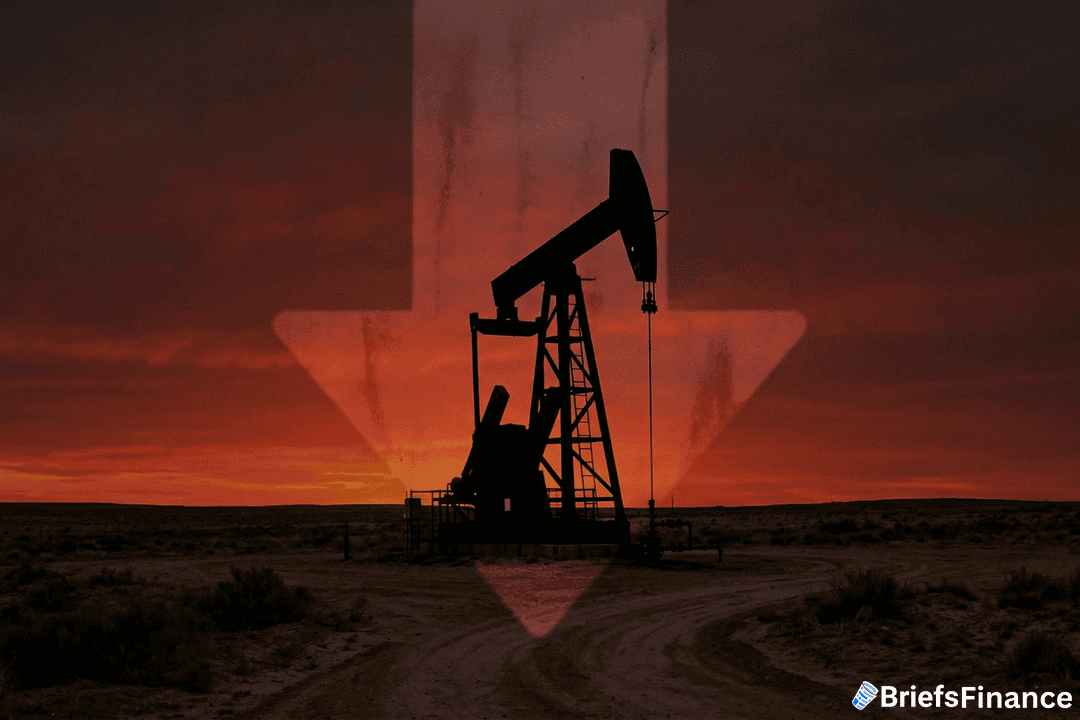
An oil pump jack at sunset with a large downward arrow overlay, suggesting a decline in oil prices or production; BriefsFinance logo in the corner.
Summary:
  • West Texas Intermediate crude fell nearly 17% to about $93 a barrel after the U.S.-Iran ceasefire was announced.
  • Brent crude dropped to around $91, falling below $100 for the first time since mid-March.
  • Despite the drop, analysts say prices are still well above fair value and full recovery will take months.

Oil just had a day for the history books. And not the kind energy investors were hoping for.

West Texas crude crashed nearly 17% on Wednesday. It fell to about $93 a barrel. Brent crude dropped to around $91. This was the biggest one-day fall since the 1991 Gulf War.

The Ceasefire Changed Everything

The sell-off started when Trump announced a two-week ceasefire with Iran. The deal requires Tehran to reopen the Strait of Hormuz. This narrow waterway was shut down for five weeks.

Before the truce, oil had been stuck above $110. Gas prices were climbing. And inflation fears were building fast.

One announcement wiped all of that out in a matter of hours.

Don't Celebrate Too Fast

Here's the thing - $93 oil is still pricey. Before the Iran war started, crude was trading near $70.

Jorge Leon from Rystad Energy told Yahoo Finance the market is still building in risk. The market went from $110 to $95 - a big drop, but prices are still elevated. The market is being careful about a weak ceasefire.

Wood Mackenzie said Middle East makers shut down about 11 million barrels per day during the war. Restarting that work could take six to nine months - even if the ceasefire holds.

What to Watch

Oil shipping won't snap back overnight. Tanker operators need confidence the strait is truly safe before they start running full routes again. Repairs to damaged refineries and LNG terminals in the Gulf could take months more.

The price crashed. The supply chain hasn't caught up yet.

Disclosure

Get Market Briefs delivered to your inbox every morning for free!

No fluff. No noise. No politics. Just finance news you can read in 5 minutes.

Blogs

April 29, 2026
What Is Blockchain? A Plain English Guide For Investors
  • Blockchain is a digital ledger that records every transaction on a public network.
  • Once a transaction is recorded, it cannot be changed or deleted.
  • It is the foundation of Bitcoin, Ethereum, and thousands of other cryptocurrencies.

Read More
April 29, 2026
How To Negotiate Bills: The Script That Saves You Hundreds A Year
  • Most monthly bills are negotiable, even though most Americans never try.
  • A simple phone call with the right script can lower your phone, internet, and utility bills.
  • The key rule is to be nice. Customer service reps have more flexibility than most people realize.
Read More
April 29, 2026
75 15 10 Rule: The Budget That Builds Wealth On Autopilot
  • The 75 15 10 rule is a budgeting plan: spend at most 75% of your income, invest at least 15%, and save at least 10%.
  • It works by making sure you pay yourself before you spend.
  • Once your savings target is hit, you shift the 10% over to investing, becoming a 75/25 plan.
Read More
April 29, 2026
How To Rebalance Portfolio: The Strategy That Forces You To Buy Low And Sell High
  • Rebalancing means adjusting your portfolio back to your target allocation when it drifts too far.
  • The two main methods are time-based (rebalance once a year) and threshold-based (rebalance when allocation drifts more than 5%).
  • If you are still adding money, you can rebalance by directing new money instead of selling.
Read More
April 29, 2026
How To Buy Treasury Bonds: A Beginner's Guide
  • Treasury bonds are loans you make to the U.S. government. They are considered the safest investment in the world.
  • You can buy them at TreasuryDirect.gov directly or through any major brokerage.
  • There are three main types: T-Bills, Treasury Notes, and Treasury Bonds. The longer the term, the higher the interest rate.
Read More
April 29, 2026
Forward Vs Futures Contracts: What's The Real Difference?
  • Both forward and futures contracts are deals to buy or sell something at a set price on a future date.
  • Futures trade on exchanges. Forwards are private deals between two parties.
  • Most regular investors do not use either. They are mostly tools for businesses and big institutions.
Read More
April 29, 2026
Alternative Investments Explained: What They Are And Why They Matter
  • Alternative investments are anything that is not a regular stock or bond.
  • The most common types are precious metals, crypto, real estate, commodities, and collectibles.
  • Most investors should hold 5% to 25% of their portfolio in alternatives, depending on risk tolerance.
Read More
April 29, 2026
How To Buy Bitcoin For Beginners: 3 Simple Ways
  • There are three main ways to buy Bitcoin: directly on an exchange, through a Bitcoin ETF, or through a Bitcoin miner stock.
  • Each has its own pros, cons, and tax setup.
  • Most beginners do best starting small and using dollar cost averaging.
Read More
April 29, 2026
How To Follow Smart Money: The 5 Market Shifts Framework
  • "Smart money" means big investors with deep research teams and fast information.
  • You can follow them by watching for 5 types of market shifts.
  • The goal is to spot where money is moving before it shows up on CNBC.
Read More
April 29, 2026
Insider Trading Meaning: What It Really Is (And Why Some Of It Is Legal)
  • Insider trading means buying or selling a stock based on facts the public does not know yet.
  • Some insider trading is legal. Some is a federal crime that can send people to prison.
  • The SEC tracks every legal insider trade in a public file called Form 4.
Read More
1 2 3 19
Share via
Copy link