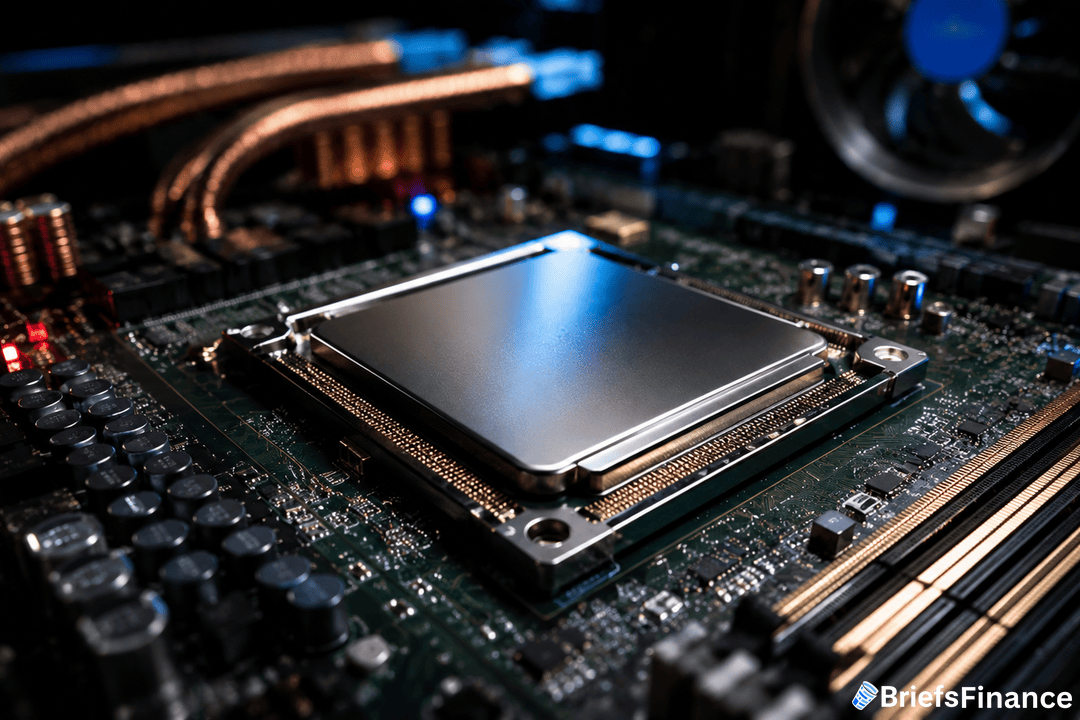
For three years, Nvidia has been the GPU company, but Jensen Huang just told investors the next leg of growth runs through a different chip and a different market. The new Vera CPU opens a $200 billion total market per Huang, with the surprise twist that he says China is part of it - despite Beijing blocking every H200 shipment so far.
The Vera Bet
CPUs are central processing units, which are the chips that run everyday computing tasks, while GPUs do the heavy lifting for AI training. Nvidia owns the GPU side, and until now Intel and AMD owned the CPU side.
Vera is Nvidia's first real swing at that market, where it serves as the CPU half of the Vera Rubin platform Nvidia is rolling into production this year. Huang told investors on Wednesday's earnings call that the product unlocks $200 billion in new revenue potential on top of the $1 trillion in AI chip sales the company has already forecast.
The pitch behind Vera is agentic AI, which is software that takes actions on its own instead of just answering prompts. Those workloads pull harder on CPUs than traditional GPU-based training does, broadening the chip mix companies need to buy.
That broader chip mix matters for the addressable market math. Nvidia spent a decade locking up the GPU side of AI, and the CPU side has historically been Intel and AMD territory, with Vera giving Nvidia a new shelf to compete on.
If you want a five-minute read on which chip plays are actually catching tailwinds, Market Briefs covers it every weekday morning - and a free investing masterclass is included when you sign up.
The China Question
Huang's China comments are the real story. Speaking to reporters at Taipei's Songshan airport on Saturday, he confirmed his $200 billion forecast assumes China is buying, adding that "it would be terrific to be able to serve that market."
Reality is messier than the forecast. The U.S. cleared around 10 Chinese firms to buy the H200, which is Nvidia's second-most-powerful AI chip, per Reuters last week. Zero deliveries have been made so far, since Beijing wants to grow its own chip industry first.
President Trump's meeting with Xi Jinping in Beijing this month, which Huang attended as part of the U.S. delegation, did not produce a breakthrough.
Smuggling is another wrinkle, with Taiwanese prosecutors saying Thursday that they are investigating three people for illegally exporting Super Micro AI servers containing controlled Nvidia chips. In March, the U.S. Justice Department charged three Super Micro associates with helping smuggle at least $2.5 billion of AI tech to China.
What To Watch
Nvidia is ramping Vera Rubin production now, which Huang says will make for "a very busy second half" for Taiwan's supply chain. AMD just committed more than $10 billion to Taiwan's AI sector, and the supplier base is the trade investors should track.
The shift from GPU pure-play to GPU-plus-CPU widens Nvidia's addressable market by a third, and the China lever remains the swing factor on whether that math actually plays out.
Huang said in Taipei he would meet with TSMC, the world's largest contract chipmaker, to talk Vera Rubin production ramps for the second half of the year.
If you want every morning's biggest market stories explained in plain English, sign up for Market Briefs - new readers also get a free 45-minute investing course.