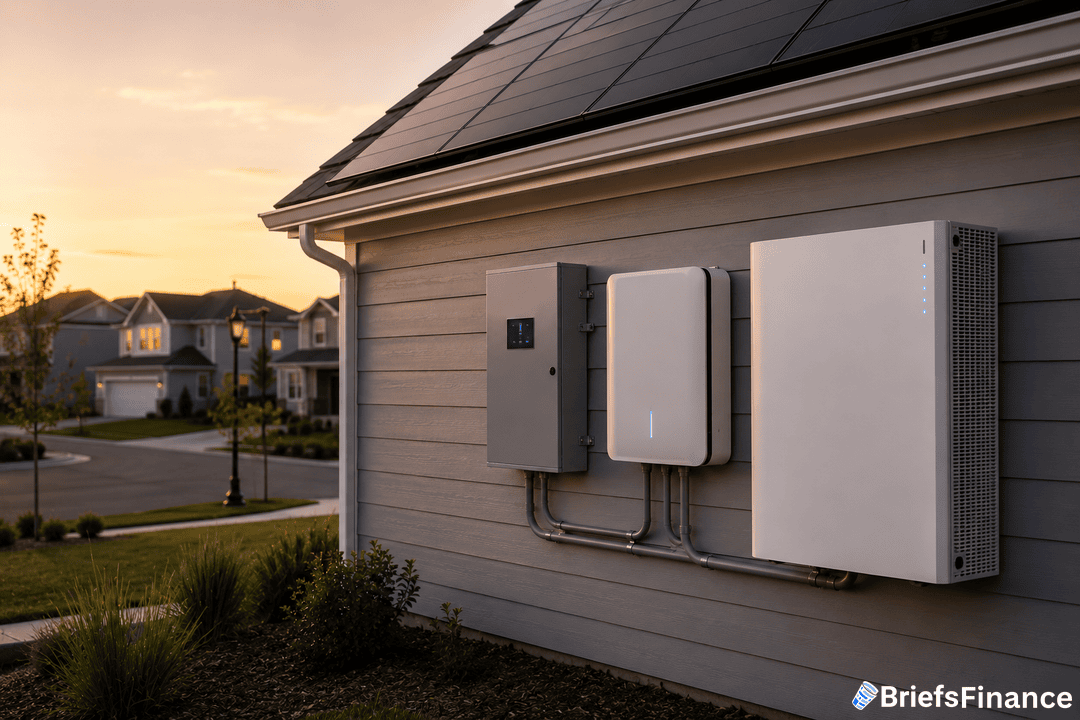
AI's power problem is getting so big that the industry is now eyeing your house.
Homebuilders are signing up, Nvidia is supplying the chips, and the side of your house might soon double as part of the cloud.
This isn't a concept slide - it is already running in a few neighborhoods.
How This Works
A California startup called Span is stitching the system together. The company first launched with smart electrical panels - basically a dashboard that shows homeowners where their power is going.
Now it is pairing those panels with small white boxes called XFRA units. Each one is a "fractional data center" - a slice of compute that can link with other slices around the country to act like a full-sized facility.
Cloud companies and AI providers tap into the network the same way they would plug into a centralized data center, while homeowners get paid for the electricity and Wi-Fi the system uses.
"Fundamentally, it's an infrastructure play," Span CEO Arch Rao told CNBC, describing the setup as a way to meet runaway compute demand at lower cost while sharing the upside with homeowners.
Why Nvidia And Pulte Are In
Nvidia is supplying the brains. Span is using Nvidia's liquid-cooled RTX PRO 6000 Blackwell Server Edition GPUs, which don't need fans, so the box on the wall of your house won't sound like a leaf blower.
Marc Spieler, who runs Nvidia's global energy team, said the pitch is power that already exists. Building a giant new data center takes years and a fight with the local grid, while plugging into spare capacity in suburbia takes weeks.
PulteGroup, one of the country's largest homebuilders, is in early testing, with the XFRA system going on newly built houses. Pulte sees a way for buyers to offset energy bills while keeping land that would have gone to a data center open for more housing.
PulteGroup stock rose nearly 3% on Tuesday, while Nvidia shares slipped about 0.6%.
The Bigger Picture
The numbers are why this matters for investors. Span claims it can install 8,000 XFRA units six times faster and five times cheaper than a centralized 100-megawatt data center of the same total capacity.
That is a real swing at AI's biggest bottleneck.
Power has become harder to find than chips or land. Communities are pushing back on giant new facilities, and grid operators warn AI demand could push electric bills higher for ordinary homes.
This setup flips the script. Instead of one mega-site competing for grid capacity, you get thousands of small ones tucked into spare power already sitting on the network.
The full system also includes a smart panel, the XFRA box, a home backup battery, and sometimes solar panels, so the unit doesn't strain the home's everyday power use.
Worth Noting
The rollout is still small, and Pulte calls it a test. But the direction is clear.
The companies winning the AI build-out are running out of normal places to put data centers, and they are getting creative. Your neighbor's house could be the next one online.