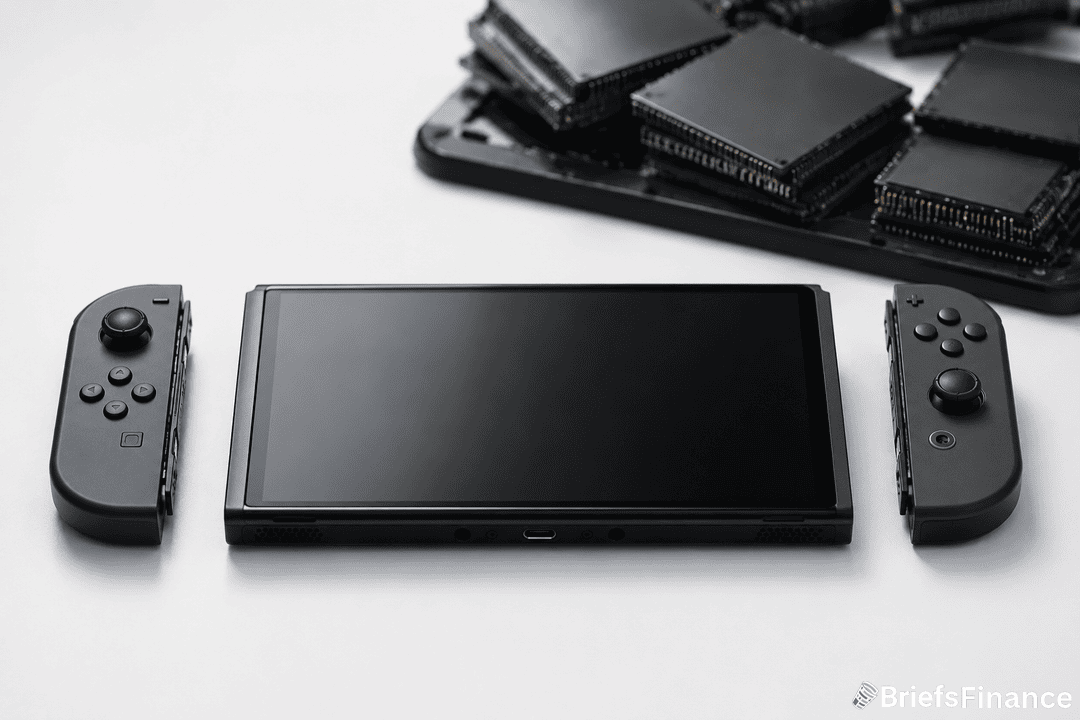
Console makers don't usually cut second-year sales forecasts, since year two is when sales are supposed to climb. Nintendo just did the opposite, hiking the Switch 2 by $50 and warning that next year will see millions fewer units sold than this year did.
The New Sticker
The U.S. price moves from $449.99 to $499.99 on Sept. 1, while Japan jumps even harder, going from 49,980 yen to 59,980 yen starting May 25, with Canada and Europe also rising.
Nintendo says the move reflects "changes in market conditions" and the global business outlook, which in plain English means building a Switch 2 just got much more expensive.
The Switch 2 uses the same kind of memory chips that AI data centers are buying in massive volumes, pushing memory prices up to levels Nintendo can't absorb.
Sony already hit the same wall in March, raising PlayStation 5 prices by as much as $150.
The Forecast Is The Bigger Story
Nintendo expects to sell 16.5 million Switch 2 units in the year ending March 2027, well below the 19.86 million it sold the year before.
The company also guided for a 27% drop in net profit to 310 billion yen, while net sales are now expected to fall 11.4% to 2.05 trillion yen, with both figures landing below what analysts had modeled.
Roughly 100 billion yen, about $637 million, of that pain is tied to higher component costs and tariffs.
"The clock was ticking for Nintendo for months now," said Serkan Toto, CEO of Kantan Games. "The impact is quite dramatic, as console sales usually go up in the second year - and not down as Nintendo predicts this time."
Why The Memory Squeeze Hits Nintendo So Hard
The Switch 2 is a hardware story sold at a hardware-friendly price, which means margins on each console are thinner than what Nintendo earns on software.
When the cost of a single key part jumps the way memory has, Nintendo has two choices, and the company is taking both: raise the price and accept lower volume.
The trade-off is that a more expensive console at year two slows down the install base that drives game sales for years afterward, which is the engine that actually pays the bills.
Nintendo's first-quarter results showed the strain already setting in, with revenue of 407.2 billion yen coming in short of the 430.6 billion yen analysts wanted, even as net profit edged past expectations at 65.2 billion yen.
What To Watch
Nintendo's stock has fallen close to 50% from its August high above 14,000 yen, but the bright spots are still the games.
The "Super Mario Galaxy Movie" has grossed nearly $900 million globally, and "Pokemon Pokopia" has become a surprise hit on Switch 2.
New Splatoon and Starfox titles are due this year, with two more big Pokemon releases slated for next year.
"It is now absolutely critical for Nintendo to release blockbuster first-party games as fast as possible in order to drive sales," Toto said. That puts the next year of Nintendo's plan squarely on the games team.