Free NewsletterPro Login

NextEra Just Spent $67 Billion To Become The Power Company Behind The AI Boom

Published May 18, 2026
Share:
Summary:
  • NextEra Energy is buying Dominion Energy in an all-stock deal worth nearly $67 billion.
  • The combined company would be the largest regulated electric utility in the world, with a $249 billion market cap.
  • The deal hands NextEra control of the utility that powers northern Virginia, the biggest data center hub on the planet.

Most utility deals are about size, costs, and rate base. This one is about chips.

NextEra just agreed to pay nearly $67 billion for the company that already powers the world's biggest data center market.

The Deal And The Math

The combined company would have a market cap of about $249 billion and an enterprise value near $420 billion, making it the third-largest U.S. energy company behind Exxon Mobil and Chevron.

NextEra holders end up with 74.5% of the combined company, with Dominion holders getting the rest. Everything will trade under NextEra's NEE ticker on the New York Stock Exchange.

Investors picked sides fast on Monday, sending Dominion shares up almost 11% while NextEra fell more than 4%.

NextEra CEO John Ketchum said in a statement that "electricity demand is rising faster than it has in decades," and that the firms are joining forces "because scale matters more than ever."

Deals like this are the kind we break down each morning in Market Briefs - five minutes to read, and a free investing masterclass comes with the signup.

Why Now: The Data Center Angle

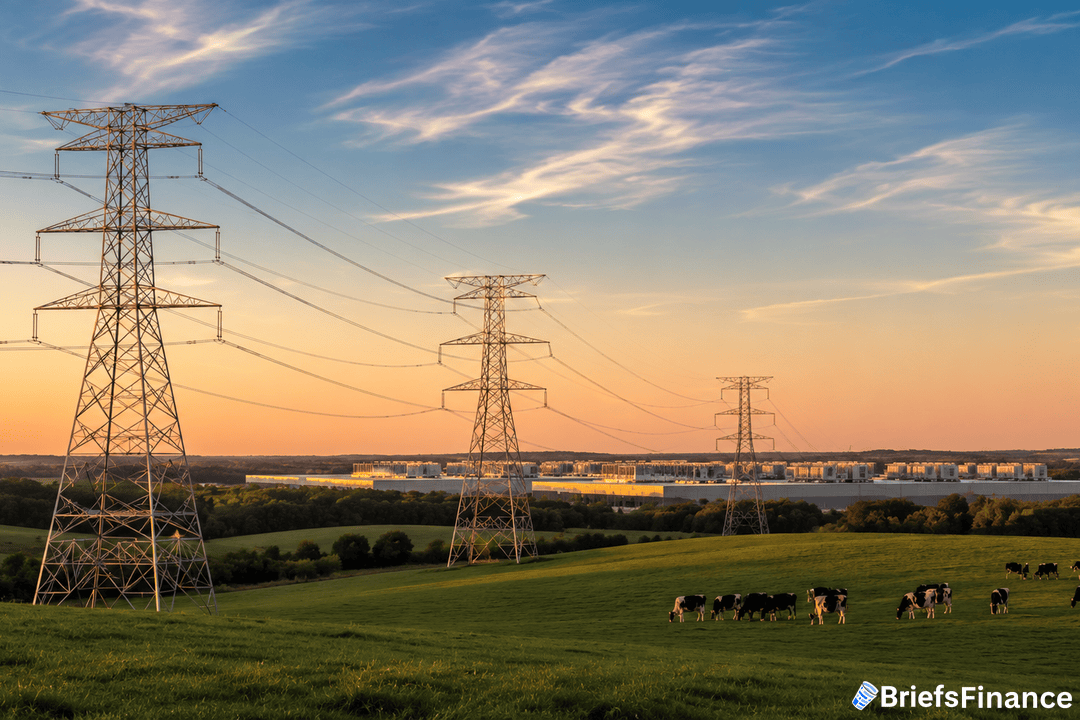
Dominion is the utility responsible for northern Virginia, which holds more data center power capacity than any other region in the world, while NextEra is the biggest renewable energy developer in the country and runs the largest utility in the S&P 500 from its base in Florida.

Together, the two would be the world leader in renewables and battery storage, the U.S. leader in natural gas, and the second-largest nuclear operator.

Ketchum said the combined business plans to build more than 30 data center hubs across the country, with the goal of becoming the "go-to partner" for AI's largest power buyers.

That builds on the work NextEra is already doing with Big Tech, after the company cut a deal with Alphabet's Google last year to reopen the mothballed Duane Arnold nuclear plant in Iowa.

What To Watch

Ketchum stays as CEO of the combined firm, while Dominion CEO Robert Blue takes over the regulated utilities business and gets a board seat.

For investors, the math is plain: AI is the demand story, and power is the bottleneck. Owning the largest regulated utility in the world becomes a much bigger deal when the buyers are the hyperscalers building chip farms.

The AI race is starting to look more like an electricity race. This deal is the biggest bet on that idea yet.

Subscribe to Market Briefs and get daily reads on the deals moving Wall Street - plus a free 45-minute investing course as a bonus.

Disclosure

Get Market Briefs delivered to your inbox every morning for free!

No fluff. No noise. No politics. Just finance news you can read in 5 minutes.

Blogs

May 5, 2026
How to Create Multiple Income Streams: A Beginner's Playbook
  • Most people rely on a single income stream from their job - which is also the most heavily taxed.
  • Multiple income streams come from a mix of cash flow, dividends, side businesses, real estate, and royalties.
  • The fastest path for most beginners is starting with one extra stream - usually dividends or a side hustle - and stacking from there.
Read More
May 5, 2026
The 60/40 Portfolio Explained: A Beginner's Guide
  • A 60/40 portfolio holds 60% in stocks and 40% in bonds (or other fixed income).
  • It's designed to balance growth from stocks with stability from bonds.
  • Your "right" mix depends on age, time horizon, income needs, and how well you sleep when markets drop.
Read More
May 5, 2026
How to Invest in Silver: A Beginner's Guide
  • Silver is both a precious metal and an industrial metal, used in solar panels, electronics, and medical tech.
  • Investors can buy silver four main ways: physical bars and coins, ETFs, mining stocks, or futures contracts.
  • Most beginners are best served by allocating a small slice of their portfolio to silver - usually between 1% and 3%.
Read More
May 1, 2026
Asset Allocation by Age: The Right Portfolio Mix at Every Stage of Life
  • Younger investors should hold mostly stocks because they have decades to recover from crashes and benefit from compounding.
  • Allocations gradually shift toward bonds and stable income as retirement approaches, but stocks remain important even past age 65 to outpace inflation.
  • Annual rebalancing is essential - it forces you to buy low and sell high while keeping your portfolio aligned with your actual life stage.
Read More
April 30, 2026
Stablecoin Explained: Why Some Cryptocurrencies Actually Aren't Volatile
  • Stablecoins are cryptocurrencies pegged to stable assets like the US dollar, giving crypto-style speed and access without the volatility of Bitcoin or Ethereum.
  • Fiat-backed stablecoins like USDC are the safest option, while algorithmic stablecoins have failed spectacularly and should generally be avoided.
  • Stablecoins fit a portfolio as cash reserves with better yields, a hedge against crypto volatility, and a fast, cheap rail for international transactions.
Read More
April 30, 2026
Buy Now, Pay Later Risks: Why This "Easy" Payment Method Is Dangerous to Your Wealth
  • Buy now, pay later services like Klarna, Affirm, and Sezzle are debt products designed to feel harmless while keeping users in a cycle of overspending.
  • BNPL exploits psychological debt blindness, triggers late fees, and damages credit scores without helping users build positive credit history.
  • Building real wealth means waiting 30 days, paying upfront when you have the cash, and avoiding systems built to extract money from your future income.
Read More
April 30, 2026
Dividend Payout Ratio: The Secret Metric That Shows If a Stock Is Safe or Risky
  • Dividend payout ratio is total dividends paid divided by net income, showing the percentage of earnings a company returns to shareholders.
  • A 20-50% payout ratio is generally safe and sustainable, while ratios above 75% often signal a dividend cut is coming.
  • High dividend yields can be warning signs, not opportunities - safety and dividend growth matter more than the headline yield number.
Read More
April 30, 2026
Ethereum for Beginners: What It Is and Why Smart Investors Are Paying Attention
  • Ethereum is a blockchain platform that runs smart contracts, while Ether (ETH) is the cryptocurrency that powers the network.
  • Use cases include decentralized finance, NFTs, gaming, supply chain tracking, and digital identity - many still experimental.
  • Most investors should treat Ethereum as a small allocation hedge using dollar-cost averaging, not a get-rich-quick lottery ticket.
Read More
April 30, 2026
Dollar Cost Averaging Strategy: How to Beat Emotion and Build Wealth Steadily
  • Dollar cost averaging means investing the same amount at regular intervals regardless of what the market is doing.
  • The strategy automatically buys more shares when prices are low and fewer when prices are high, lowering your average cost over time.
  • DCA removes emotion, eliminates the need to time the market, and turns volatility into a mathematical advantage for long-term investors.
Read More
April 30, 2026
The BRRRR Strategy: How to Build Real Estate Wealth Without Big Money Down
  • BRRRR stands for Buy, Rehab, Rent, Refinance, Repeat - a five-step framework for scaling real estate without saving for big down payments.
  • The strategy works by buying distressed properties below market value, adding value through smart renovations, and pulling out equity through refinancing.
  • Tax advantages like depreciation and mortgage interest deductions make BRRRR a powerful tool for owners willing to manage tenants and contractors.
Read More
1 2 3 20
Share via
Copy link










