Free NewsletterPro Login

Metals Just Had Their Worst Day in Months

A stylized illustration of a cylindrical cup with blue arrows and lines indicating a swirling or rotational motion inside the cup.
Published Mar 19, 2026
Share:
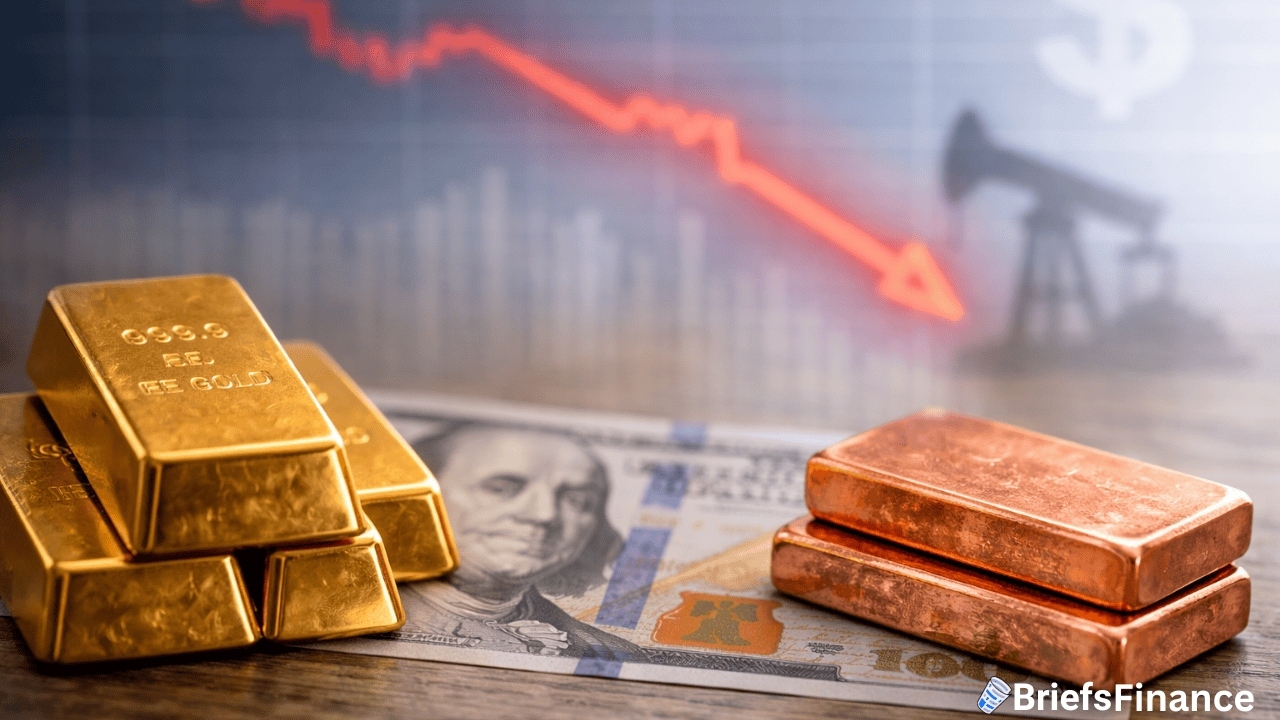
Gold bars, copper ingots, and a US $100 bill in the foreground; a downward trending red stock chart and oil pump silhouette in the background illustrate how metals fell during the market’s worst day.
Summary:
  • Gold dropped nearly 5%, silver lost over 6%, and copper gave back all of its 2026 gains in a single session on Thursday.
  • The Iran conflict is pushing oil prices high enough that investors are now pricing in a real chance of recession.
  • The word "stagflation" is making the rounds on Wall Street - but the Fed and several analysts think that fear is overblown.

The Safe Haven That Wasn't

Gold is supposed to go up when the world gets scary.

Instead, it's been sliding ever since the first missiles hit Iran - and Thursday's drop was the ugliest yet. The metal lost close to 5% in a single session, dragging silver down more than 6% with it.

Here's why the playbook broke: oil is repricing everything. Rising energy costs are pushing inflation expectations higher, which is pulling interest rates up with them.

The 10-year Treasury - the benchmark rate that influences everything from mortgages to corporate borrowing - briefly topped 4.3% on Thursday.

That's a problem for gold. It doesn't pay interest, so when rates climb, investors have less reason to hold it.

A stronger U.S. dollar - another side effect of higher rates - makes it even less appealing.

"The risks to inflation taking away the Fed rate cuts that were priced in, and seeing interest rate increases across the world, and real rates rising, that has been the drag on gold," said Peter Boockvar, CIO at One Point BFG Wealth Partners.

Copper Is Sending a Different Warning

Gold falling on rate fears is one thing. Copper falling is a whole different signal.

Copper shows up in basically every corner of the economy that involves building or making things - construction, electronics, plumbing, you name it.

When its price drops, it usually means the market is betting that demand for real stuff is about to slow down.

And that's exactly what happened.

Copper lost roughly 2% on Thursday, erasing its entire 2026 rally in one session. Over in London, copper has shed close to a tenth of its value in March alone.

The fear is straightforward: if oil stays this expensive for long enough, consumers and businesses start pulling back.

That's when an energy shock turns into a spending shock - and eventually a recession.

"On the industrial metal side, people are now really worried about the recession risks," Boockvar said.

Aluminum got hit even harder - its worst single session in nearly four years - with trading volumes in London hitting all-time highs.

Options-related hedging made the move worse, with dealers unwinding massive positions that had been built during the early days of the conflict.

The Stagflation Debate

When you combine rising prices with slowing growth, you get stagflation - the worst of both worlds for investors. And some on Wall Street are starting to position for exactly that.

But the people who actually set interest rates aren't buying it.

Fed Chair Jerome Powell said Wednesday that he'd "reserve the term stagflation for a much more serious set of circumstances."

Ed Yardeni, head of Yardeni Research, made a similar case in a note this week.

He pointed to 2022 as proof - when Russia went into Ukraine, oil spiked and prices ran hot, but the economy never tipped into a downturn.

His argument: modern energy shocks don't cause the kind of lasting damage they did during the 1970s oil embargo.

Not everyone agrees. Bernard Dahdah at Natixis said the broader outlook "is looking bleak" and that central banks may have no choice but to hike rates to fight inflation - which would only pile more pressure on metals.

What to Watch

The longer this war drags on, the more these recession fears will build. Boockvar thinks industrial metals need a ceasefire to find a floor.

Gold might have a different path.

If government debt and deficits keep growing - partly because of military spending - gold tends to benefit as a hedge against currency weakness.

Goldman Sachs' asset allocation team wrote Thursday that gold should find support in a stagflation scenario, especially if real interest rates start falling.

Wars end - but deficits can stick around a lot longer.
Disclosure

Get Market Briefs delivered to your inbox every morning for free!

No fluff. No noise. No politics. Just finance news you can read in 5 minutes.

Blogs

May 1, 2026
Asset Allocation by Age: The Right Portfolio Mix at Every Stage of Life
  • Younger investors should hold mostly stocks because they have decades to recover from crashes and benefit from compounding.
  • Allocations gradually shift toward bonds and stable income as retirement approaches, but stocks remain important even past age 65 to outpace inflation.
  • Annual rebalancing is essential - it forces you to buy low and sell high while keeping your portfolio aligned with your actual life stage.
Read More
April 30, 2026
Stablecoin Explained: Why Some Cryptocurrencies Actually Aren't Volatile
  • Stablecoins are cryptocurrencies pegged to stable assets like the US dollar, giving crypto-style speed and access without the volatility of Bitcoin or Ethereum.
  • Fiat-backed stablecoins like USDC are the safest option, while algorithmic stablecoins have failed spectacularly and should generally be avoided.
  • Stablecoins fit a portfolio as cash reserves with better yields, a hedge against crypto volatility, and a fast, cheap rail for international transactions.
Read More
April 30, 2026
Buy Now, Pay Later Risks: Why This "Easy" Payment Method Is Dangerous to Your Wealth
  • Buy now, pay later services like Klarna, Affirm, and Sezzle are debt products designed to feel harmless while keeping users in a cycle of overspending.
  • BNPL exploits psychological debt blindness, triggers late fees, and damages credit scores without helping users build positive credit history.
  • Building real wealth means waiting 30 days, paying upfront when you have the cash, and avoiding systems built to extract money from your future income.
Read More
April 30, 2026
Dividend Payout Ratio: The Secret Metric That Shows If a Stock Is Safe or Risky
  • Dividend payout ratio is total dividends paid divided by net income, showing the percentage of earnings a company returns to shareholders.
  • A 20-50% payout ratio is generally safe and sustainable, while ratios above 75% often signal a dividend cut is coming.
  • High dividend yields can be warning signs, not opportunities - safety and dividend growth matter more than the headline yield number.
Read More
April 30, 2026
Ethereum for Beginners: What It Is and Why Smart Investors Are Paying Attention
  • Ethereum is a blockchain platform that runs smart contracts, while Ether (ETH) is the cryptocurrency that powers the network.
  • Use cases include decentralized finance, NFTs, gaming, supply chain tracking, and digital identity - many still experimental.
  • Most investors should treat Ethereum as a small allocation hedge using dollar-cost averaging, not a get-rich-quick lottery ticket.
Read More
April 30, 2026
Dollar Cost Averaging Strategy: How to Beat Emotion and Build Wealth Steadily
  • Dollar cost averaging means investing the same amount at regular intervals regardless of what the market is doing.
  • The strategy automatically buys more shares when prices are low and fewer when prices are high, lowering your average cost over time.
  • DCA removes emotion, eliminates the need to time the market, and turns volatility into a mathematical advantage for long-term investors.
Read More
April 30, 2026
The BRRRR Strategy: How to Build Real Estate Wealth Without Big Money Down
  • BRRRR stands for Buy, Rehab, Rent, Refinance, Repeat - a five-step framework for scaling real estate without saving for big down payments.
  • The strategy works by buying distressed properties below market value, adding value through smart renovations, and pulling out equity through refinancing.
  • Tax advantages like depreciation and mortgage interest deductions make BRRRR a powerful tool for owners willing to manage tenants and contractors.
Read More
April 30, 2026
What Is GDP? A Beginner's Guide to Understanding Economic Growth
  • GDP measures the total value of everything a country produces and acts as the speedometer of the economy.
  • Strong GDP growth lifts businesses, dividends, and stock prices, while weak growth signals caution for investors.
  • Real GDP and GDP per capita matter more than the headline number when judging whether your wealth is actually growing.
Read More
April 29, 2026
What Is Blockchain? A Plain English Guide For Investors
  • Blockchain is a digital ledger that records every transaction on a public network.
  • Once a transaction is recorded, it cannot be changed or deleted.
  • It is the foundation of Bitcoin, Ethereum, and thousands of other cryptocurrencies.
Read More
April 29, 2026
How To Negotiate Bills: The Script That Saves You Hundreds A Year
  • Most monthly bills are negotiable, even though most Americans never try.
  • A simple phone call with the right script can lower your phone, internet, and utility bills.
  • The key rule is to be nice. Customer service reps have more flexibility than most people realize.
Read More
1 2 3 20
Share via
Copy link










