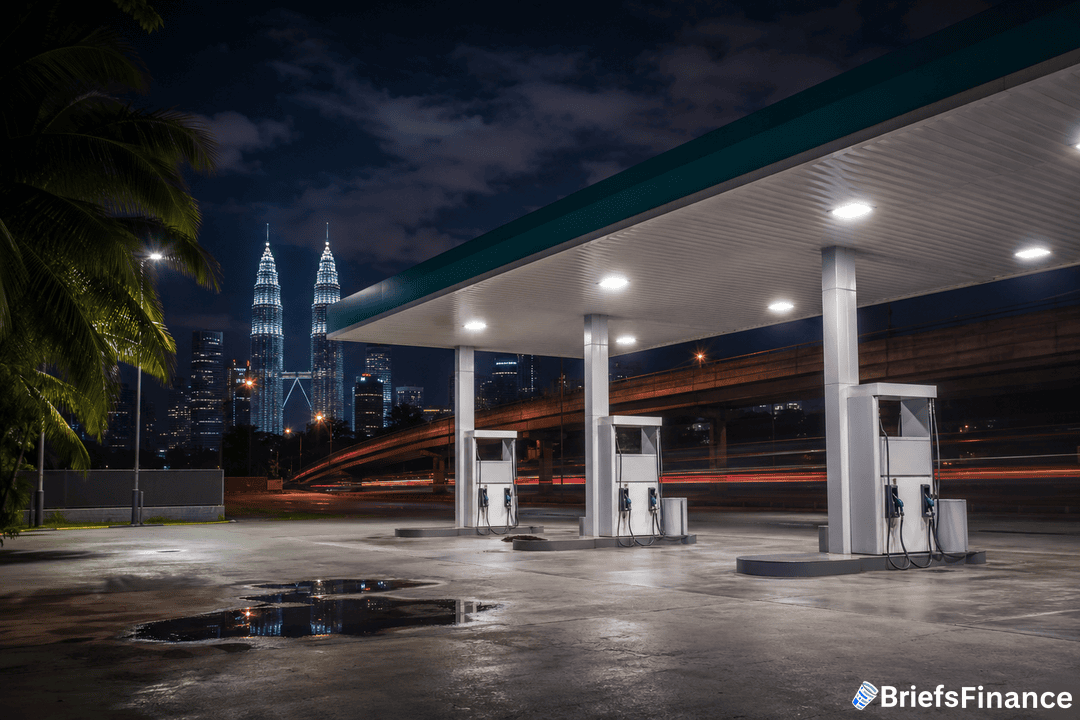
Oil prices are up across Asia thanks to Iran's war. Most central banks in the region are getting nervous.
The higher costs flow through to gas pumps and grocery aisles. Malaysia's central bank is not worried yet.
The country pays so much to keep pump prices low that drivers feel almost none of the global spike.
The Decision
All 28 economists in a Reuters poll expect Bank Negara Malaysia to hold its policy rate at 2.75% on Wednesday. Bank Negara Malaysia is the country's central bank.
That would mark the fifth straight hold since the bank cut rates by a quarter point in July 2025. Most economists also expect the rate to sit at 2.75% through the rest of 2026.
HSBC sees it staying there all the way through 2027. Of the 22 economists who gave a year-end view, 20 see a hold.
Just 2 see a 25-basis-point hike. Only two economists in the poll expect any rate hike at all over the next quarter.
Why Inflation Has Not Moved
Malaysian inflation hit 1.7% in March. That is well inside the central bank's 1.5% to 2.5% range for the year.
Inflation in 2025 came in at 1.4%. The 2026 forecast is around 2.0%.
By contrast, Vietnam is running at 4.7% and the Philippines at 4.1%. Both are above their central banks' targets.
Why is Malaysia different? The answer is fuel aid.
Fuel aid is when the government pays part of the cost of fuel so the buyer pays less. Monthly aid has jumped about ten times in size since the Iran war started.
It has gone from roughly 700 million ringgit to 7 billion ringgit each month. Those funds keep pump prices low.
The government's budget absorbs the higher cost of imported oil. The country still caps the main fuel grade, called RON95, at 1.99 ringgit per liter.
RON95 is the local 95-octane fuel grade most drivers use. The government just trimmed the monthly cap to 200 liters per person to slow the bleed on the budget.
The Cost Of The Cushion
Malaysia's 2026 deficit target is 3.5% of GDP. The bigger fuel-aid bill is making that target harder to hit each month it stays in place.
The government may have to pull back on aid later this year to protect the budget. If it does, inflation could move quickly.
ANZ economist Krystal Tan said the central bank's reaction "is likely to turn more hawkish if higher energy costs broaden into core categories." That means Bank Negara would have to think about rate hikes if prices outside fuel start moving too.
Capital Economics' Gareth Leather said his team doubts the central bank will rush to adjust policy this year.
Strong Growth, Low Inflation
The Malaysian economy grew 5.3% in the first quarter, an early estimate suggests. Full-year 2026 growth is set to come in around 4.5%.
That is a stronger profile than most peers in the region. It gives Bank Negara Malaysia room to hold steady on rates without choking off the recovery.
What To Watch
Subsidized fuel is doing the central bank's job for now.