- A core-satellite portfolio splits investments into stable core holdings and higher-risk satellite picks.
- The core is usually 60% of the portfolio, with satellites at 40%.
- It blends passive index investing with active opportunity bets.

One day, Korean investors were celebrating the war's possible end. The next day, they were running for the exits.
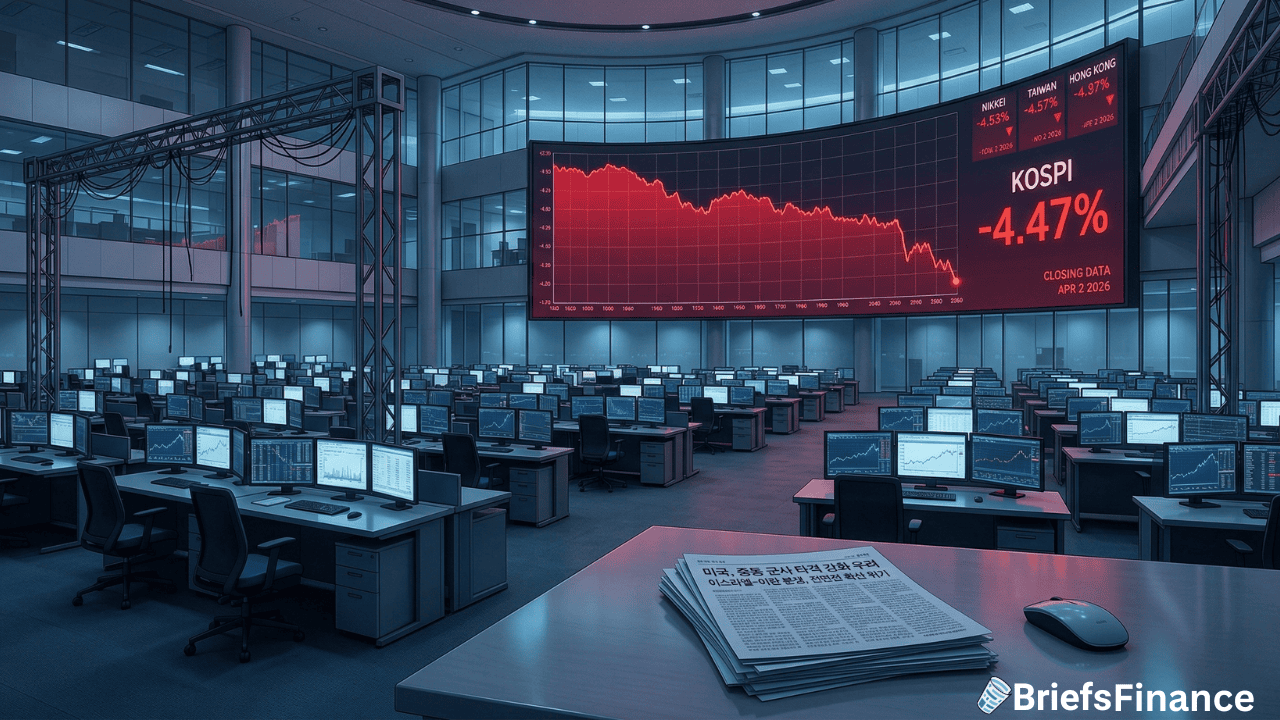
The Kospi lost 244.65 points on Thursday - landing at 5,234.05 - after President Trump used a national broadcast to warn that the U.S. would hit Iran "extremely hard" over the coming weeks. That wiped out over half of the previous day's 8.44% surge.
The speed of the reversal tells you everything about how thin the optimism really was.
Thursday actually started on a hopeful note. The Kospi opened 1.33% higher as investors bet Trump's speech would bring a ceasefire closer.
It didn't. Once Trump started talking, stocks flipped.
The index blew past its opening gains and kept falling. Sell-side trading curbs kicked in on both the Kospi and the smaller Kosdaq - which lost 5.36% on the day.
Neither market has needed this many emergency stops since the 2008 financial crisis. South Korea has triggered 14 on the Kospi this year alone, and 8 on the Kosdaq.
Big money headed for the door. Institutions dumped a net 1.45 trillion won - roughly $1.07 billion - while foreign funds sold off 140.6 billion won on top of that.
The only buyers? Everyday traders, who scooped up 1.21 trillion won in shares.
That kept the damage from getting worse, but it wasn't enough to stop the slide. Korea's two biggest chipmakers took the hardest hits - Samsung Electronics shed 5.91% and SK hynix gave back 7.05%.
The Korean won lost 18.4 to the dollar, finishing the session at 1,519.7. Investors piled into the greenback looking for safety.
Bitcoin slid 3.56% to $66,640. So much for the "digital gold" theory - investors sold it right alongside stocks.
Gold futures lost 3.75%, dropping to $4,632 an ounce. Climbing oil prices made investors more worried about inflation - and less hopeful about rate cuts coming anytime soon.
Markets across Asia followed the same pattern.
Analysts are split on what comes next. One camp sees Trump's tough talk as a bargaining move to force Iran into negotiations. The other points out that sending a third aircraft carrier to the region doesn't look like someone winding things down.
Korea's fear gauge - the Kospi Volatility Index - sat at an average of 60.77 last week. Anything above 50 means the market is in full panic mode. Until that number starts falling, expect more sessions exactly like this one.