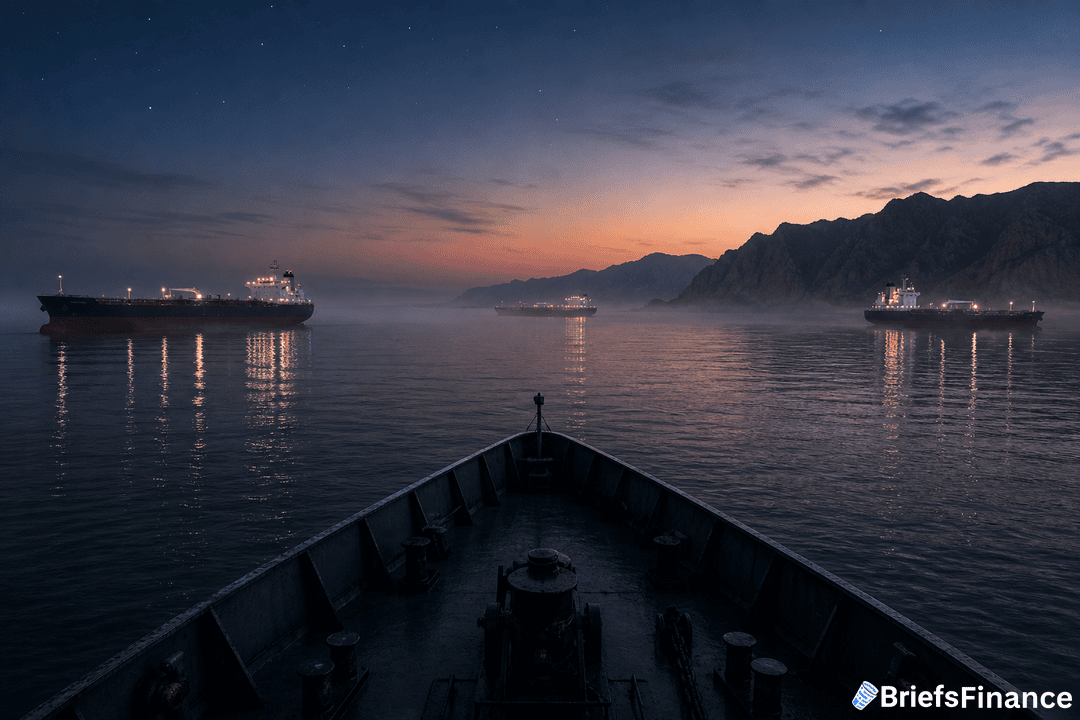
Markets reprice fast when the news shifts, and Kalshi just showed how fast. A week ago, traders on the prediction market gave their best odds to a July 1 reopening of the Strait of Hormuz.
As of Monday, that's been pushed to September 1 - two months later in seven days. For investors who watch oil, shipping, and freight, that's a measurable change in expectations, and the waterway handles roughly a fifth of the world's seaborne crude.
What's Driving The Re-Pricing
The U.S. and Iran have a ceasefire, but neither side has signaled when the strait will reopen. The U.S. is still maintaining a naval blockade.
Iran's state media reported Monday that two missiles struck a U.S. warship and forced it to pull back, while U.S. Central Command rejected the claim.
The same day, the United Arab Emirates intercepted Iranian missiles for the first time since the ceasefire began. Earlier in the weekend, President Trump said the U.S. military will "guide" stranded ships through the strait.
Each of those headlines moved the Kalshi line, but none of them resolved the underlying question of when the strait actually reopens.
How Kalshi Defines Normal
Kalshi's definition isn't open to interpretation. The contract resolves when the 7-day moving average of strait transits crosses 60, using IMF PortWatch data.
Right now, traders give:
- 56% odds traffic returns to normal by August 1.
- 57% odds by September 1.
- 76% odds by January 1, 2027.
The move from July to September odds is the biggest shift, but the long-term outlook stayed roughly steady. Traders still expect the strait to open eventually - just not as fast as they thought a week ago.
Why It Matters For Investors
Hormuz disruption shows up everywhere. The U.S. national average gas price just hit $4.45, the highest May 2 reading on record, while diesel is up $2.09 year over year and that pressure is already moving through freight rates.
If the strait stays disrupted into September, the summer pricing baseline doesn't reset. Inflation pressure stays sticky, and the Fed has fewer reasons to cut rates.
For energy investors, the Kalshi shift confirms what oil markets have been pricing for weeks. Crude is going to stay choppy until the strait reopens, and that supports companies tied to U.S. energy production while squeezing those that buy a lot of fuel.
The Broader Read
Prediction markets like Kalshi aren't a crystal ball, but they aggregate a lot of small bets from a lot of different people. When the consensus on a date moves by two months in a week, that's worth paying attention to.
The same shift hasn't fully shown up in equity markets yet. That gap could be an opportunity or a warning, depending on how the next round of headlines plays out.
Worth Noting
Disclosure note: CNBC has a minority stake in Kalshi and the two companies maintain a commercial relationship.
Right now, consensus says don't expect normal anytime soon.