The U.S. blockade was supposed to crush Iran's oil trade in days.
It hasn't.
Iran has started cutting crude output, and Tehran says it has done this before.
The Storage Squeeze
The blockade went into effect April 13, and exports have collapsed since then.
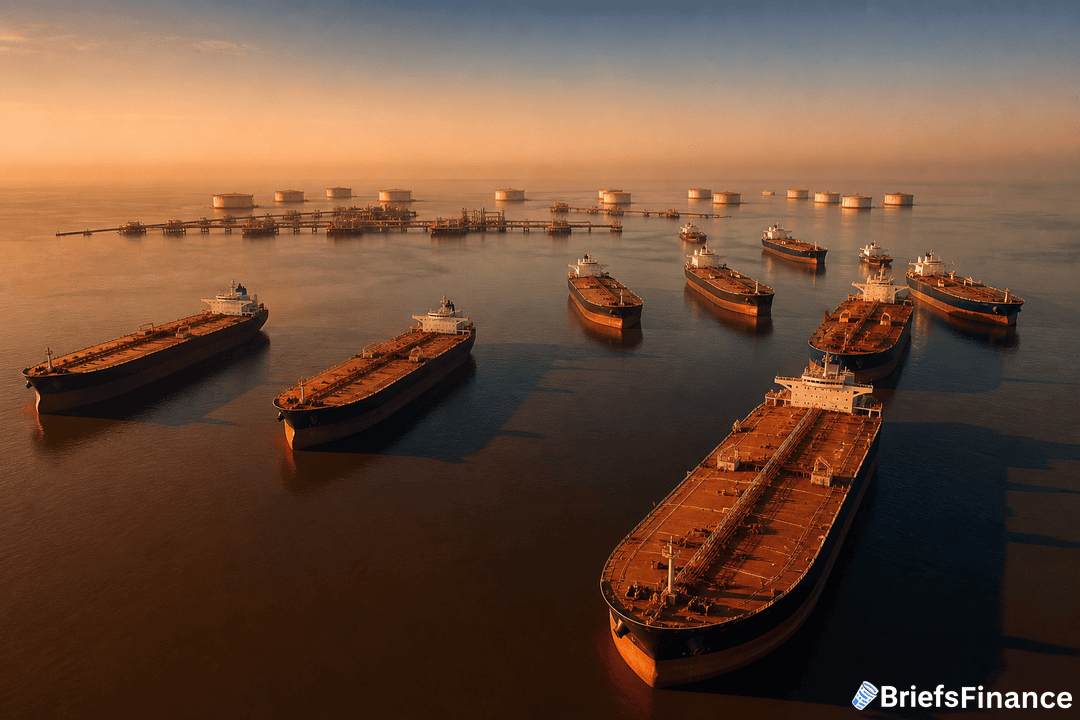
Tankers have been piling up off Kharg Island, Iran's main export hub.
About 18 ships that have hauled Iranian oil before are now parked in the Gulf, with room for up to 35 million barrels of crude, per data firm Kpler.
A senior Iranian official said the country has begun cutting output, and the cuts could touch as much as 30% of Iran's oil fields.
JPMorgan Chase and Kpler peg Iran's storage runway at about a month.
Wood Mackenzie sees roughly three weeks.
In all, Iran has 65 to 75 million barrels of floating storage to lean on, per Vortexa.
Much of that sits on older "dark" tankers inside the Gulf, ships that operate outside global shipping rules.
The blockade has frozen what was a 3.2 million barrel-a-day operation just last month.
Exports were holding near pre-war levels until the U.S. moved in.
The Playbook
Cutting output is risky.
Wells need steady underground pressure to stay healthy.
A sloppy shutdown can ruin them for good.
The White House is betting some of those wells won't come back.
Tehran says they will.
Iran spent years under the first Trump term learning to shut wells down and bring them back.
That muscle memory is what it's leaning on now.
"We have enough expertise and experience," said Hamid Hosseini, a spokesman for Iran's oil exporters group. "We're not worried."
Iran has also kept a small flow moving overland.
About 250,000 to 300,000 barrels a day are going to Turkey, Pakistan, Afghanistan, and Uzbekistan, per Hosseini.
Those volumes don't come close to replacing what once shipped by sea.
But they do keep some money flowing in while the blockade holds.
Whose Pain Lasts Longer
The flip side is the price tag.
Treasury Secretary Scott Bessent wrote on X this week that Kharg Island is "soon nearing capacity," pegging Iran's lost oil revenue at $170 million a day.
Iran's money also hit a record low against the dollar this week.
But the blockade is costing the U.S. too.
Oil prices hit a four-year high this week.
That feeds straight into gas pumps, jet fuel, and everything else that moves through U.S. supply chains.
"Washington is operating on a status-quo assumption that Iran will sit idly by and absorb this pressure and move toward collapse on a predictable timeline," said Brett Erickson at Obsidian Risk Advisors.
"That fundamentally misunderstands how regimes behave under sustained economic warfare. They do not fold, they adapt."
The U.S. Treasury also hit dozens of people this week tied to Iran's "shadow banking" network.
Among the targets were small Chinese refineries that have long been a key buyer of cheap Iranian crude.
What To Watch
Trump predicted last Sunday that Iran's oil setup would "explode" within three days.
That deadline came and went.
Tehran has done this before. Washington hasn't.