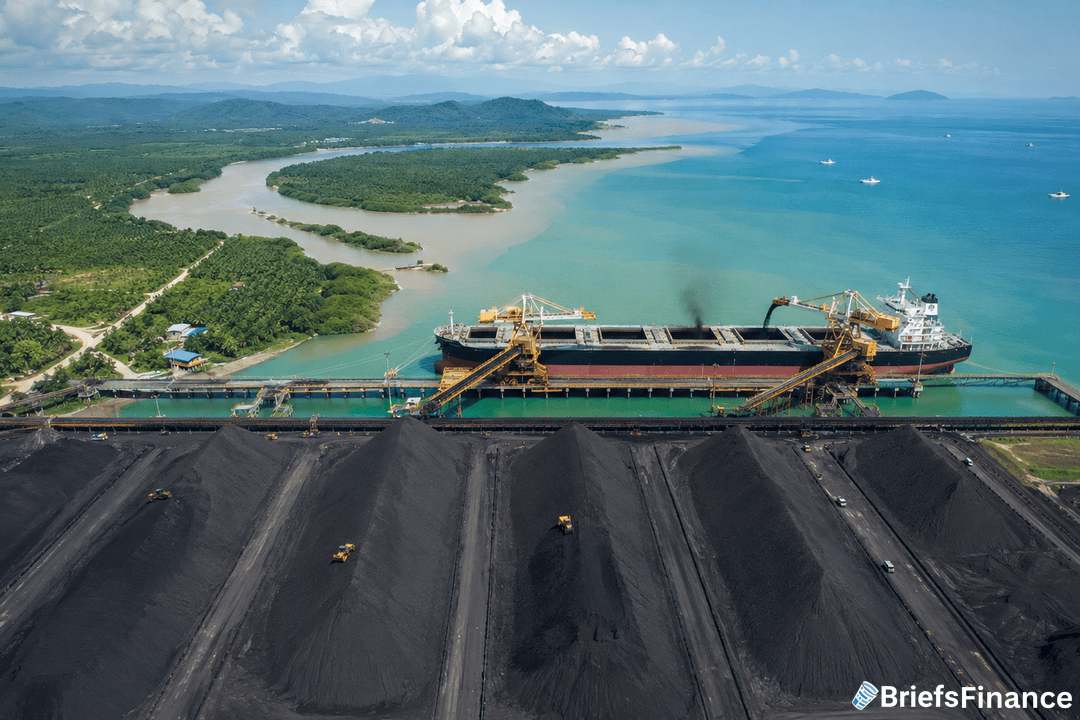
Indonesia is the world's biggest seller of thermal coal and palm oil. Soon, those exports may have to go through one state agency.
Markets are not taking the news well. Jakarta's main index fell 3.5% on Tuesday.
What's Being Built
Jakarta plans to set up a new state body to manage exports of key commodities. The agency would sit under Danantara, the country's sovereign wealth fund. It would report straight to President Prabowo Subianto. An announcement could come as soon as Wednesday.
The goal, per sources close to the plan, is to clamp down on tax dodges. The trick they want to stop is called "under-invoicing," where exporters undercount shipments to pay less tax.
The bigger goal is to help the rupiah. The currency has been sliding all year, dragging stocks with it.
For more on the policy moves quietly shifting commodity markets, read Market Briefs in five minutes a day. You also get a free 45-minute investing masterclass when you join.
Why Markets Sold Off
The Jakarta Composite Index fell 3.5% on Tuesday. That pushed Indonesia's 2026 loss past 26%, making it the worst stock market in the world this year.
Energy and basic-materials stocks led the drop. Both lean heavily on exports. A new layer of state control means more paperwork, more delays, and likely less profit. Foreign investors don't tend to enjoy that kind of headline.
Think of it like turning a public highway into a toll road. Traffic still moves, but everyone slows down at the booth.
The Bigger Picture
Prabowo is trying to fund some big promises. Universal free school meals top the list. Those programs need cash, and the easiest place to find it is the export sector.
That's the part of the economy that runs on global prices Jakarta can't control. So the government wants more of those flows passing through state hands.
A central agency also lets Jakarta keep more dollars and yuan inside the country. That matters a lot when the rupiah is sliding.
The trade-off: Investor trust. And right now, investors are voting with their feet.
What This Means For Global Buyers
Buyers of Indonesian coal and palm oil could see slower deliveries while the new agency gets up to speed. Some buyers may shift to other sources, like Australian coal or Malaysian palm oil.
Prices could move too. If the new agency tries to push for higher prices, global buyers pay more. If the agency just adds friction, supply gets choppy without any clear price win.
What To Watch
The announcement could land as soon as Wednesday. Watch for two things: which goods get covered, and how much actual control the new agency gets versus how much stays with private exporters.
A heavy-handed version could push stocks lower. A light-touch version might stop the bleeding. And foreign money managers are watching how this plays out for cues on the rest of Asia.
For a daily read on global moves like this one, join Market Briefs and you'll also get a free investing course thrown in.