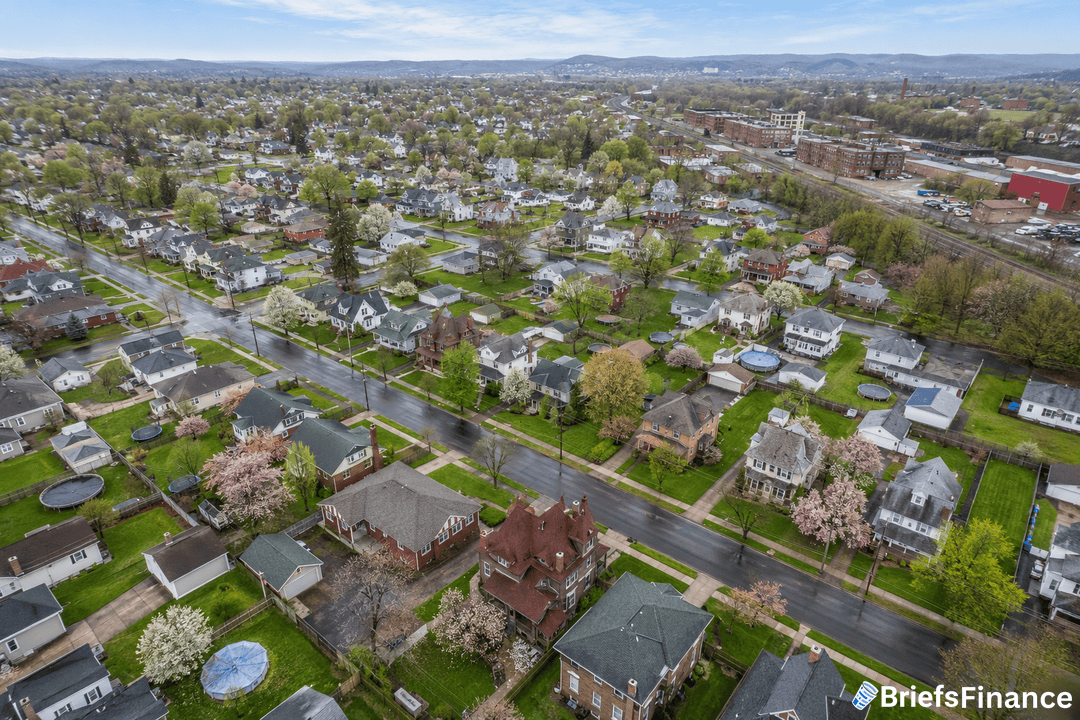
The hottest housing market in America right now isn't Austin, Miami, or Phoenix.
It is Akron, Ohio.
That is a sentence that wouldn't have made sense a few years ago.
What The Numbers Say
The National Association of Realtors released its first-quarter report this week, showing about seven in ten metro markets - 71% out of 235 tracked - saw home prices rise.
The national median price for a single-family home came in at $404,300. That is only up 0.5% from a year ago, so prices on average are basically stalled.
But the average misses what's happening underneath. About a quarter of metros are now reporting price drops, up from 17% last year, and the market is splitting in two.
More than a dozen metros even posted double-digit annual gains, a sharp shift from the boom-era playbook when the biggest jumps came from Phoenix, Tampa, or Boise.
The Cheap Markets Are Winning
The biggest gainers aren't trendy Sun Belt names. They are affordable Midwestern and Northeastern cities where buyers can still afford to play.
The top 10 metros by annual price gain in Q1:
- Akron, OH: +12%
- Anchorage, AK: +10.4%
- Albany-Schenectady-Troy, NY: +9.3%
- Trenton, NJ: +9.2%
- Davenport-Moline-Rock Island, IA-IL: +9.2%
- Canton-Massillon, OH: +7.9%
- Milwaukee-Waukesha-West Allis, WI: +7.7%
- St. Louis, MO-IL: +7.4%
- Reading, PA: +7.4%
- Rochester, NY: +7.2%
By region, the Northeast led the country with a 4.9% gain, followed by the Midwest at 3.6%, while the South barely moved at 0.2% and the West actually slipped 2.9%.
California still owns the top of the price ladder. San Jose-Sunnyvale-Santa Clara led the most expensive list at a $2.03 million median, followed by Anaheim-Santa Ana-Irvine at $1.44 million and San Francisco-Oakland-Hayward at $1.35 million.
Why This Is Happening
Two forces are pulling against each other.
On one side, a tight housing shortage in the Northeast keeps pushing prices higher. On the other, the Sun Belt is dealing with too much new construction and softer demand, which has flat-lined or pulled down prices in California and Florida.
Mortgage rates are doing some of the quiet work too. The 30-year fixed-rate sits in the low-to-mid 6% range, well below the near-7% rate buyers were staring at a year ago.
The typical monthly payment on an existing single-family home with 20% down is now $1,979, about $140 lower than the same period last year.
Lawrence Yun, NAR's chief economist, said the rate drop is letting more buyers qualify for mortgages. The catch: it isn't enough to fix the deeper affordability problem.
Worth Noting
Most homeowners have come out ahead. NAR estimates the typical owner has built about $128,100 in housing wealth over the past six years.
The next leg of this market is going to look nothing like the last one. The cheap, undersupplied corners of the country are leading, while the expensive ones are stalling.
For investors and would-be buyers, the playbook just changed.