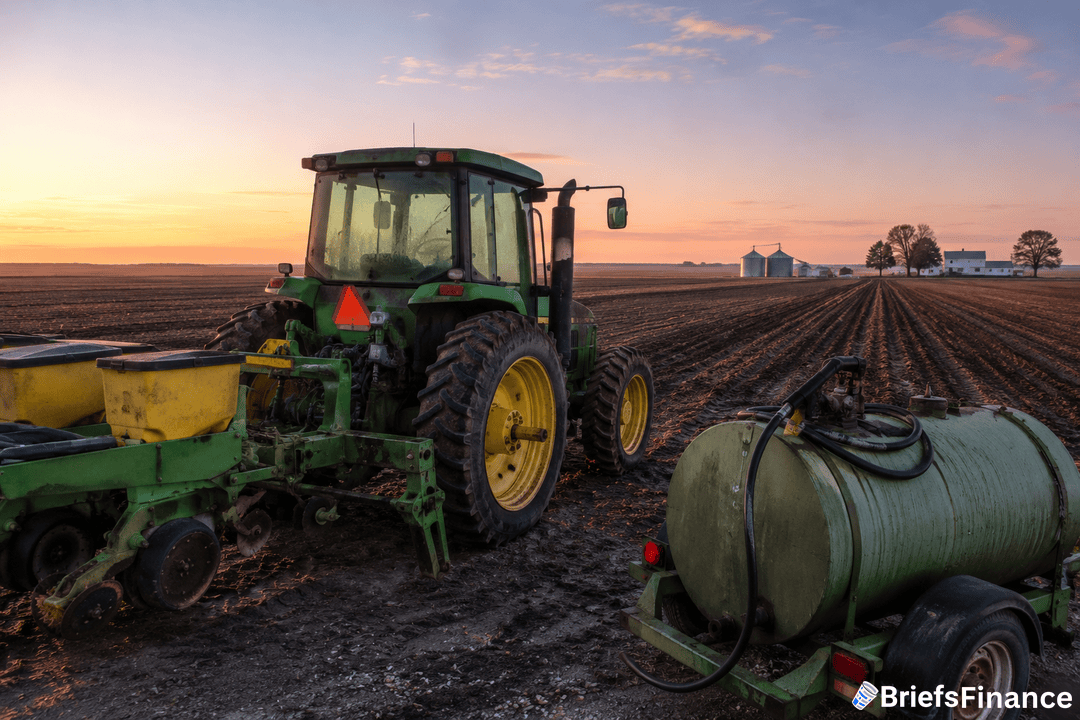
Tractors run on diesel. Combines run on diesel. So do irrigation pumps and grain dryers. So do the trucks that move the harvest. When oil rises, every one of those bills rises with it.
The USDA says fuel and electricity together make up about 15% of total U.S. farm production costs. For rice, cotton, peanut, and poultry growers, the share runs 12% to 16%. Other crops and livestock sit closer to 7% to 10%. That puts the energy line near the top of every farm budget.
The Second Half Of The Bill
Direct fuel is only part of the story. Nitrogen fertilizer carries the highest "embodied energy" of any farm input. That is because gas is 70% to 90% of the cost of making it.
So when crude rises, farmers face the same shock twice. Diesel goes up at the pump. Fertilizer goes up at the supply store. Both for the same reason.
That is why farm economists watch energy prices as closely as crop prices. A 30% jump in diesel does not just raise this quarter's fuel bill. It raises every input bill from the next planting through the next harvest.
How Farmers Adjust
Farmers do not have many levers when input costs jump. They usually do some mix of three things. Plant fewer acres. Switch to crops that need less fuel and fertilizer. Or absorb the margin hit and hope prices recover.
Each choice ripples downstream. Fewer acres of corn or wheat tightens supply later in the year. That lifts grain prices.
Switching crops can change what shows up in the grocery aisle six months later. Margin loss weakens farm balance sheets. That limits the next round of seed and equipment spending.
The roughly 8x rise in global nitrogen fertilizer use over the past 60 years shows why these choices matter. Modern farming is built on cheap gas. When gas is not cheap, the math behind every farm budget shifts.
The Pass-Through To Wholesale
Farmers cannot easily raise their prices. They sell into a market where the price is set. So most of the cost shock travels through their margins first.
That is one reason farm income tends to fall in the first year of an energy spike. It then partly recovers as crop prices catch up the next season. The timing matters for investors. It shows up in farm equipment sales, fertilizer demand, and ag lender credit reports months before broader inflation does.
A Small Town Read
Energy shocks also reshape rural economies in ways the headlines miss. A bad input year cuts spending at the local feed store, the diner, and the John Deere dealer. The map of who is hurting moves with the price of crude.
What To Watch
Crop planting decisions for the 2026 growing season are being made right now. The USDA's prospective plantings reports over the next two months will show whether farmers are pulling back acres in response to the energy shock.
A drop in corn or wheat acres would be the first hard signal. That is when the input costs farmers are absorbing today start to show up at the grocery store.