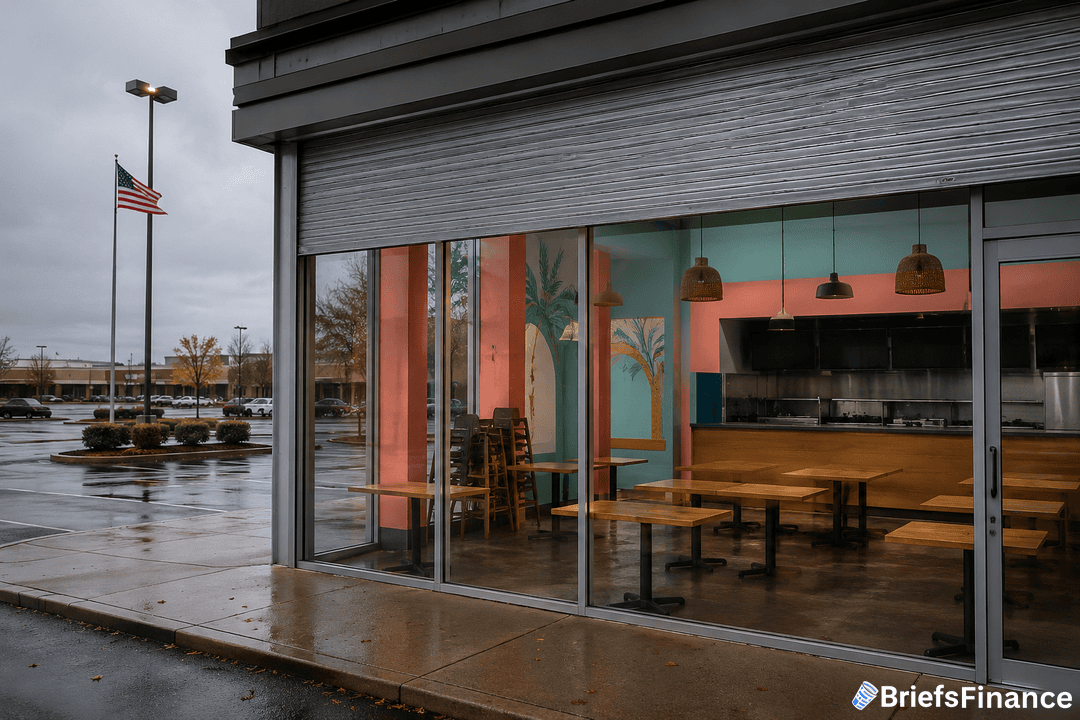
In 2020, Guzman y Gomez came to Chicago with big plans.
The bosses said they would open "hundreds, if not thousands" of US stores.
Last Friday, after six years and just eight stores, they pulled the plug.
Then the stock went up.
The Loss That Investors Loved
Shares of Guzman y Gomez trade in Australia as GYG.
They jumped from A$18.05 to A$21.10 when the news broke. That's a rise of about 17% on what should have been bad news.
The reason is simple. The US arm was losing money. Aussie investors did not want it on the books.
Founder Steven Marks said it plainly in his ASX note. After three months on the ground in the US, "this was going to take significantly more time and capital than we had expected."
RBC analyst Michael Toner told Reuters the US arm had "very low prospects" and was hurting earnings.
That's why the exit lifted the stock instead of sinking it.
The shock was not the failure. It was the speed of the exit.
If you want this kind of plain-English take on market moves every morning, check out Market Briefs. A free 45-minute investing class is thrown in when you join.
Why The Timing Stings
Guzman y Gomez was meant to be the next Chipotle.
Two New Yorkers built it in Australia. They set a 1,000-store goal back home, plus stores in Singapore and Japan.
The US arm was meant to bring its "no preservatives, no artificial flavors" pitch back home.
But the math never worked.
US fast-casual is tough right now. Food prices for dining out are up 39.3% since January 2019, per S&P Global data cited by TheStreet.
Three in ten Americans say they've cut back on dining out this year.
Chipotle, the gold standard, already has about 4,000 stores. Even Chipotle is dealing with weaker traffic.
Trying to scale a new brand into all of that with eight stores in one metro was always going to be hard.
What To Watch
The US exit lets Guzman y Gomez focus on Australia. It is aiming for 1,000 stores and a 10% EBITDA margin.
EBITDA margin is the slice of sales kept after the cost of running stores.
For US fast-casual, the story is bigger. A well-funded foreign brand just gave up.
The space is crowded. The shopper is tired. And brands without a big footprint are running out of room.
Last year alone, more than a dozen US chains shut stores or filed for bankruptcy, per industry data.
The fast-casual space is now stuck. Big chains hold the ground. New brands can't get a foot in.
That's why even well-funded entries like Guzman y Gomez can't break in.
The 17% pop says Aussie investors saw the writing on the wall before the bosses did. They wanted the US arm gone.
For the daily read on where firms quit and where they win, join the Market Briefs newsletter. Five minutes a day, plus a free investing course when you sign up.